
Understanding tỷ lệ cá cược Betting Odds – Football Prediction and Analysis is crucial for any bettor aiming to maximize their success in the vibrant world of football betting. Accurately interpreting odds and analyzing match data allows bettors to spot value bets, avoid common pitfalls, and make informed decisions. Whether you’re a novice or a seasoned punter, leveraging insights from betting odds and detailed football analysis can elevate your betting strategy to new heights.
In this article, we’ll explore how to effectively use Betting Odds – Football Prediction and Analysis, provide practical examples, compare different approaches, and offer expert advice to enhance your betting game.
The Fundamentals of Betting Odds – Football Prediction and Analysis
Before diving into complex strategies, it’s essential to understand what Betting Odds – Football Prediction and Analysis truly entails. This process combines statistical data, team form, tactical insights, and bookmaker odds to forecast match outcomes. It provides a structured way to evaluate the likelihood of different results, aiding bettors in making smarter bets.
Recognizing the different types of odds—decimal, fractional, and American—is fundamental. These formats convey the same information but cater to different markets and personal preferences. Accurate comprehension of odds allows bettors to quickly calculate potential returns and assess whether a wager offers good value relative to the perceived likelihood of an event.
The core of Betting Odds – Football Prediction and Analysis is about blending quantitative data with qualitative insights. Analyzing recent team performance, injuries, head-to-head records, and tactical styles, combined with the odds offered by bookmakers, enables bettors to identify discrepancies and opportunities. This analytical approach transforms guessing into a strategic operation, increasing the chances of long-term success.
The Role of Statistics and Data in Football Prediction
Statistics serve as the backbone of effective football analysis. From possession percentages to expected goals (xG), every data point provides insight into a team’s performance beyond the final score.
Integrating statistical models with betting odds enhances prediction accuracy. Advanced models can simulate numerous match scenarios, factoring in player form, weather, and venue effects. For instance, if analysis shows a team consistently over-performs their expected goals, and the odds reflect a higher probability of victory, this can indicate a good betting opportunity.
In practice, analyzing statistical trends helps bettors identify when odds might be undervaluing or overestimating certain outcomes. By tracking these patterns consistently, bettors develop their intuition, aligning predictions closely with real-world performance indicators. Such data-driven methods complement intuition, making Betting Odds – Football Prediction and Analysis a powerful tool for any serious bettor.
Combining Qualitative and Quantitative Factors
Football is inherently unpredictable, and pure numerical analysis cannot capture every nuance of the game. That’s where qualitative factors come into play. Tactical adjustments, player morale, coaching changes, or even psychological aspects like team motivation influence outcomes.
Balancing these qualitative insights with quantitative data creates a holistic prediction framework. For example, a team might have impressive statistical backing but face a key injury or a crucial suspension that tilts the odds. Conversely, some teams may have a history of underperforming statistically but possess tactical flexibility that isn’t immediately obvious in numbers.
Successful bettors do not rely solely on either data or gut feeling. They synthesize both to identify value bets—where the perceived chance of an event happening is higher than the implied probability suggested by odds. This integrated approach embodies the essence of Betting Odds – Football Prediction and Analysis and helps avoid common biases in decision-making.
How to Use Betting Odds – Football Prediction and Analysis Effectively
Mastering the use of betting odds and analysis involves disciplined strategies, continuous learning, and a keen eye for detail. Incorporating these elements into your routine can significantly improve your success rates and ensure sustainable profitability.
To start, always compare odds across multiple bookmakers. Variations in odds can reveal where potential value lies. Being vigilant for discrepancies, especially in less popular markets, allows bettors to exploit arbitrage opportunities or find underpriced outcomes. This approach requires patience and a good grasp of the odds formats and implied probabilities.
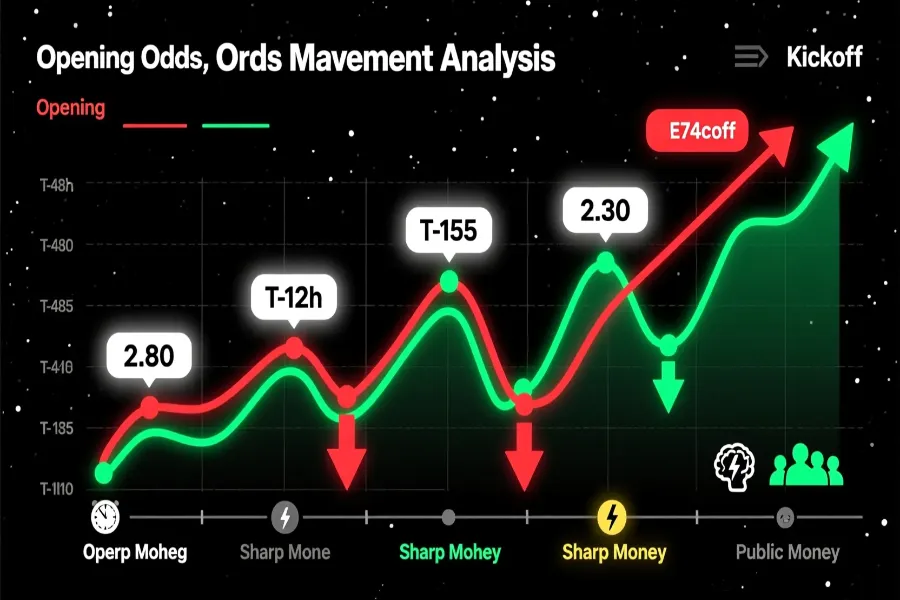
Understanding the concept of bookmaker margins helps you identify when odds are genuinely favorable. Lower margins generally equate to better value, though they might come with smaller profit margins per bet. Analyzing market movements before placing bets provides insight into how betting patterns influence odds and can hint at where sharp money is going.
Constructing a Betting Strategy Based on Odds and Analysis
Developing a structured betting strategy is essential for long-term profit. Start by defining your criteria for value betting—such as favoring underdogs when the odds seem overly generous, or backing favorites when they are undervalued based on your analysis.
Consistent bankroll management prevents emotional betting and helps sustain your betting activities over time. Allocate a fixed percentage of your bankroll to each wager, and avoid chasing losses by making larger bets to recover previous ones.
Combine statistical models with qualitative insights to craft predictions. For example, if odds indicate a close match but your analysis suggests a tactical mismatch or a key player absence, you might take a cautious stance or avoid betting altogether. The key is aligning your predictions with the betting opportunities provided by odds and market movements, driven by thorough analysis.
Tracking and Refining Your Bets
An often-overlooked aspect of effective betting is meticulous tracking. Record every bet—outcome, odds, stake, and your reasoning—to analyze performance over time. This practice reveals strengths and weaknesses in your approach and allows you to refine your models or betting criteria.
Use data analysis tools or spreadsheets to visualize your betting history. Look for patterns such as which markets or types of bets tend to be more profitable. Periodically reviewing your bets helps you avoid repeating mistakes and adapt to changing team forms, league dynamics, or market conditions.
Lastly, maintain discipline and patience. Betting Odds – Football Prediction and Analysis are most powerful when used systematically and with a long-term perspective. Consistency and continuous learning are the cornerstones of successful football betting.
Comparing Different Approaches to Football Prediction Using Betting Odds
Various methodologies have emerged for incorporating betting odds into football prediction models. Understanding the strengths and weaknesses of each can help you choose the best approach suited to your style and expertise.
Some bettors rely heavily on statistical models that quantify team performance and derive probabilities independently of odds. Others adopt a more market-focused approach, analyzing how betting patterns influence odds and exploiting these movements for value bets.
Imagining a comparison between these strategies reveals that combining them often produces the best results. Pure statistical models tend to be objective but may overlook tactical or psychological factors. Conversely, market-based strategies are more dynamic but can be affected by biases or misinformation.
In practice, blending these approaches—using quantitative data to identify potential value and monitoring market movements to confirm or challenge predictions—embodies a comprehensive Betting Odds – Football Prediction and Analysis approach. Such hybrid models tend to be more resilient and adaptable to different betting conditions.
Pros and Cons of Data-Driven Versus Market-Driven Strategies
Data-driven prediction models excel at providing unbiased, consistent assessments based on historical performance. They can process vast amounts of information, reveal hidden patterns, and simulate multiple outcomes efficiently.
However, these models might struggle to incorporate late-breaking news, tactical shifts, or psychological factors. They also require significant expertise and access to quality data sources, which might be a barrier for some bettors.
Market-driven strategies, on the other hand, capitalize on the collective wisdom (or biases) of the betting public. By analyzing odds movement, a bettor can identify when a market overreacts to news or misconceptions, creating opportunities for value bets.
Yet, market-based approaches can be misled by large bettors or coordinated betting patterns, which can distort odds temporarily. They also require quick reactions and a keen sense of market psychology to succeed consistently.
Finding the Balance for Optimal Prediction
The most effective betting systems integrate both strategies. Using data analysis to establish an initial prediction and then refining it based on market movements creates a dynamic, flexible model. This synergy enhances the accuracy of predictions, reduces reliance on any single method, and mitigates their individual weaknesses.
Crucially, ongoing assessment and calibration of both data models and market interpretations are necessary. No approach guarantees success, but disciplined integration of various tactics rooted in Betting Odds – Football Prediction and Analysis principles can substantially improve betting performance.
Conclusion
Mastering Betting Odds soi kèo bóng đá – Football Prediction and Analysis is essential for any bettor aiming to develop a strategic, disciplined approach to football betting. By understanding the types of odds, leveraging statistical and qualitative data, and carefully analyzing market movements, bettors can identify lucrative opportunities and minimize risks. Combining different prediction methodologies and maintaining rigorous tracking and refinement practices will set you apart in this competitive realm. Remember, patience and continuous learning are your best friends—success in football betting is a journey built on knowledge, analysis, and disciplined execution.
