
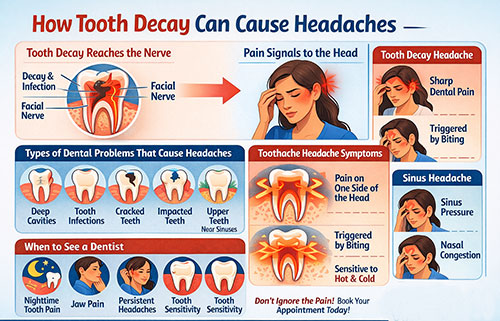
If you’ve ever noticed that a filled tooth starts aching whenever you have a headache, you’re not alone. Many people experience discomfort in their teeth during headaches and wonder whether the filling is failing or if another issue is involved. In most cases, the connection between headaches and filling pain is related to nerve sensitivity, pressure changes, teeth grinding, sinus issues, or bite problems rather than the filling itself.
Understanding why this happens can help you determine whether the discomfort is temporary or a sign that you should visit a dentist.
How Headaches Can Trigger Pain in Filled Teeth
Headaches and tooth pain often share the same nerve pathways. The trigeminal nerve, which provides sensation to the face and teeth, can transmit pain signals that make it difficult to identify the exact source of discomfort.
When you develop a headache, especially a migraine or tension headache, the nerves surrounding your teeth may become more sensitive. As a result, a tooth that has received a filling may feel sore, tender, or painful even if the restoration is functioning properly.
Tooth Nerve Sensitivity After a Filling
A filling can sometimes leave the tooth more sensitive than before, particularly if the cavity was deep. The inner nerve tissue may remain slightly irritated for weeks or even months.
Temperature changes, pressure, and headaches can amplify this sensitivity. This is one reason some people report discomfort long after their dental treatment. Patients experiencing persistent tooth pain months after filling should schedule a dental examination to rule out underlying complications.
Bite Problems After a Filling
A filling that sits slightly higher than the surrounding tooth surface can affect how your teeth come together when you bite.
Even a minor imbalance can place additional pressure on the tooth and surrounding muscles. Over time, this strain may contribute to headaches while also making the filled tooth feel painful during chewing or jaw movement.
Signs of a bite-related issue include:
- Pain when biting down
- Jaw soreness
- Frequent headaches
- Tooth sensitivity on one side of the mouth
- Discomfort that worsens throughout the day
Sinus Pressure and Referred Tooth Pain
Sinus headaches are another common cause of tooth discomfort. The roots of the upper teeth are located close to the sinus cavities, so inflammation in the sinuses can create pressure that feels like tooth pain.
Many people assume their filling is causing the problem when the real source is sinus congestion or infection. The pain often affects multiple upper teeth and may worsen when bending forward.
| Symptom During Headache | Possible Explanation |
| Mild aching in filled tooth | Increased nerve sensitivity from the headache or minor irritation around the filling |
| Pain spreading to jaw or teeth | Muscle tension, referred pain, or bite imbalance related to the filling |
| Sensitivity without biting | Nerve response triggered by the headache or sensitivity associated with the filling |
| Pain affecting multiple teeth | Pressure changes in the head and sinuses, or generalized dental sensitivity |
| Throbbing discomfort | Vascular headache effects, nerve inflammation, or irritation beneath the filling |
| Temporary pain that fades with headache | Headache-related cause, although persistent symptoms may suggest a filling issue |
When Should You See a Dentist?
Occasional mild discomfort during a headache is usually not an emergency. However, certain symptoms should not be ignored.
You should schedule an appointment if:
- Pain lasts longer than a few days
- The tooth becomes sensitive to heat
- Swelling develops
- Chewing becomes painful
- Headaches occur frequently with tooth pain
Seeking care early can help prevent more complex dental issues later.
Residents of Arlington and neighboring cities can benefit from family dentistry in Arlington VA, where experienced dental professionals can evaluate fillings and other oral health issues to help identify the cause of persistent discomfort.
Frequently Asked Questions
Can a headache make a filling hurt?
Yes. Headaches can increase nerve sensitivity and make an existing dental issue feel more noticeable.
Is it normal for a filled tooth to hurt occasionally?
Mild sensitivity can be normal, especially after recent treatment, but persistent pain should be evaluated.
Can migraines cause tooth pain?
Yes. Migraines can affect facial nerves and create referred pain that feels like it originates from a tooth.
How long should filling sensitivity last?
Most sensitivity improves within a few days to several weeks, depending on the depth of the filling.
Can a high filling cause headaches?
Yes. An uneven bite can strain jaw muscles and contribute to headaches and tooth discomfort.
Can sinus infections affect filled teeth?
Yes. Sinus pressure often causes pain in the upper teeth, regardless of whether they have fillings.
Conclusion
While pain in a filled tooth during a headache can be concerning, in many cases it is linked to changes in nerve sensitivity rather than an issue with the filling itself. Headaches can increase pressure and tension in the head, jaw, and surrounding muscles, which may make certain teeth feel more sensitive or uncomfortable.
Understanding this connection can help reduce unnecessary worry, especially when the filling appears otherwise intact and functions normally. However, if the pain becomes persistent, worsens over time, or is accompanied by other symptoms such as visible damage or strong discomfort when biting, it is important to seek a professional dental evaluation to rule out any underlying problems.
