
You love snuggling with your dog. Sharing the couch, the bed, and the occasional treat feels completely harmless — until your skin starts itching. Most people know that dog dander can trigger human allergies, but far fewer realize the reverse is also true: certain skin conditions and parasites your dog carries can be directly transferred to you.
These cross-species transmissible conditions are known as zoonotic diseases, and they’re more common than many pet owners expect. Below, we break down the five most important dog-related skin conditions that can jump from your furry companion to you — what they are, how they spread, what symptoms to watch for, and how to protect your family.
What Are Zoonotic Skin Conditions?
A zoonotic disease is any illness that can be transmitted between animals and humans. Dogs can harbor fungi, mites, parasites, and bacteria that can also survive on human skin. Treating dogs with antiparasitic and anti-allergy medications is essential, as transmission can occur through direct skin contact, contact with contaminated bedding or furniture, or even by sharing the same living space with an infected pet.
Children, elderly adults, and people with compromised immune systems face the highest risk of contracting these conditions from their dogs.
1. Ringworm (Dermatophytosis) — The Most Common Fungal Transfer
What it is: Despite the name, ringworm has nothing to do with worms. It is a fungal infection caused by dermatophytes — most commonly Microsporum canis — that invade the keratinized tissues of the skin, hair, and nails.
How it transfers: Ringworm spreads through direct contact with an infected dog or indirectly through contaminated objects such as bedding, grooming tools, or carpets. Fungal spores are remarkably resilient and can survive in the environment for extended periods.
Symptoms in dogs: Circular patches of hair loss, scaly or crusty skin, and occasionally inflamed red rings on the skin surface.
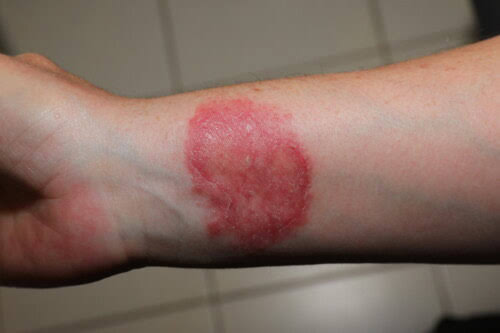
Symptoms in humans: The classic presentation is a ring-shaped, itchy, red lesion on the skin — often appearing on the arms, face, scalp, or torso. Multiple lesions can appear if exposure is prolonged.
Who’s most at risk: Children are particularly vulnerable because they tend to handle animals more closely and frequently, and their immune systems are still developing.
Treatment: In most cases, topical antifungal creams are sufficient for mild infections in both dogs and their owners. More severe or widespread infections may require oral antifungal medications. Both the pet and affected humans should be treated simultaneously to prevent re-infection.
Prevention tip: If your dog develops bald circular patches or scaly skin, visit your vet promptly and avoid skin-to-skin contact with the affected areas until a diagnosis is confirmed.
2. Sarcoptic Mange / Scabies — The Itchiest Transfer of All
What it is: Sarcoptic mange in dogs is caused by the microscopic mite Sarcoptes scabiei. When this mite transfers to humans, the resulting condition is known as scabies — one of the most intensely itchy skin conditions known to medicine.
How it transfers: The mite is highly contagious and can be passed to humans through even casual contact with an infected dog. The adult female mite burrows into the outer layer of skin, where she lays eggs that hatch and mature over a few weeks.
Symptoms in dogs: Intense scratching, red inflamed skin, crust formation, hair loss (especially around the ears, elbows, and face), and general restlessness.
Symptoms in humans: Severe itching (often worse at night), a red bumpy rash, and visible burrow tracks on the skin — commonly appearing on the wrists, between the fingers, and on the abdomen. Symptoms in humans are often less severe than in dogs, but itching and dermatitis are consistently reported.
Treatment: Both sarcoptic mange and human scabies respond well to treatment. Your vet can prescribe topical or oral medications for your dog, while your doctor will likely recommend a prescription-strength topical cream (such as permethrin) for affected humans. All household contacts should be treated simultaneously, and bedding, clothing, and upholstered furniture must be thoroughly washed.
Important note: Humans cannot sustain a full Sarcoptes life cycle on their own skin the way dogs can, so the infestation in people typically resolves once the dog is treated — but you should still seek medical care, as the mites can cause secondary skin infections from scratching.
3. Cheyletiellosis (Walking Dandruff) — The Under-Diagnosed Mite
What it is: Cheyletiellosis is caused by Cheyletiella yasguri mites in dogs — large enough to be seen with the naked eye as tiny moving white specks, hence the nickname “walking dandruff.” This condition is often overlooked or misdiagnosed because its symptoms can mimic other skin conditions.
How it transfers: The mite is highly contagious to dogs, cats, rabbits, and humans alike. Humans contract it through direct contact with an infested pet or through contaminated bedding and furniture, as the mites can survive for several days off the host.
Symptoms in dogs: The most prominent sign is excessive scaling or dandruff, most noticeable along the back and upper body. Itching may also occur, though some dogs harbor mites without showing noticeable symptoms — making them silent carriers.
Symptoms in humans: In people, Cheyletiella mites cause red, raised, intensely itchy bumps — typically on the forearms, chest, and abdomen. Over time, the lesions can develop a yellow-crusted appearance. Fortunately, the mites cannot complete their life cycle on human skin, so human infections generally resolve within about three weeks once the host animal is treated.
Diagnosis challenge: Cheyletiella is notoriously difficult to diagnose — laboratory diagnostics can come back negative in up to 15% of dogs with confirmed infestations. A thorough skin scraping or flea-comb examination under a microscope is the most reliable method.
Treatment: Most pets require three to four medicated baths given once a week. Lime-sulfur rinses, fipronil, selamectin, and ivermectin-based treatments are all commonly used. All animals in the household must be treated, and the home environment — including carpets, bedding, and upholstery — should be treated with a flea-grade insecticide spray.
4. Hookworm Infection (Cutaneous Larval Migrans) — The Creeping Rash
What it is: Hookworms are intestinal parasites common in dogs that can cause a distinctive and distressing skin condition in humans called cutaneous larval migrans, sometimes called “creeping eruption.” While not technically an “allergy,” this condition produces severe allergic-type skin reactions in humans.
How it transfers: Dogs pass hookworm larvae through their feces into soil. Humans become infected when they walk barefoot or sit on contaminated soil or sand, allowing the larvae to penetrate the skin. Beaches, sandboxes, and dog parks are common sites of exposure.
Symptoms in dogs: Bloody diarrhea, weight loss, lethargy, and pale gums (due to anemia) in severe cases. Many adult dogs carry hookworms with minimal outward symptoms.
Symptoms in humans: The hallmark is a serpiginous (snake-like) creeping rash on the skin — usually on the feet, legs, or buttocks. It is accompanied by severe itching and sometimes blistering as the larvae migrate just beneath the skin surface. The rash advances a few millimeters to a few centimeters per day, which gives it the “creeping” description.
Treatment: Topical antiparasitic cream (thiabendazole or ivermectin) applied directly to the rash is often effective for mild cases. Oral albendazole or ivermectin may be prescribed for more extensive infections. The larvae cannot survive long in human skin and will eventually die without treatment, but the itching can be severe enough to warrant medication.
Prevention tip: Ensure your dog receives regular deworming treatments as recommended by your vet. Avoid walking barefoot in areas where dogs defecate, and always clean up your dog’s waste promptly.
5. Flea Bite Hypersensitivity and Cheyletiella Dermatitis — Shared Environmental Allergens
What it is: Dogs with flea allergy dermatitis (FAD) are hypersensitive to the proteins in flea saliva. While this allergic response itself is not “infectious,” the fleas responsible for triggering it can absolutely infest your home and bite humans, causing allergic skin reactions in people too.
How it transfers: Fleas do not live permanently on humans, but they readily bite us. When a flea-infested dog brings fleas into the home, the insects drop off into carpeting, furniture, and bedding. Once hatched, flea larvae and adults can bite all members of the household.
Symptoms in dogs: Hair loss along the lower back, upper tail base, and thighs; intense scratching; red inflamed skin; small raised bumps and crusting. Even a single flea bite can trigger a prolonged allergic response in a sensitized dog.
Symptoms in humans: Flea bites in humans cause small, intensely itchy red bumps, often in clusters around the ankles and lower legs. People with existing skin sensitivities or immune conditions may develop more pronounced allergic reactions, including hives and widespread rashes.
Treatment: Managing flea allergy in the household requires a multi-pronged approach: treating the dog with a vet-recommended flea preventive, treating all other pets in the home, and addressing the environment with appropriate flea sprays or foggers. Washing all bedding in hot water and vacuuming thoroughly (and disposing of the vacuum bag immediately) significantly reduces the flea population. For humans experiencing reactions, an antihistamine or hydrocortisone cream can relieve symptoms.
Prevention tip: Year-round flea prevention on your dog is the single most effective strategy. It protects your dog from FAD and your family from flea bites simultaneously.
How to Protect Yourself and Your Family
Sharing your home with a dog carries small but real risks of exposure to these zoonotic conditions. A few simple habits dramatically reduce that risk:
- Schedule regular vet checkups. Routine examinations catch skin conditions early before they spread to humans.
- Keep up with parasite prevention. Monthly flea, tick, and heartworm preventives address multiple risks at once.
- Practice good hygiene. Wash hands thoroughly after handling your dog, especially before touching your face or preparing food.
- Wash pet bedding frequently in hot water to kill mites, flea eggs, and fungal spores.
- Act quickly on unusual skin changes. If your dog develops bald patches, flaking, unusual itching, or crusty lesions — and you or a family member develops similar symptoms — see both your vet and your doctor without delay.
- Be especially cautious if immunocompromised. People undergoing chemotherapy, living with HIV, or on immunosuppressive drugs should consult their physician about safe pet handling practices.
When to See a Doctor
If you develop an unexplained skin rash, intense itching, or a creeping rash after contact with your dog — particularly if your dog has recently been diagnosed with a skin condition — see a healthcare provider. Always mention that you have a dog and describe any symptoms your pet has been showing. This information helps your doctor identify the most likely cause quickly and prescribe appropriate treatment.
Final Thoughts
Living with a dog is one of life’s great joys, and these risks should not discourage pet ownership. The vast majority of dog owners will never experience a zoonotic skin transfer. But awareness is powerful: knowing what to look for in your dog, keeping up with veterinary care, and practicing basic hygiene puts you in complete control of your family’s health.
Your dog depends on you. And with the right knowledge, you can keep both of you safe and healthy together.
Disclaimer: This article is for informational purposes only and does not constitute medical or veterinary advice. Always consult a licensed physician or veterinarian for diagnosis and treatment of any health condition.
