
Many people only book a dental appointment when they experience severe pain. Unfortunately, waiting until a problem becomes painful often means the issue has already progressed, requiring more extensive treatment.
Modern dentistry focuses on prevention. Identifying dental problems early can help preserve your natural teeth, reduce treatment costs, and prevent unnecessary discomfort.
Whether you’re experiencing persistent tooth sensitivity, bleeding gums, or simply haven’t had a dental check-up in years, recognising the warning signs can make a significant difference to your long-term oral health.
According to Dr Aziz Baluch, Dentist in Brunswick, many serious dental conditions begin with subtle symptoms that patients often overlook.
“The earlier we diagnose a dental issue, the more conservative and comfortable the treatment usually is. Regular dental examinations allow us to detect problems before they become painful or expensive to treat.”
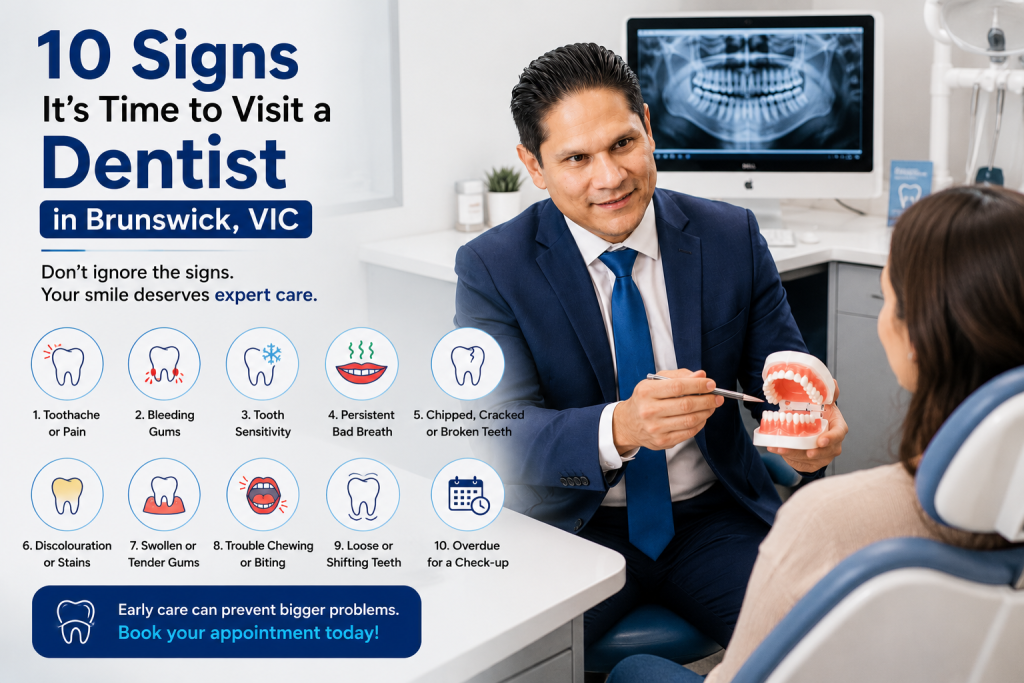
In this guide, we’ll explore ten common signs that indicate it’s time to visit a dentist and explain why early professional care matters.
Why Early Dental Care Matters
Your mouth often provides the first signs of developing health problems. Small cavities, early gum disease, cracked teeth, or worn enamel may not cause pain immediately, but they continue to worsen if left untreated.
Routine dental examinations allow dentists to:
- Detect tooth decay before it becomes painful
- Identify early gum disease
- Screen for oral cancer
- Monitor wisdom teeth
- Check existing fillings and crowns
- Detect bite problems
- Prevent future complications
- Maintain healthy teeth for life
Preventive dentistry is always less invasive—and often less costly—than treating advanced dental disease.
1. Persistent Toothache
One of the most obvious reasons to see a dentist is persistent tooth pain.
While occasional sensitivity after eating something cold may not always indicate a serious issue, continuous pain should never be ignored.
Toothaches may be caused by:
- Tooth decay
- Dental abscess
- Cracked teeth
- Exposed tooth roots
- Gum infection
- Impacted wisdom teeth
Pain is your body’s way of telling you that something needs attention.
Ignoring a toothache can allow infection to spread deeper into the tooth or surrounding tissues, potentially leading to root canal treatment or tooth extraction.
2. Bleeding Gums When Brushing or Flossing
Many people believe bleeding gums are normal.
They are not.
Healthy gums should not bleed during brushing or flossing.
Bleeding gums are often one of the earliest signs of gum disease (gingivitis), which is reversible when treated promptly.
Common causes include:
- Plaque build-up
- Poor oral hygiene
- Gingivitis
- Periodontitis
- Incorrect brushing technique
Without treatment, gum disease may eventually lead to gum recession, loose teeth and even tooth loss.
3. Persistent Bad Breath
Bad breath after eating garlic or onions is perfectly normal.
However, bad breath that persists despite regular brushing may indicate an underlying dental issue.
Possible causes include:
- Gum disease
- Tooth decay
- Oral infections
- Dry mouth
- Food trapped between teeth
- Poor oral hygiene
A professional dental examination can identify the underlying cause rather than simply masking the symptoms.
4. Tooth Sensitivity That Doesn’t Go Away
Do you experience discomfort when drinking coffee, eating ice cream or breathing in cold air?
Occasional sensitivity may not be concerning, but ongoing sensitivity should be assessed.
Common causes include:
- Worn enamel
- Gum recession
- Tooth decay
- Cracked teeth
- Old fillings
- Teeth grinding
Early treatment often prevents more serious damage to the tooth structure.
5. Loose Teeth
Adult teeth should never feel loose.
Loose teeth often indicate advanced gum disease or bone loss supporting the teeth.
Other possible causes include:
- Dental trauma
- Teeth grinding
- Infection
- Bone deterioration
Seeking treatment promptly improves the chances of saving the affected tooth.
6. You Have a Broken, Chipped or Cracked Tooth
Many small cracks cause little or no pain initially.
However, bacteria can enter through these fractures and infect the tooth’s inner pulp.
Even minor chips should be professionally assessed.
Modern dentistry offers several treatment options including:
- Composite bonding
- Dental veneers
- Crowns
- Onlays
- Root canal treatment (if required)
Early intervention often prevents larger restorative procedures later.
7. You Notice Swollen or Red Gums
Swollen gums usually indicate inflammation.
Possible causes include:
- Gingivitis
- Periodontal disease
- Dental abscess
- Food trapped beneath the gumline
- Wisdom tooth infection
Healthy gums should appear pink, firm and fit snugly around your teeth.
Swelling, tenderness or pus should always be investigated by a dentist.
8. It’s Been More Than Six Months Since Your Last Dental Check-Up
Many dental problems develop silently.
You may feel perfectly fine while cavities, gum disease or worn fillings continue progressing.
Routine examinations allow your dentist to detect problems before symptoms appear.
During a preventive appointment, your dentist typically checks for:
- Tooth decay
- Gum disease
- Oral cancer
- Existing dental work
- Bite alignment
- Jaw joint issues
- Signs of teeth grinding
Regular visits remain one of the most effective ways to maintain lifelong oral health.
9. Difficulty Chewing or Jaw Pain
Pain while chewing should never be ignored.
Possible causes include:
- Cracked teeth
- TMJ disorders
- Wisdom teeth
- Dental abscess
- Tooth infection
- Bite problems
Jaw discomfort may gradually worsen if left untreated.
A dentist can identify whether the issue involves your teeth, jaw joints or surrounding muscles.
10. Changes in Your Smile or Teeth
Sometimes the warning signs aren’t painful at all.
You may notice:
- Teeth appearing longer
- Gum recession
- New gaps between teeth
- Tooth wear
- Discolouration
- Changes in your bite
- Shifting teeth
These changes often develop gradually.
A comprehensive dental examination can determine the underlying cause and recommend appropriate treatment before the condition progresses.
What Happens During a Dental Examination?
Many people postpone appointments because they’re unsure what to expect.
A routine examination is straightforward and typically includes:
- Reviewing your medical history
- Discussing any concerns or symptoms
- Checking every tooth for decay
- Examining your gums
- Screening for oral cancer
- Evaluating existing fillings, crowns and restorations
- Assessing your bite
- Taking dental X-rays if required
- Providing personalised oral hygiene advice
Your dentist will explain any findings clearly and discuss treatment options if necessary.
Expert Advice from Dr Aziz Baluch
According to Dr Aziz Baluch, Dentist in Brunswick, prevention is one of the most important aspects of modern dentistry.
“Patients often tell me they waited because the discomfort wasn’t severe. Unfortunately, many dental conditions progress quietly before becoming painful. Regular examinations allow us to identify small problems early, helping patients avoid more complex treatment later.”
Dr Baluch also encourages patients not to ignore changes in their oral health.
“If something doesn’t feel right—whether it’s sensitivity, bleeding gums, persistent bad breath or discomfort—it’s worth having it assessed. Early diagnosis gives us the greatest opportunity to preserve natural teeth.”
Modern Technology, Personalised Care at Hope Street Family Dental
Your oral health affects far more than your smile. Recognising early warning signs and seeking professional dental care promptly can help prevent discomfort, preserve your natural teeth and support your overall wellbeing.
Whether you’re experiencing tooth pain, bleeding gums, sensitivity or simply haven’t had a dental examination in some time, arranging a check-up with local dentist like Hope Street Family Dental is an important step towards maintaining long-term oral health.
As Dr Aziz Baluch advises, “The best time to treat most dental problems is before they become emergencies.” By acting early and prioritising preventive care, you can enjoy a healthier smile for years to come.
Frequently Asked Questions
How often should adults visit a dentist?
Most adults benefit from a dental examination every six months. However, some patients with gum disease, a higher risk of tooth decay or ongoing dental conditions may require more frequent visits.
Is bleeding while brushing normal?
No. Healthy gums should not bleed. Bleeding is often an early sign of gum disease and should be assessed by a dental professional.
Should I see a dentist if my toothache comes and goes?
Yes. Intermittent pain can still indicate tooth decay, infection or a cracked tooth. Early assessment can prevent the condition from worsening.
Can a dentist detect oral cancer?
Yes. Comprehensive dental examinations typically include an oral cancer screening, allowing suspicious changes to be identified as early as possible.
Why are regular dental check-ups important even if I have no pain?
Many dental conditions—including cavities, gum disease and early infections—develop without noticeable symptoms. Routine examinations allow these issues to be detected before they become painful or require more extensive treatment.
