
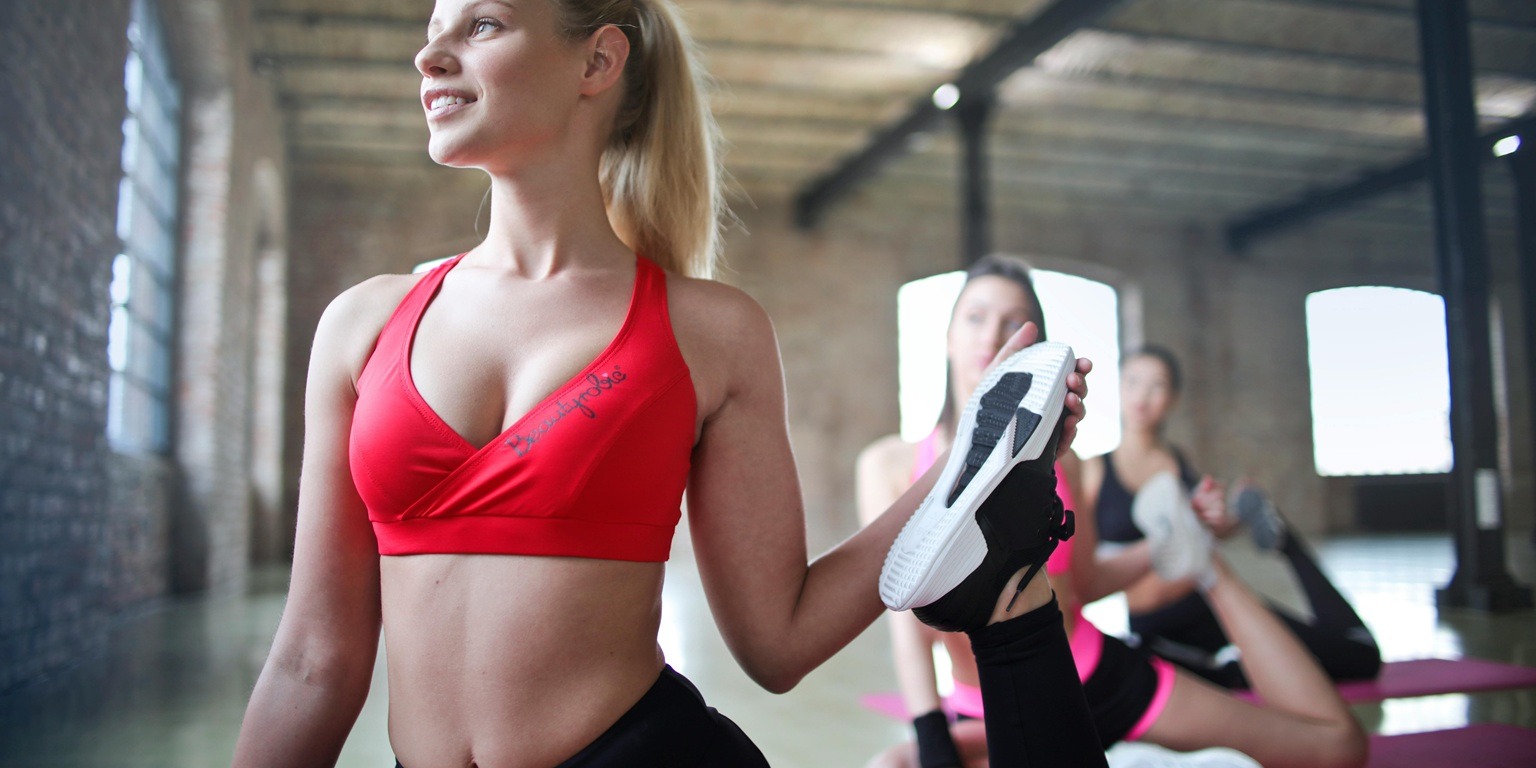
Modern life does not always encourage healthy movement. Many people spend hours sitting at a desk, looking down at a phone, driving, or repeating the same physical tasks throughout the day. Over time, these habits may contribute to stiffness, reduced mobility, muscle imbalances, and a general feeling that the body is not moving as freely as it once did.
Pilates offers a low-impact approach to exercise that focuses on controlled movement, breathing, alignment, and coordination. Rather than training individual muscles in isolation, it encourages the body to work as an integrated system. This can make Pilates particularly useful for people who want to improve their posture, feel more stable, and develop strength that supports everyday activities.
From sitting comfortably at work to carrying groceries or climbing stairs, the benefits of better movement control can extend far beyond the exercise studio.
What Is Pilates?
Pilates is a movement method built around precision, concentration, controlled breathing, and efficient muscle engagement. Exercises may be performed on a mat or with specialized equipment such as a reformer, chair, or tower.
A typical Pilates session emphasizes the relationship between mobility and stability. Some parts of the body need to move freely, while others must remain controlled and supported. For example, the hips and shoulders may move through a wide range of motion while the trunk stays stable.
This balance can help people develop a stronger awareness of how they move. Instead of simply completing as many repetitions as possible, Pilates encourages participants to notice how the spine, pelvis, shoulders, and limbs are positioned during each exercise.
The method is also highly adaptable. Exercises can often be modified to suit different fitness levels, body types, and movement goals. Beginners may start with basic breathing and stabilization exercises, while more experienced participants can progress to complex sequences that challenge strength, balance, and coordination.
How Pilates May Support Better Posture
Posture is often misunderstood as a single “correct” position that should be maintained throughout the day. In reality, healthy posture is dynamic. The body needs to adjust continuously when sitting, standing, walking, lifting, and reaching.
Problems may arise when a person remains in one position for too long or lacks the strength and mobility needed to change positions comfortably. Long periods of sitting, for example, can be associated with tightness around the hips, reduced movement in the upper back, and fatigue in the muscles that support the trunk.
Pilates may help address these issues by developing both postural awareness and muscular control.
Increasing Awareness of Alignment
One of the first things people often learn in Pilates is how to recognize the position of their pelvis, ribs, shoulders, and head.
During an exercise, an instructor may encourage participants to notice whether they are arching the lower back, lifting the shoulders, holding their breath, or shifting more weight onto one side. This feedback can help people identify habits they may not notice during everyday life.
Greater body awareness does not mean holding the body rigidly. Instead, it helps a person recognize when unnecessary tension or poor positioning is making movement less efficient.
Strengthening the Muscles That Support the Spine
Pilates exercises frequently involve the muscles of the abdomen, back, hips, and pelvic floor. Together, these muscles help stabilize the trunk and support the spine during movement.
A stronger trunk can make it easier to remain upright without excessive tension in the neck or shoulders. It may also help the body manage movements such as bending, reaching, rotating, and lifting.
Importantly, Pilates does not focus only on the visible abdominal muscles. Many exercises emphasize deeper stabilizing muscles that help control the position of the pelvis and spine.
Improving Mobility Where It Is Needed
Postural problems are not always caused by weakness. Limited mobility can also affect how the body organizes itself.
For example, if the upper back does not rotate or extend comfortably, the neck and lower back may compensate. If the hips feel stiff, the pelvis may move in ways that place additional strain on other areas.
Pilates includes controlled spinal movement, hip mobility, shoulder movement, and rotation. By combining mobility exercises with stabilization, the method may help the body distribute movement more evenly.
How Pilates Can Help Develop Better Balance
Balance is not simply the ability to stand on one leg. It depends on several systems working together, including vision, the inner ear, muscular strength, coordination, and proprioception.
Proprioception is the body’s ability to sense where it is in space. It allows a person to move an arm or leg without constantly watching it. It also helps the body make quick adjustments when walking on an uneven surface or changing direction.
Pilates may support balance by improving trunk control, coordination, and awareness of weight distribution.
Building a Stable Center
Many Pilates exercises require the trunk to remain controlled while the arms or legs move. This teaches the body to maintain stability while responding to changing forces.
That ability is useful in daily life. When stepping off a curb, reaching for an object, or carrying a bag on one side, the body must adjust without losing control.
Exercises that challenge the relationship between the limbs and the trunk may help improve this type of functional stability.
Practicing Weight Transfer
Walking, climbing stairs, and getting up from a chair all involve shifting body weight from one area to another.
Pilates exercises may include controlled changes in weight distribution, single-leg movements, kneeling positions, and standing work. These movements can help participants become more comfortable transferring weight while maintaining alignment.
Developing Coordination
Balance also requires different areas of the body to work together at the right time. Some Pilates exercises involve moving the arms and legs in opposite directions, coordinating movement with breathing, or maintaining one position while another part of the body moves.
These patterns can challenge concentration and motor control. With regular practice, they may support more confident and coordinated movement.
What Is Everyday Strength?
Strength is often associated with lifting heavy weights or building large muscles. However, everyday strength is the ability to perform routine activities safely, comfortably, and efficiently.
This may include:
- carrying shopping bags;
- standing up from a chair;
- lifting a child;
- placing an object on a shelf;
- walking up stairs;
- getting down to the floor and standing up again;
- maintaining balance while dressing;
- working in the garden;
- sitting upright during a long workday.
Pilates can contribute to this type of functional strength because many exercises involve multiple muscle groups working together.
Training the Body as a System
In everyday life, muscles rarely work in isolation. Picking up a bag requires the legs, hips, trunk, shoulders, and arms to coordinate.
Pilates reflects this whole-body approach. Even a movement that appears to focus on the legs may also require abdominal control, shoulder stability, and controlled breathing.
This integrated training can help people develop strength that is easier to apply outside the studio.
Improving Control Through a Range of Motion
Strength is most useful when it can be maintained throughout movement.
Pilates exercises often involve moving slowly through a controlled range rather than relying on momentum. This can help participants identify weak or unstable points within a movement.
For example, lowering the body gradually may be as important as lifting it. This type of controlled movement can be particularly relevant when sitting down, descending stairs, or placing an object on the floor.
Supporting Low-Impact Strength Development
Pilates is generally considered a low-impact form of exercise because it does not usually involve repeated jumping or high-impact landings.
This can make it appealing to beginners, older adults, and people who prefer a more controlled form of strength training. However, low impact does not necessarily mean easy. Exercises can become highly challenging when resistance, range of motion, balance demands, or coordination requirements increase.
Mat Pilates and Reformer Pilates
Pilates can be practiced in several ways, with mat and reformer classes being among the most common.
Mat Pilates
Mat Pilates uses body weight as the primary source of resistance. Some classes also incorporate small accessories such as resistance bands, rings, or light weights.
It can be practiced at home or in a group setting and requires relatively little equipment. Mat work is often effective for developing foundational control, breathing patterns, and trunk stability.
However, some exercises may feel demanding because the body does not receive much external support.
Reformer Pilates
A reformer includes a moving carriage, springs, straps, and a footbar. The springs provide adjustable resistance, while the carriage creates both support and instability depending on the exercise.
This makes the reformer versatile. It can assist a movement for someone who is learning a new pattern or add resistance for someone seeking a greater challenge.
The equipment also provides immediate feedback. If the carriage moves unevenly or too quickly, the participant may recognize that one side of the body is working differently from the other.
People exploring equipment-based Pilates can learn more about professional and home training solutions through balanced-body.lt. Choosing equipment that offers appropriate adjustability, stability, and smooth resistance can support controlled movement and allow exercises to be adapted to different users.
Neither mat nor reformer Pilates is automatically better. The right choice depends on a person’s goals, experience, preferences, and access to qualified instruction.
Who May Benefit From Pilates?
Pilates may appeal to a wide range of people, including:
- office workers experiencing stiffness from prolonged sitting;
- beginners looking for a structured, low-impact activity;
- older adults who want to work on stability and coordination;
- active individuals seeking a complementary form of training;
- people who want to improve body awareness;
- those returning to regular movement after a period of inactivity.
Because exercises can often be modified, Pilates can meet people at different stages of their movement journey.
However, it is not a substitute for medical treatment. Anyone experiencing persistent pain, recovering from an injury, living with a medical condition, or returning to exercise after surgery should consult an appropriate healthcare professional. Working with a qualified Pilates instructor can also help ensure that movements are adapted safely.
How to Start Pilates Safely
Beginners do not need to master complicated exercises immediately. A gradual approach is usually more effective.
Start by learning the basic principles of breathing, pelvic positioning, spinal movement, and trunk control. Focus on the quality of each repetition rather than speed or quantity.
It is also important to distinguish effort from pain. Muscular fatigue may be expected during exercise, but sharp, sudden, or persistent pain should not be ignored.
A few practical principles include:
- begin with introductory exercises or beginner-level classes;
- work within a comfortable range of motion;
- avoid holding the breath;
- increase resistance gradually;
- prioritize control over momentum;
- allow time for recovery;
- seek guidance when an exercise feels unclear or uncomfortable.
Consistency is often more valuable than occasional intense sessions. Two or three manageable sessions each week may help build familiarity and control more effectively than an irregular routine that feels overwhelming.
Bringing Pilates Principles Into Daily Life
The benefits of Pilates are not limited to formal exercise sessions. Its principles can influence how a person moves throughout the day.
When sitting at a desk, notice whether the head is drifting forward or the shoulders are rising toward the ears. When standing, observe whether weight is distributed evenly between both feet.
During lifting, consider bending through the hips and knees while keeping the load close to the body. When reaching overhead, allow the upper back and shoulders to move rather than forcing the lower back to arch.
Breathing can also be useful. Slow, controlled breathing may help reduce unnecessary tension and make demanding movements feel more organized.
Regular movement breaks are equally important. Even excellent sitting posture can become uncomfortable when maintained for hours. Standing up, walking, stretching, or changing position frequently may be more beneficial than trying to remain perfectly still.
Final Thoughts
Pilates is more than a collection of abdominal exercises. It is a method of learning how to move with greater awareness, control, and efficiency.
By strengthening the muscles that support the trunk, improving mobility, and developing coordination, Pilates may contribute to better posture, balance, and functional strength. These qualities can make everyday activities feel easier and help people move with greater confidence.
The goal is not to create a rigid or “perfect” body position. It is to build a body that can adapt — one that can sit, stand, lift, rotate, reach, and walk with control.
Whether practiced on a mat or with specialized equipment, Pilates can provide a structured way to develop movement skills that remain useful long after the workout is over.
