
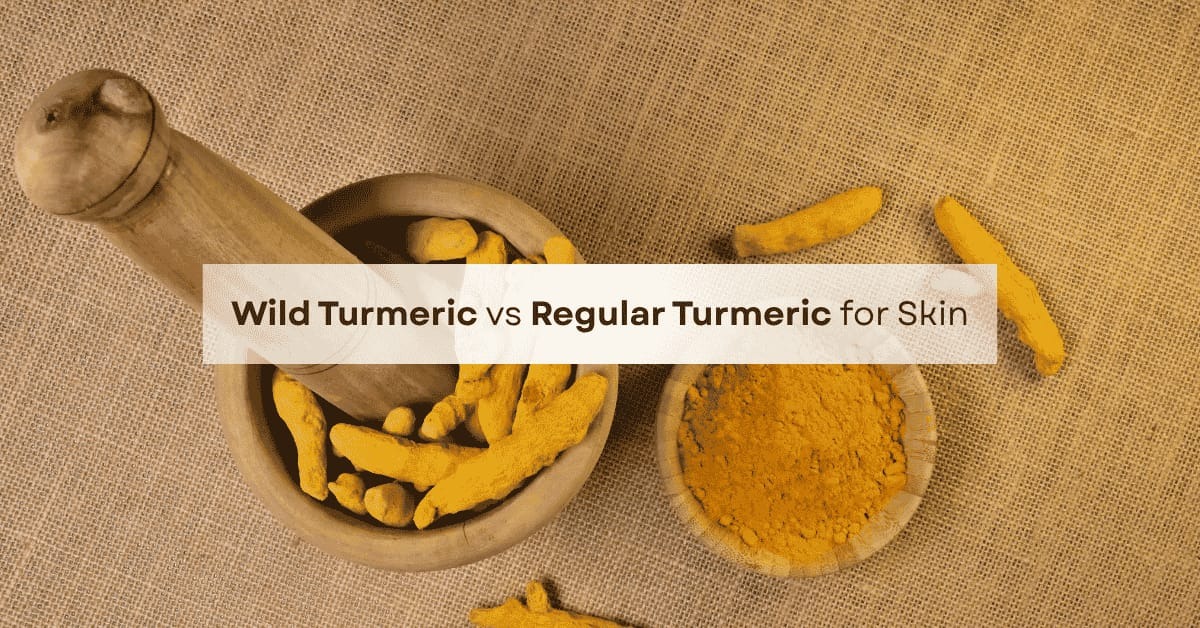
Turmeric, one of the most widely preferred and used in skincare for ages by our ancestors because of their properties. From DIY face masks to haldi ceremonies, this one ingredient helps in elevating your skin for being more healthy, radiant, and refreshed. But the one thing which most of them do not notice is that every turmeric is the same.
They are broadly classified into wild turmeric (kasturi manjal) and regular turmeric (Curcuma longa). Though both are from the same botanical family, they differ in aspects like composition, aroma, and appearance. Picking the best one will surely make a difference in your DIY skincare routine.
In this guide, you will know in detail about the key difference, their unique properties and which is perfect for you considering the skin type and concern.
Wild VS Regular Turmeric – The Epic Difference
| Feature | Wild Turmeric (Kasturi Manjal) | Regular Turmeric |
| Primary Use | Skincare and cosmetic applications | Culinary and wellness uses |
| Botanical Name | Curcuma aromatica | Curcuma longa |
| Colour | Pale yellow | Bright yellow-orange |
| Aroma | Mild, earthy, aromatic | Strong turmeric scent |
| Skin Staining | Minimal | Can stain skin temporarily |
| DIY Face Packs | Highly suitable | Suitable in small quantities |
| Traditional Use | Beauty rituals and ubtans | Cooking, herbal remedies, and skincare |
Why Wild Turmeric Is Common in Skincare?
Wild Turmeric has been a part of skincare ritual on an everyday basis for generations, especially in southern part of Asia. They are used as face packs, ubtans, and even for various body care because of their nature.
They are widely preferred because:
- Gives less stain than regular turmeric.
- Blends well with clay powder, floral powders, and even herbal ingredients.
- Suitable for skincare and bodycare.
- Helps in improving the appearance of dull and uneven skin tone.
Its mild nature makes it a favourite ingredient for those who enjoy DIY skincare without worrying about temporary yellow stains.
What Makes Regular Turmeric Different?
In terms of regular turmeric, they are majorly used in culinary spice but also used in skincare for ages! The high curcumin content is rich in anti-oxidant and anti-inflammatory properties.
Research says that curcumin’s role in skin health works better, while also managing oxidative stress and overall skin wellness. However they have heavy pigment, which will stain fair or lighter skin tone when applied in large amounts. This is why most of the DIY recipes recommend using just a pinch for DIY Face packs.
What Research Says about Turmeric?
In the latest modern research, turmeric has been a valued ingredient in skincare traditions. According to the studies, the primary active compound in turmeric inhibits anti-oxidant radicals. The presence of anti-oxidants helps in neutralising free radicals that are generated by pollution and UV exposure.
Research has also investigated curcumin for their role in healing wounds and reducing inflammatory responses in the skin. Wild Turmeric has received comparatively less scientific attention, but their longstanding use in traditional skincare highlights its reputation as a gentle cosmetic ingredient suitable for external application.
Which Skin Concerns Can They Help Address?
Wild Turmeric – Traditionally used for treating dull skin, uneven skin, excess oiliness, herbal face packs, and also in bridal skincare rituals.
Regular Turmeric – Often included in DIY recipes targeting blemishes, Tired/lifeless skin, skin redness, and also for supporting annti-oxidants
Which One Is Better for DIY Face Packs?
For regular or weekly DIY face masks at home, wild turmeric is a better choice since they are way more convent and pairs well with ingredients like:
- Multani Mitti
- Rose Petal Powder
- Sandalwood Powder
- Aloe Vera Gel
- Yogurt
- Gram Flour
- Honey
Even though regular turmeric can also be used, the stronger pigment adds tint to your skin will be quite not skin-friendly!
How to Choose Based on Your Skin Type
- Dry Skin – “Wild Turmeric” is better since they combine well will hydrating ingredients like curd, honey, etc.
- Oily skin – Both “Regular and Wild” works. You can even pair them with Clay Powder For better results.
- Combinational Skin – “Wild” works best, since they work best for regular usage.
- Sensitive skin – Ensure a patch test, as they will irritate skin or cause redness.
- Mature skin – Any of them works! But make sure to combine with anti-oxidant ingredients.
Tips for Safe Usage
- Do a safety test before incorporating in your DIY recipes.
- Avoid using them on burnt or infected skin.
- Use them for just 10 -15mins, and wash off.
- Use a hydrating lotion and SPF post face packs.
- If you feel discolored skin, ensure to use a lesser quantity.
Conclusion
Even though both wild and regular turmeric have a better place in natural skin, at times they serve different purposes. For those who enjoy making DIY face packs regularly, Wild Turmeric is often the best as it blends easily with various natural ingredients and cosmetic use.
Rather than opting for one which is better, go with turmeric which suits your skin type and treat your skin concern. Selecting high-quality, pure turmeric powders and pairing them with a consistent skincare routine can help you make the most of these time-honoured botanical ingredients. If you are wondering where to get the best quality and pure wild turmeric powder, get yours from Vriksha Veda.
