
What happens if you are not able to get pregnant naturally? You will definitely try to seek some alternative options while speaking to your healthcare provider. This is where treatments like intrauterine insemination (IUI) come to your assistance. Under this procedure, the sperms are prepared and washed to be sent to the uterus directly.
This usually happens during ovulation and helps healthy sperms connect with the egg when the ovary releases it. It’s a common fertility treatment used by any gynecologist in Rajkot for couples or individuals who want to conceive soon.
Let’s learn more about how IUI treatment is actually timed and carried out in this detailed guide.
How Does an IUI Treatment Work?
Generally, a sperm travels to the person’s cervix through a vagina during natural conception. That is how it reaches the uterus and the ovary releases the egg. Later, it reaches the fallopian tube and this is where the sperm meets the egg, leading to fertilization.
IUI treatment works completely differently here. As a part of this process, the specialist uses a thin tube or catheter to place the sperm into the uterus directly. In short, IUI treatment makes it easier for the sperm to reach an egg by cutting down the time and distance taken to travel there. This also increases the chances of the person getting pregnant.
How is it Performed?
Most individuals or expecting couples choose IUI treatment in Rajkot if they are not able to get pregnant naturally. It is also considered for the following conditions:
- Problems With Cervical Mucus: The cervix produces mucus on its own that helps transport sperms. However, if the mucus is thick, it becomes difficult for the sperm to swim. IUI helps the sperms bypass the cervix and travel to the uterus directly.
- Low Sperm Count: In some cases, the partner may not have enough sperm. In others, their sperms may be slow or oddly shaped. IUI treatment helps increase the number of functional sperms that fertilize the eggs.
- Donor Sperm: Donor insemination is the process of using sperm from an individual who is not the original birth parent. IUI is used in this process too.
- Erection or Ejaculation Dysfunction: IUI can be helpful if one of the partners cannot sustain or get an erection. The same applies if the person is not able to ejaculate naturally.
- Semen Allergy: Some people may have an allergy from their partner’s semen. IUI helps wash the sperms so that the proteins causing the allergy are eradicated completely.
- Unexplained Fertility: If healthcare providers are not able to find the cause of infertility, they can go with IUI treatment.
IUI Treatment: What Are the Steps?
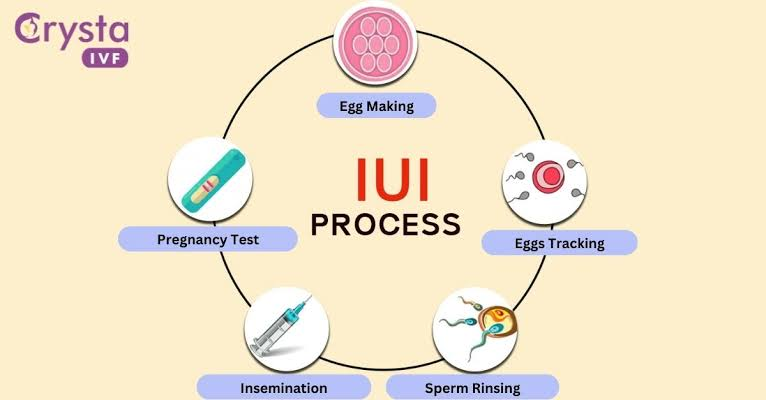
A gynecologist in Rajkot will have different ways of providing IUI treatment. The common steps are:
Ovulation
The healthcare provider will ask the person if they are ovulating or ask them about the timelines. This is usually done with the help of an at-home ovulation kit. It helps them detect luteinizing hormone (LH) that can also be checked through blood tests.
Semen Sample Preparation
Doctors always need a fresh sperm sample for the IUI procedure. In some cases, they will freeze the sperm if the person decides to provide it beforehand. The sample may be prepared or thawed if someone is using a sperm donor.
Insemination
In this procedure, the person lies on the examination table after which the doctor inserts a speculum into their vagina. Later, a catheter is also inserted into the uterus through the individual’s cervix. Then, the washed sperm is entered through the uterus. In this case, the person can take a pregnancy test two weeks after the IUI treatment in Rajkot.
Are There Any Side Effects?
Mild symptoms are common in people who went through IUI treatment. The most common ones are mild cramps or spotting for 1-2 days. But many individuals may return to their normal activities right away in some cases.
However, there are certain risks associated with the IUI treatment, and the common ones are:
- Multiple Births: A woman may release more than one egg if they take fertility medications. It’s a rare case but also increases their chances of becoming pregnant with triplets or twins. A pregnancy with multiple babies may carry a higher risk of low birth weight or preterm birth too.
- Infection: This is a rare occurrence but can still happen if the person is not careful about their health.
- Ovarian Hyperstimulation Syndrome (OHSS): A woman may suffer from this rare condition if they have taken too much fertility medication.
How Effective is IUI Treatment?
The effectiveness of all fertility treatments, including IUI, always depends on the age of the woman and the reason behind their infertility. As a person ages, they have fewer eggs, and their quality also decreases over time. It is for individuals under 38 years of age that the IUI treatment is considered to be more successful.
Pregnancies achieved through the IUI procedure within the first 3-4 cycles. However, parents may have to consult a gynecologist again if they are not able to conceive even after receiving the treatment. These are unique circumstances and can be resolved after consulting a specialist.
