
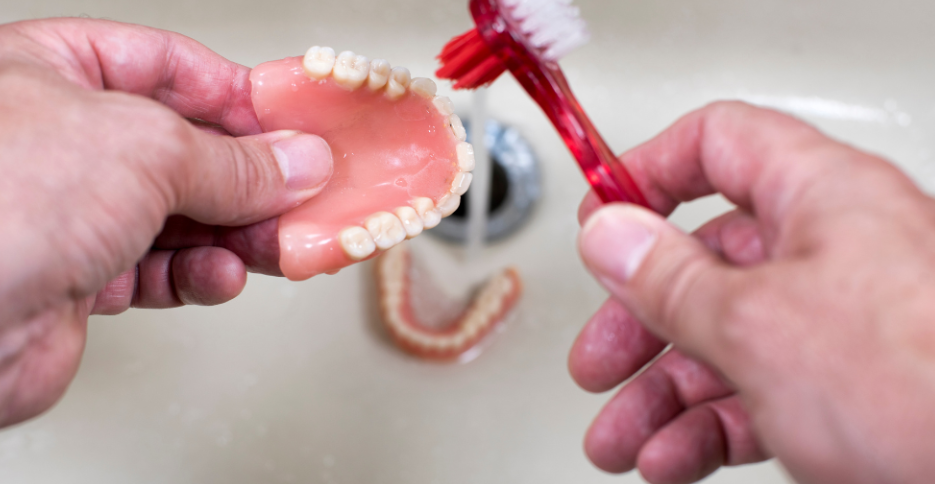
Over time, dentures can lose their clean, natural-looking appearance. Coffee, tea, red wine, tobacco, and strongly coloured foods can contribute to discolouration, while plaque and food debris can build up around artificial teeth, clasps, and other hard-to-reach areas. A consistent cleaning routine can help, but persistent staining may need professional assessment. A denture clinic in Brisbane can determine whether the issue is surface staining, built-up deposits, or a problem with the denture itself.
Many everyday stains can be managed with appropriate home care, but knowing what to use and what to avoid is important. Harsh products and aggressive scrubbing can damage the denture surface and potentially make future staining easier.
Why Do Dentures Get Stained?
Dentures can develop discolouration as pigments from foods, drinks, and tobacco build up on or become absorbed into some denture materials. Plaque and food debris can also accumulate around artificial teeth, clasps, and other areas that are difficult to reach.
Regular cleaning helps remove these deposits and keeps dentures looking and feeling cleaner between professional checks. It can also make more stubborn staining easier to manage.
How to Clean Badly Stained Dentures
Rinse First
Remove the dentures and rinse them under cool or lukewarm water to loosen food particles and other debris. Avoid hot or boiling water, as excessive heat can alter the shape of some denture materials.
Brush Gently
Use a soft-bristled denture brush with a non-abrasive denture cleanser. Clean all surfaces carefully, including around the artificial teeth and any clasps.
Regular toothpaste can be too abrasive for some denture materials. Over time, scratching the surface may make it easier for stains and deposits to accumulate.
Use a denture soaking solution
For stubborn staining, a denture-cleaning or soaking solution may help. Always follow the manufacturer’s instructions regarding concentration, soaking time and rinsing.
If your denture feels loose or uncomfortable, avoid trying to correct the fit through extra cleaning or scrubbing. A dental professional can assess whether an adjustment or denture reline in Brisbane may be appropriate.
Avoid Harsh Cleaning Methods
Avoid abrasive powders, stiff brushes, sharp tools and household chemicals unless specifically recommended by a dental professional. These methods can scratch or damage the denture and may affect its appearance or fit.
What About Tobacco Stains?
Tobacco can contribute to persistent yellow or brown discolouration, which may be more difficult to remove through ordinary brushing.
Gentle cleaning with a denture-specific cleanser and an appropriate soaking product may help. However, avoid scraping stains away or using strong chemicals. If a denture becomes chipped or cracked, don’t attempt a DIY repair. Have it assessed by a professional, as emergency denture repairs in Brisbane may be available depending on the damage.
Everyday Habits That Help Prevent Stains
A consistent routine can make a noticeable difference. Rinse dentures after meals where practical, clean them daily using suitable products and avoid exposing them to hot water.
The same care is important for partial dentures with extra attention needed around clasps and the natural teeth alongside the appliance. Storing dentures as directed when they are not being worn can also help protect their condition.
Caring for Implant-Supported Dentures
Implant-supported dentures require care for both the denture and the implant attachments. Cleaning instructions can vary depending on the type of denture and attachments used, so follow the advice provided by your dental professional.
If you are considering denture implants in Brisbane, discuss both the treatment and ongoing maintenance requirements with your dental professional. Understanding how to clean and care for the restoration is an important part of looking after it long term.
When Should You Seek Professional Help?
Home cleaning may not remove every type of stain or deposit. If discolouration remains despite regular cleaning, the denture develops a rough surface, or it becomes loose, uncomfortable, chipped, or cracked, a professional assessment is recommended.
A professional can determine whether the denture needs cleaning, adjustment, repair or replacement rather than relying on increasingly aggressive cleaning methods at home.
Final Thoughts
The safest approach to stained dentures is gentle, consistent cleaning with products designed for denture care. Avoid abrasive materials, hot water, and harsh household chemicals, and seek professional advice when staining persists or the denture no longer feels right.
With the right daily routine and professional care when needed, dentures can remain clean, comfortable, and in good condition for longer. If you have concerns about persistent stains, damage, or the fit of your dentures, Denture Haus can provide professional advice and support based on your individual needs.
Frequently Asked Questions
Can I use baking soda to clean stained dentures?
Baking soda is sometimes used as a home remedy, but it is not a substitute for a denture-specific cleanser. Avoid vigorous scrubbing, as abrasive cleaning can scratch some denture materials.
Can I use bleach on stained dentures?
Avoid household bleach unless it has been specifically recommended by a dental professional. It can affect some denture materials and may damage or corrode metal components in certain partial dentures.
Can I use normal toothpaste on dentures?
Regular toothpaste can be too abrasive for dentures. A non-abrasive cleanser specifically designed for dentures is generally a better choice for routine cleaning.
Can badly stained dentures be professionally cleaned?
Yes. A dental professional can assess persistent staining and deposits and determine whether professional cleaning or another form of treatment is appropriate.
How often should I clean my dentures?
Dentures should generally be cleaned daily to remove food debris and plaque. Follow your dental professional’s advice and the instructions provided with any denture-cleaning products you use.
