
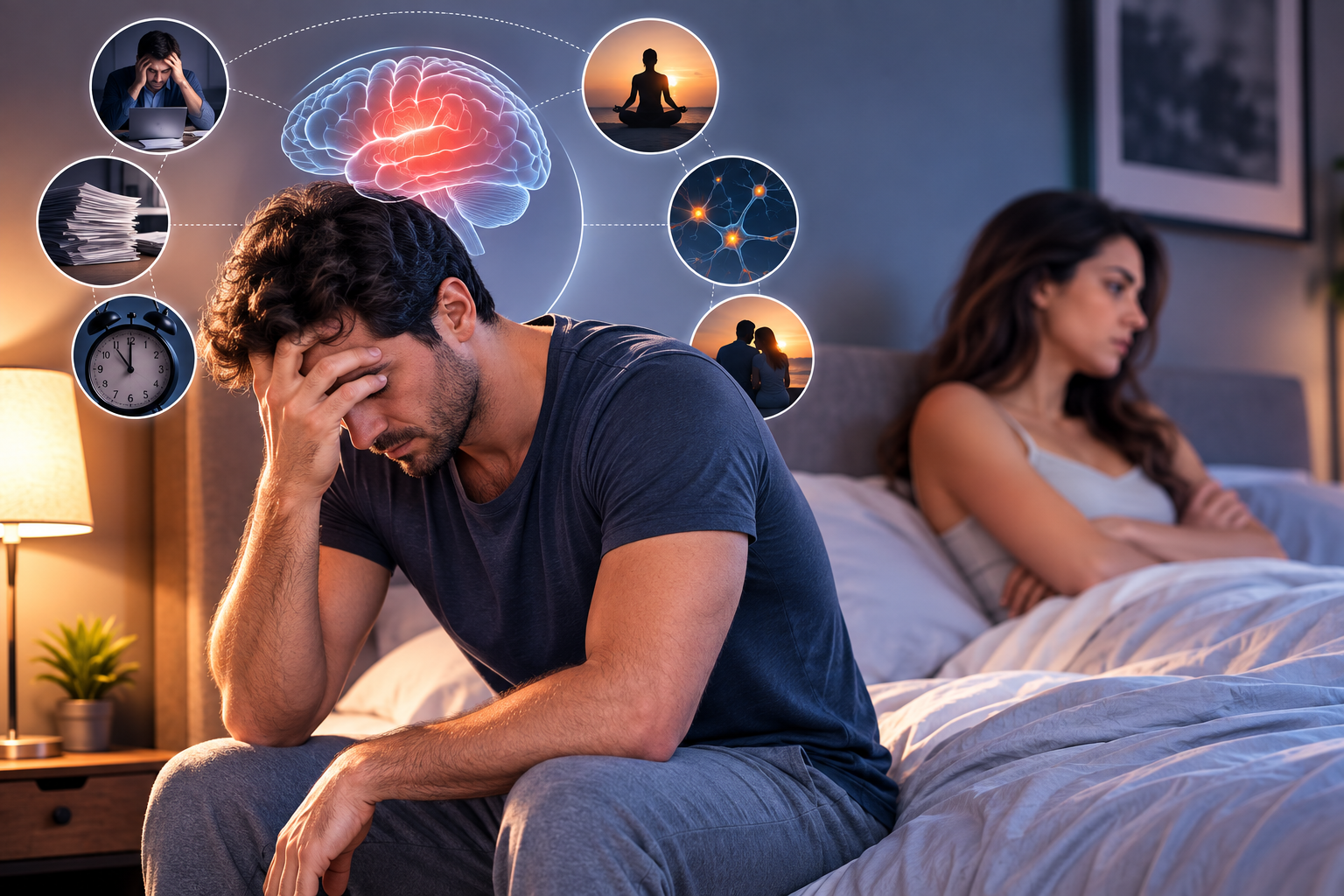
Low libido gets blamed on testosterone, age, or relationship problems more often than it deserves. In a lot of cases, especially in people who otherwise feel healthy, the real driver is something much less talked about: chronic, low-grade stress that never fully switches off.
If your bloodwork comes back normal and your relationship feels fine, but your desire for sex has quietly disappeared, stress is worth looking at before anything else.
What Counts as Low Libido, Really?
Low libido simply means a noticeable, ongoing drop in sexual desire compared to what feels normal for you. It is not about hitting some universal average. It is about a real change from your own baseline that lasts for weeks or months rather than a day or two.
The Stress Connection Nobody Talks About
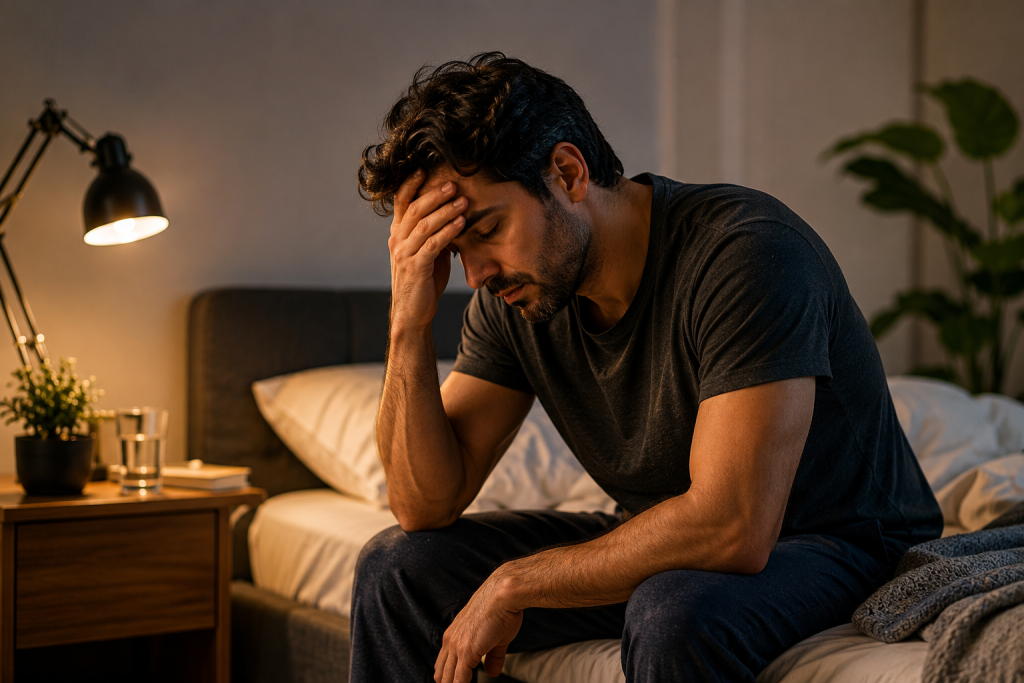
Sexual desire is, biologically speaking, a “safe and calm” response. It switches on when the body senses there is no immediate threat to deal with. Chronic stress does the opposite. It keeps the body in a constant state of low-level alert, which quietly tells the brain that now is not the time for anything unrelated to survival, including sex.
The Cortisol and Low Libido Link
Elevated cortisol, the body’s main stress hormone, directly suppresses testosterone production over time. This is not a one-off dip. It is a slow, cumulative effect, which is exactly why so many people do not connect months of work pressure or personal stress to a gradual decline in desire until it has already become a pattern.
Why Waiting It Out Rarely Works
Most people assume desire will bounce back once the busy period ends or life settles down. Sometimes it does. More often, the pattern quietly becomes the new normal, especially once avoidance and a bit of self-consciousness about the change get added on top of the original stress.
Getting an outside opinion early, rather than waiting to see if it resolves on its own, tends to shorten the whole process. A top sex therapist in India like Dhruv Bhola can usually tell fairly quickly whether stress, a hormonal issue, or something relational is the main driver, instead of you guessing indefinitely.
Common Signs Stress Is Behind Your Low Libido

● The drop in desire lines up with a specific stressful period at work or at home
● You still find people attractive but feel no real urge to act on it
● You feel touched out or mentally overloaded by the end of most days
● Sleep has also taken a hit over the same period
None of this points to anything being permanently wrong. It usually means the nervous system has been running on alert for too long and needs help winding back down.
What Actually Helps Rebuild Desire
Lowering the baseline stress load is the single biggest lever, since desire tends to return on its own once the nervous system is no longer stuck in alert mode.
Protecting sleep matters more than most people expect, since poor sleep alone can suppress both testosterone and general interest in sex.
Rebuilding connection deliberately, rather than waiting for desire to spontaneously return, often works better, since desire in long-term relationships frequently follows closeness rather than leading it.
Getting Your Drive Back the Right Way
Generic advice like “just relax” rarely fixes this on its own, because the right approach depends on what is actually driving the drop. For a practical, step by step guide on identifying the cause and rebuilding desire, this piece on how to get your libido back when you’re exhausted from work walks through it in detail.
FAQ
Can stress alone cause low libido?
Yes. Chronic stress raises cortisol, which suppresses testosterone and keeps the nervous system in a state that is not conducive to sexual desire, even without any other underlying health issue.
How long does low libido from stress usually last?
It varies, but it typically does not resolve until the underlying stress is actively addressed, since simply waiting for circumstances to change is often not enough on its own.
Is low libido from stress different from low libido from hormonal issues?
Yes. Stress-related low libido tends to fluctuate with pressure levels and improve with rest and support, while hormonal causes are usually more consistent and need a different kind of evaluation.
Should I see a doctor or a therapist first?
Either can be a reasonable starting point, but if bloodwork and general health check out normal, a therapist who understands the psychological and stress-related side of desire is often the faster path to an answer.
