
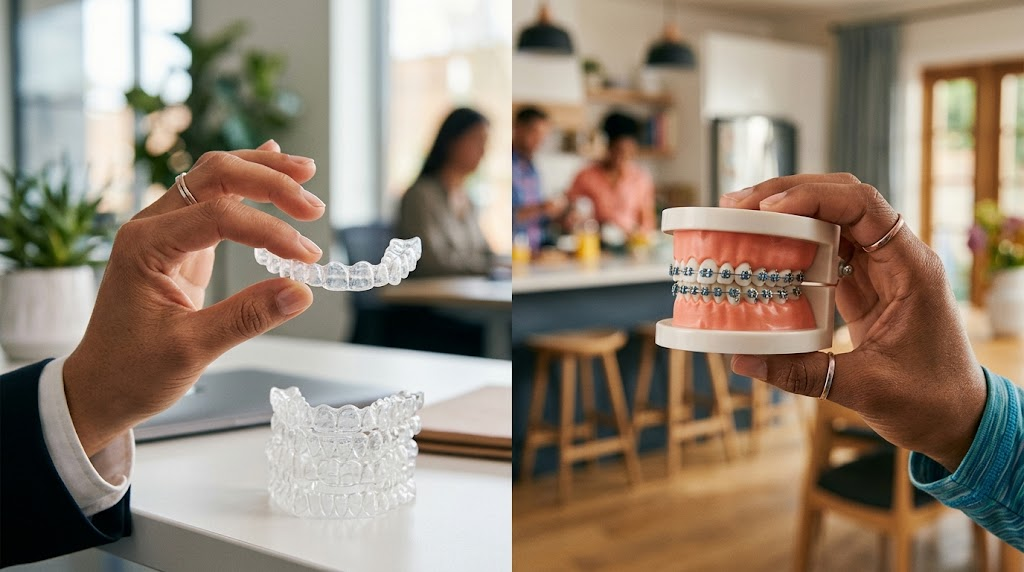
Straightening your teeth as an adult looks a lot different than it did a decade ago. Metal brackets used to be the only real option, but clear aligners have changed the conversation entirely. The question now isn’t just which one straightens teeth better, it’s which one fits into your actual daily life.
Why This Decision Matters More Than People Think
Choosing between Invisalign and traditional braces isn’t purely a cosmetic decision. It affects how you eat, how you speak in meetings, how often you’re back in the dental chair, and how long the whole process takes. Getting clear on the practical differences upfront saves a lot of second-guessing later.
Comparing the Two Options
| Factor | Invisalign | Traditional Braces |
| Visibility | Nearly invisible, clear plastic | Visible metal or ceramic brackets |
| Removability | Can be taken out for eating and cleaning | Fixed in place for the full treatment |
| Comfort | Smooth edges, less irritation | Occasional soreness from brackets and wires |
| Maintenance | Requires discipline to wear 20+ hours a day | No daily decision needed, always working |
| Diet restrictions | None, aligners come out to eat | Avoid sticky, hard or chewy foods |
| Treatment time | Often 6 to 18 months depending on case | Typically 18 to 24 months |
| Best suited for | Mild to moderate alignment issues | More complex bite and alignment issues |
| Appointment frequency | Check-ins every 6 to 8 weeks | Adjustments every 4 to 6 weeks |
What the Table Doesn’t Tell You
Numbers on a page only go so far. A few practical things are worth thinking through as well.
Invisalign relies heavily on self-discipline. If aligners aren’t worn for the recommended hours each day, treatment slows down or stalls entirely. This suits people with steady routines, but it’s less forgiving for anyone who tends to forget or lose things easily.
Traditional braces work regardless of willpower. Since they’re fixed, there’s no daily decision to make. This can actually be an advantage for teenagers or anyone who struggles with consistency.
More complex cases often need braces. Significant overcrowding, severe bite issues, or major jaw alignment problems are usually better suited to traditional braces, which offer more control over tooth movement.
Questions Worth Asking Before Deciding
- How visible do I want my treatment to be during the process?
- Am I disciplined enough to wear aligners for the recommended hours daily?
- Do I have dietary habits that would be hard to give up during treatment?
- How complex is my specific alignment issue?
- What does my budget allow, and does either option fit within it?
A proper consultation with a Bella Vista dentist is the best way to get a clear answer, since X-rays and a physical exam will show exactly what your teeth actually need, rather than relying on guesswork from online research alone.
Cost Considerations
Pricing varies depending on complexity, but Invisalign and traditional braces often land in a similar overall price range. The bigger cost differences tend to come from case complexity rather than which option is chosen. A straightforward case treated with either method will usually cost less than a complex case, regardless of technology used.
Life During Treatment
Something people don’t always consider is how each option fits into everyday routines.
- Invisalign users need to remember to bring their aligner case when eating out, since aligners come out for meals.
- Traditional braces require a bit more care when brushing, since food can get caught around brackets.
- Both options need a retainer afterward to maintain results, so the commitment doesn’t fully end once treatment finishes.
Frequently Asked Questions
Can adults get Invisalign at any age?
Yes, there’s no upper age limit for Invisalign. As long as gums and teeth are healthy enough to support movement, treatment can work well for adults in their thirties, forties, fifties and beyond.
Does Invisalign hurt more or less than traditional braces?
Both can cause mild discomfort, particularly in the first few days after a new aligner or adjustment. Invisalign is generally considered slightly more comfortable since there are no wires or brackets rubbing against the cheeks.
What happens if I lose an Invisalign aligner?
Most providers can supply a replacement fairly quickly, though it’s worth wearing the previous aligner or moving on to the next one in the meantime to avoid losing progress. Losing aligners regularly can add to overall treatment costs.
Can I switch from braces to Invisalign partway through treatment?
In some cases, yes, but it depends on how far along treatment already is and what the remaining alignment needs look like. This is worth discussing directly during a consultation rather than assuming it’s always possible.
Will I need a retainer after finishing either treatment?
Yes, retainers are necessary after both Invisalign and traditional braces. Teeth naturally shift over time, and a retainer helps hold the new position in place once active treatment ends.
