
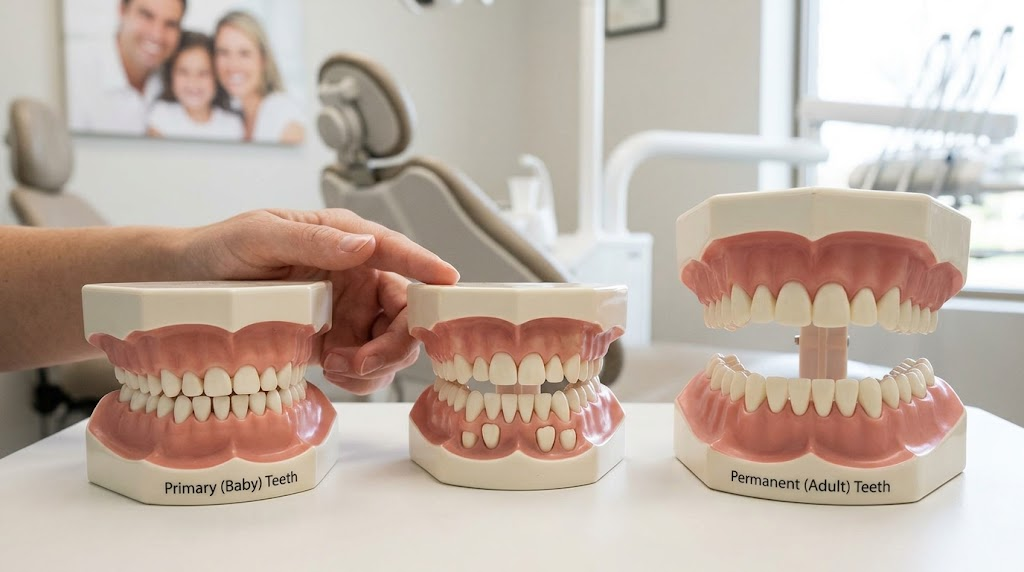
Parents often assume that because baby teeth eventually fall out, they don’t matter all that much. That assumption causes more problems than people realise. Baby teeth guide the growth of the jaw, hold space for adult teeth, and play a bigger role in speech development than most people expect.
Why Baby Teeth Deserve Just as Much Attention
A cavity in a baby tooth isn’t harmless just because the tooth is temporary. Untreated decay can lead to pain, infection, and even affect how the permanent tooth underneath develops. Baby teeth also act as placeholders. If one falls out too early, nearby teeth can shift into the gap, leaving less room for the adult tooth when it’s ready to come through.
Key Differences Between Baby and Adult Teeth
The table below breaks down the main differences parents should be aware of.
| Feature | Baby Teeth | Adult Teeth |
| Total number | 20 teeth | 32 teeth |
| Enamel thickness | Thinner, more prone to decay | Thicker and more durable |
| Timeline | Start appearing around 6 months | Begin replacing baby teeth around age 6 |
| Root structure | Shorter roots, dissolve naturally | Longer, permanent roots |
| Sensitivity to decay | Higher, decay spreads faster | Lower, but still vulnerable without care |
| Role | Space holders, speech, chewing | Long-term function and structure |
As the table shows, baby teeth are actually more vulnerable to decay than adult teeth, not less. This is largely because the enamel is thinner, meaning cavities can spread faster if left untreated.
Common Habits That Affect Both Sets of Teeth
A few everyday habits tend to cause the most trouble, regardless of a child’s age.
Bottle use at bedtime. Milk and juice left sitting on teeth overnight is one of the leading causes of early childhood decay.
Thumb sucking past the toddler years. This can gradually shift the position of teeth and affect jaw alignment.
Skipping the second brush of the day. Many kids brush in the morning but skip the evening clean, which is actually the more important one.
Too much fruit juice. Even natural sugars contribute to decay, particularly when sipped throughout the day rather than with meals.
When to Start Dental Visits
Most guidelines suggest a child’s first dental visit should happen around their first birthday, or within six months of their first tooth appearing. This might sound early, but it lets a dentist check for developmental issues before they become harder to manage.
For families in the area, a family focused dentist Chester Hill parents can visit with kids of any age makes this process far less stressful, since the same practice can look after the whole family as children grow and their needs change.
Making Dental Visits Easier for Kids
A few small steps can make a big difference in how children feel about the dentist.
- Use positive language at home rather than words like pain or hurt.
- Read a picture book about visiting the dentist beforehand.
- Book morning appointments when kids are less tired and more cooperative.
- Let them bring a comfort item, like a favourite toy, into the room.
Understanding the difference between baby and adult teeth helps parents make better decisions about everyday habits and when to seek professional advice. Getting into a rhythm of regular check-ups early on sets children up for a lifetime of healthier teeth, and takes a fair bit of guesswork out of parenting along the way.
Frequently Asked Questions
At what age do baby teeth usually fall out?
Most children start losing baby teeth around age six, starting with the lower front teeth, and the process generally continues until around age twelve or thirteen.
Does it matter if a baby tooth is decayed if it’s going to fall out anyway?
Yes. Decay can cause pain, infection, and disrupt the development of the adult tooth forming underneath it.
How often should children have dental check-ups?
Every six months is the standard recommendation, though a dentist may suggest more frequent visits if a child is prone to decay.
Is fluoride safe for young children?
Yes, in the correct amount. Dentists apply fluoride treatments specifically dosed for a child’s age, and it plays an important role in strengthening developing enamel.
What’s the best way to handle a knocked-out baby tooth?
Unlike adult teeth, baby teeth generally aren’t reinserted. Still, it’s worth having a dentist check the area to make sure the surrounding gum and adult tooth bud haven’t been affected.
