
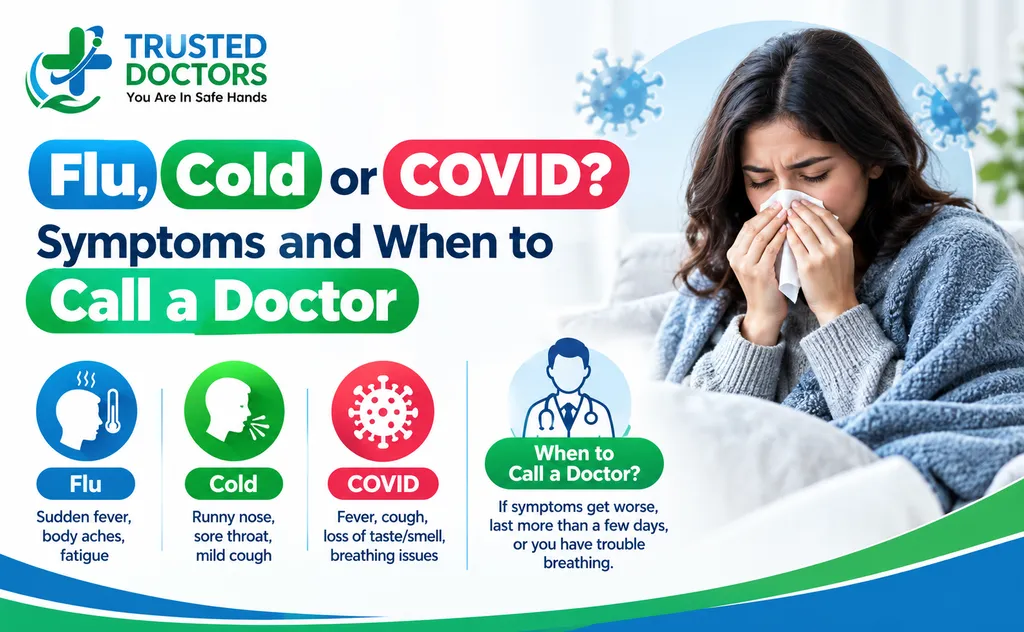
Flu, Cold or COVID? Symptoms and When to Call a Doctor
That first scratchy throat can leave you wondering what you are actually dealing with. In a city with year-round air conditioning, busy malls and constant international travel, colds, flu and COVID-19 all circulate easily, and their early symptoms look almost identical. Most cases can be managed safely at home, and when you need a medical opinion without leaving your bed, a doctor on call can examine you, arrange testing and start treatment exactly where you are. This guide explains how to tell the three illnesses apart, what you can do yourself, and the signs that mean it is time to speak to a doctor.
How to Tell a Cold, Flu and COVID-19 Apart
All three illnesses are caused by respiratory viruses, which is why they share so many symptoms. The differences lie mainly in how quickly symptoms arrive, how severe they feel and which ones dominate. Because the overlap is real, symptoms alone cannot identify the virus; a rapid or PCR test is the only reliable way to know. The table below is a practical starting point rather than a diagnosis.
| Feature | Common cold | Influenza (flu) | COVID-19 |
| Onset | Gradual over a few days | Sudden, often within hours | Gradual or sudden |
| Fever | Rare or mild | Common, often high | Common, but not always |
| Body aches | Slight | Common and intense | Common |
| Tiredness | Mild | Marked and draining | Common, can linger |
| Blocked or runny nose | Very common | Sometimes | Sometimes |
| Sneezing | Common | Uncommon | Uncommon |
| Sore throat | Common | Sometimes | Common |
| Cough | Mild to moderate | Dry, can be severe | Dry or productive |
| Loss of taste or smell | Rare | Rare | Can occur |
| Breathlessness | Uncommon | Uncommon | Can occur in moderate to severe cases |
The Common Cold: Slow and Mild
A cold tends to creep up on you. You may notice a tickle in the throat first, followed by sneezing, a runny or blocked nose and a mild cough. Fever is unusual in adults, and most people stay on their feet, if a little uncomfortable. Symptoms typically improve within seven to ten days.
Influenza: Sudden and Draining
Flu hits fast. Within hours you can go from feeling fine to having a high temperature, chills, a pounding headache and muscle aches that make getting out of bed a struggle. A dry cough and deep exhaustion are typical, and tiredness can hang around for a couple of weeks after the fever settles. Flu also carries a higher risk of complications such as pneumonia, particularly in older adults and people with long-term conditions.
COVID-19: The Unpredictable One
COVID-19 can look like a cold, like the flu or like neither. Some people have only a sore throat and congestion, while others develop fever, cough, fatigue and, in some cases, a loss of taste or smell. Symptoms vary between individuals and between virus variants, so testing is the only way to be certain. It also has practical value: a result tells you whether to isolate, who needs to be informed and whether you may qualify for specific treatment.
Managing Symptoms at Home Safely
Most healthy adults recover from a cold, flu or mild COVID-19 with rest and good self-care. Fever, sweating and a poor appetite all drain the body of fluids, and dehydration is one of the most common reasons a simple viral illness becomes a bigger problem. If drinking enough is hard because of nausea, vomiting or a very sore throat, a doctor may recommend an iv drip at home to restore fluids and electrolytes without a trip to hospital. That is a clinical decision made after an assessment, not a routine add-on.
Simple Steps That Help
- Rest as much as possible and stay home until your fever has settled and you feel clearly better, following the latest isolation guidance from the health authorities.
- Sip water, oral rehydration solution or clear soups throughout the day, and aim for pale-coloured urine.
- Take paracetamol as directed for fever and aches, and check the labels of combination cold remedies so you do not double up on the same ingredient.
- Use saline nasal spray and warm salt-water gargles for congestion and a sore throat. Honey can soothe a cough in adults and in children over one year old.
- Wear a mask around other people, wash your hands often and keep the room ventilated.
Keep a simple note of your temperature and symptoms every few hours. If you later need to speak to a doctor, that record helps them judge how the illness is progressing.
Common Mistakes to Avoid
Antibiotics do not work against viruses, so leftover tablets will not speed up recovery and can contribute to antibiotic resistance. Avoid giving aspirin to children and teenagers with viral illnesses, and do not combine several cold and flu products without reading the labels. If you have a chronic condition or take regular medication, check with a doctor before starting anything new.
When to Call a Doctor, and When to Call 998
Call a Doctor the Same Day If
Arrange a medical review promptly if you notice any of the following:
- A fever above 39°C, or a fever that lasts more than three days
- Symptoms that improve and then suddenly get worse
- Repeated vomiting or being unable to keep fluids down
- Very little urine, dizziness when standing or extreme weakness
- A cough that is getting worse or breathlessness on light activity
- A positive flu or COVID-19 test alongside any of the risk factors below
Higher-Risk Groups Should Not Wait
Adults over 65, pregnant women, young children, and people with asthma, diabetes, heart, kidney or lung disease or a weakened immune system are more likely to develop complications. For these patients, early assessment matters because antiviral medicines for flu work best when started within the first two days of illness, and some COVID-19 treatments are also time-sensitive. A doctor can judge whether treatment is appropriate, and you should never start it on your own.
Emergency Signs: Call 998 Immediately
Some symptoms are not suitable for a home visit and need emergency care. Call 998 for an ambulance if you or a family member has:
- Difficulty breathing or severe breathlessness at rest
- Chest pain or pressure
- Blue or grey lips or face
- Confusion, unusual drowsiness or difficulty waking
- A seizure or fainting episode
- A fever in a baby younger than three months
How a Home Doctor Visit Works in Dubai
When symptoms are significant but not life-threatening, a home visit spares you the journey while you are unwell and keeps you from exposing others in a waiting room. Many people begin by typing a doctor on call near me into a search bar, and the most important checks are that the clinician is DHA-licensed and properly equipped. When comparing doctor on call services, ask about response times, what the doctor carries and whether tests and medication can be arranged during the same visit. Demand for a doctor on call Dubai families can book quickly tends to peak between October and February, when flu season overlaps with the tourist season.
What the Doctor Does at Your Door
The doctor reviews your symptoms and medical history, checks your temperature, heart rate, blood pressure and oxygen saturation, and examines your throat, chest and ears. Where needed, they can arrange swabs for flu and COVID-19 or blood tests, prescribe medication and tell you plainly if hospital care is the safer option. You also receive clear advice on isolation, follow-up and the warning signs to watch for. Trusted Doctors supports this with lab tests and IV therapy at home when the doctor advises them.
Care Across Dubai
Trusted Doctors offers doctor on call services in Dubai for homes, hotels and workplaces, day and night. Whether you need a doctor on call Palm Jumeirah visit for a child with a high temperature or a doctor on call Dubai Marina visit after a night of fever and chills, you can request a doctor directly and describe your symptoms so the right clinician attends.
Common Questions
Can a home doctor test for flu and COVID-19? Yes, where the doctor considers it necessary, swab tests can be arranged so that you know what you are dealing with and can act on the result.
How long should I wait before seeking help? If symptoms are mild, monitor them for a day or two. If they are severe, worsening or you are in a higher-risk group, call the same day rather than waiting.
Final Thoughts
Colds, flu and COVID-19 are easy to confuse, but the way your symptoms start, how severe they are and who is affected can guide your next step. Rest, fluids and careful monitoring are enough for many people, while high-risk patients and worsening symptoms deserve prompt medical attention. When in doubt, speak to a doctor early; a short assessment can prevent a minor illness from becoming a serious one.
