
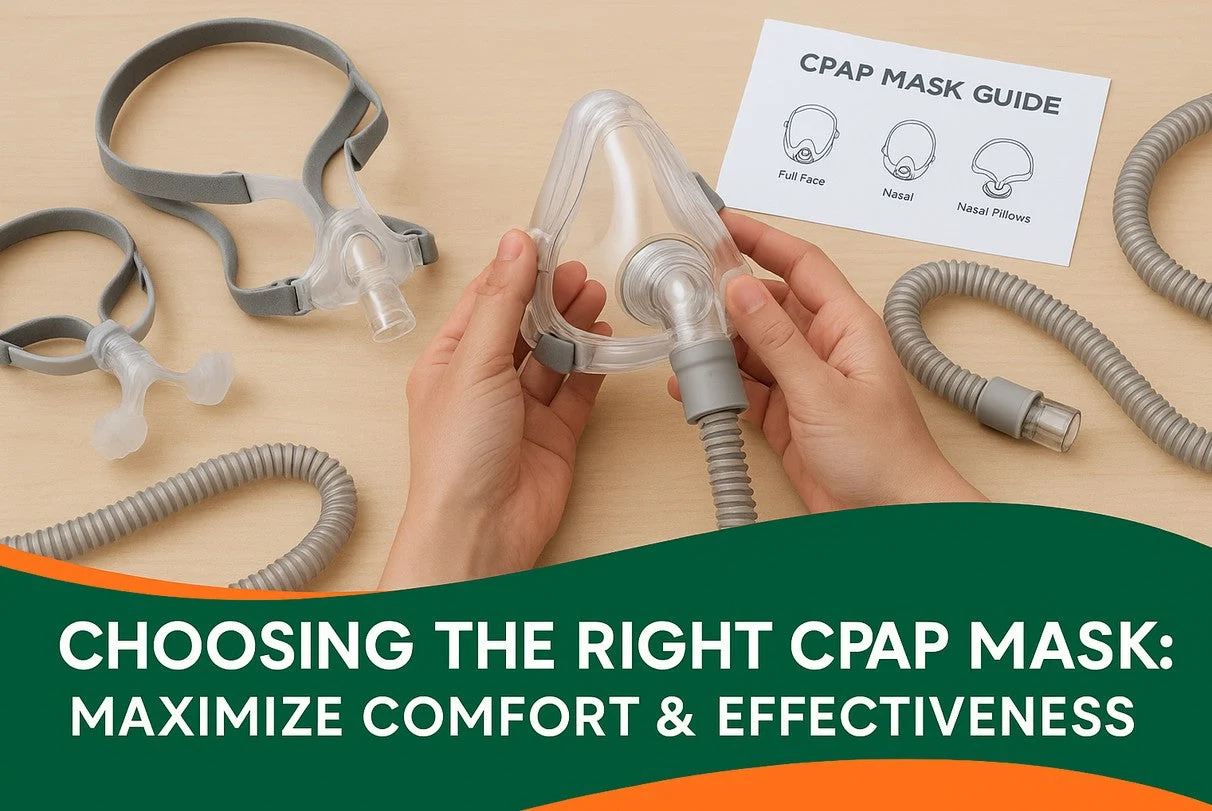
People with sleep apnea might have problems getting a comfortable night sleep. CPAP therapy most frequently finds application in assisting the management of obstructive sleep apnea with constant flow of the pressurized air into a mask wearing. The mask itself can be a determining factor in the way the treatment feels and works, though the airflow is provided by the CPAP machine.
There can be time to make a decision between various CPAP masks. The correct choice is determined by your sleeping patterns, breathing, your comfort, and also your type of CPAP machine. A mask, which fits very well with one individual, might not fit with another.
Understanding the Different Types of CPAP Masks
The CPAP masks have various designs that are aimed at meeting various needs. Learning these choices can then assist you in engaging your healthcare provider or CPAP supplier in a more valuable conversation.
Nose coverings are used on the nose that delivers pressurized air into the nose. People who breathe primarily nose when asleep are often involved. The design leaves a portion of the face exposed as compared to a full-face mask, which some users might find more comfortable to extend to their face.
Small cushions at the end of the nostrils are used as nasal pillow masks. There are other designs that show minimum facial contact, and they can be used by those who want to have a lightweight design. They are however not vulnerable to all people especially those who are not comfortable with air passing through the nostrils.
The full-face CPAP masks are over the mouth and nose. They can fit individuals who commonly inhale their sleep using their mouth or those unable to inhale via their noses. The proper fit is significant as the air leakages around the mask may interrupt sleep and decrease the comfort.
No one mask style fits everyone. It may be easier to select an item within the realm of personal preference and professional fitting advice.
What Should You Consider Before Choosing a Mask?
The first consideration when comparing CPAP masks should be their fit. An overly tight mask can produce pressure marks or produce skin irritation whereas there is a possibility that an oversized mask can allow air to escape. The mask must also be snug in the straps and there should not be excess pressure.
Sleeping position is a factor, too. Individuals who sleep on their sides might want a mask that is made in a small design that does not crunch against the pillow. Individuals that change positions frequently during sleep might require a design that maintains the same stability.
Keeping Your CPAP Mask Clean and Comfortable
Cleaning is a necessary component of CPAP. Basic facial oils, moisture, and dust might accumulate on mask cushions. Care The equipment should be maintained in proper condition and as per the manufacturer.
Check cushion, headgear and connectors (regularly) to indicate wear. Damaged or worn parts may affect the fit and cause air leaks. The timing of replacement is based on the part, condition and recommendable requirements by the manufacturer.
Waking up with a dry mouth, sore skin, or air blowing in your eyes, you should not presume that all these issues are inevitable. The mask might require modification, a varying size or a new design. Call your CPAP company in case of discomfort.
Making CPAP Therapy Easier to Maintain
The ideal CPAP mask is the one which fits, is comfortable and helps you to use your treatment regularly as prescribed by a doctor. Whether you are new to CPAP therapy, it might require a couple of tries to find the correct option to go with.
When purchasing, remember to think about your breathing patterns, sleeping posture, and overall facial comfort and compatibility with machines. Request assistance to have a qualified CPAP provider to fit you and discuss your issue with your healthcare professional in case you still have problems.
CPAP therapy is potentially a manageable part of your nocturnal regime provided there is an appropriate mask and you continue with its routine maintenance. The goal is to get a compromising arrangement that can facilitate the treatment process and still enable you to sleep as easily as possible.
