
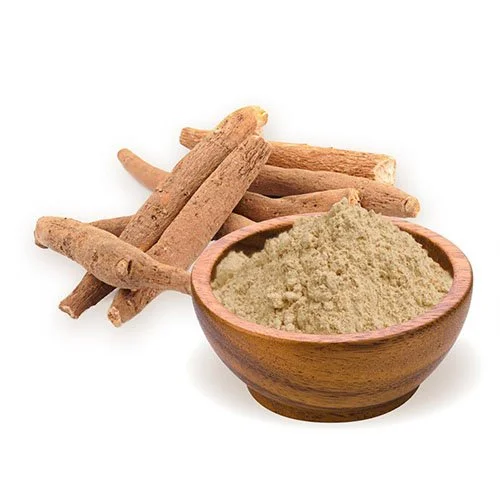
Open a bag of fine brown powder, and nothing on its surface tells you whether it came from a root, a leaf or simply ground-up plant material. The real answer sits in a family of molecules most buyers never see by name. If you source Ashwagandha Extract, those molecules are the withanolides. How a supplier counts them decides what you are actually paying for.
Suppliers like to quote a single percentage. It looks clean on a quotation and makes comparison feel easy. Yet two lots of Ashwagandha Extract can share the same headline figure while containing different compounds, measured by different methods, and sourced from different plant parts. What does that number really cover?
What Withanolides Are and Why Ashwagandha Extract Gets Judged on Them
Withanolides are modified steroidal molecules built on an ergostane skeleton, and they take their name from the plant itself. Researchers have identified more than 40 of them so far.
Let’s break it down. A “total withanolides” figure groups many of these compounds together. A single-compound figure tells you about one molecule only. Neither is wrong, but they answer very different questions.
Perhaps that sounds like a technicality. It stops being one the moment your label claim, your stability file, or your customer’s audit depends on it.
The Six Withanolides Labs Commonly Measure in Ashwagandha Root
Waters Corporation lists six compounds typically extracted from the root:
- Withaferin A
- Withanolide A
- Withanolide B
- 12-deoxywithastramonolide
- Withanoside A
- Withanoside B
Its application note applied the AOAC 2015.17 method to root extracts and supplements on an HPLC system. The results were telling. Commercial supplements showed only some of these compounds, often at much lower levels than a USP root reference sample.
A clear marker list gives you something concrete to compare across suppliers. A vague “withanolides” claim does not.
Root and Leaf Carry Very Different Withanolide Profiles
Here is why the plant part matters so much. The traditional Indian system of medicine emphasises the root. Leaves, though, tend to hold far more withaferin A. One study measured it at 1.13% in leaf and 0.044% in root.
That gap matters for buyers. A batch made partly from leaf could show a strong withaferin A reading while chemically looking nothing like a root extract. If your formula or label says root, you need evidence that the lot matches.
Some formulators might want leaf material for their own reasons, and that is fine as long as everyone says so openly. The trouble starts only when nobody mentions it.
When the Label Says 5% and the Lab Finds 0.15%
A 2024 study gives the clearest warning so far. Researchers tested 10 supplements sold as ashwagandha root extracts. The labels claimed a median of 5% withanolides.
HPLC analysis found roughly 0.15% in every product, consistent with plain ashwagandha root. None of the 10 met the manufacturer’s claim. Microscopy turned up plant fragments and starch granules that matched the root in size and shape.
The likely explanation is powdered root sold as concentrated extract. Those products reached shelves with paperwork that presumably looked acceptable. Would your incoming checks have caught the same gap? Perhaps, perhaps not, and that uncertainty alone is reason enough to look closer.
How the Test Method Shapes the Withanolide Number
The method behind a figure changes what it means. Some supplier spec sheets still list total withanolides by gravimetry, with identity confirmed only by TLC.
A gravimetric assay weighs a separated fraction of the extract instead of measuring named molecules one by one. HPLC separates and quantifies individual compounds, which lets you see exactly which withanolides are present and in what amounts.
Neither method is automatically dishonest. A gravimetric 2.5% and an HPLC 2.5% describe different things, and a buyer who treats them as equal may overpay for one.
What to Ask Before You Approve an Ashwagandha Extract Lot
So where does all this leave a buyer? A short list covers most of the ground:
- The plant part, stated clearly on the certificate of analysis as root, leaf or a blend.
- The withanolide figure along with its test method, and which compounds the lab counted.
- The reference standard used for quantification
- A microscopy check for starch granules or unextracted root fragments when the material is sold as a concentrated extract.
- Heavy metal and microbial results for the same lot
A supplier who answers all five without hesitation is usually worth a second conversation. One who answers two and changes the subject probably is not.
Sourcing Ashwagandha from a Manufacturer That Tests In-House
ShriNanda Herbs, based in Uttarakhand, lists Ashwagandha Extract among its nutraceutical products and Ashwagandha Powder, ground from the root, in its conventional range. The company runs an in-house testing facility that checks its extracts for purity and potency.
Share your marker, method and plant-part requirements with the team to discuss specifications and the documentation your product needs.
