

Struggling with drug addiction or mental health disorders can feel overwhelming, isolating, and deeply personal. Many individuals attempt to cope on their own, believing that willpower alone is enough to overcome substance use or emotional distress. However, addiction and mental health challenges are complex conditions that affect the mind, body, and behavior. This is where therapy plays a vital role in long-term healing and recovery.
Therapy provides structured support, professional guidance, and evidence-based tools that help individuals understand the root causes of their struggles. Rather than focusing only on symptoms, effective therapy addresses emotional patterns, thought processes, and life experiences that contribute to addiction or mental health concerns.
Why Therapy Is Essential in Addiction Recovery

Addiction is not simply a bad habit or lack of discipline. It is a chronic condition that alters brain chemistry, decision-making, and emotional regulation. Without proper therapeutic intervention, relapse becomes more likely, even after periods of sobriety.
Engaging in professional addiction therapy allows individuals to receive structured care that goes beyond surface-level solutions. Therapy helps individuals:
- Identify emotional and psychological triggers
- Develop healthier coping strategies
- Rebuild self-esteem and personal accountability
- Address trauma, anxiety, or depression linked to substance use
- Create sustainable routines that support recovery
Through consistent therapeutic support, individuals gain insight into their behaviors and learn how to respond to stress and cravings in healthier ways.
The Role of Therapy in Mental Health Treatment
Mental health disorders such as anxiety, depression, PTSD, and mood disorders often coexist with addiction. In many cases, substance use begins as a way to self-medicate emotional pain. Therapy creates a safe space where individuals can openly explore these challenges without judgment.
Professional therapy supports mental wellness by:
- Improving emotional awareness and communication
- Helping individuals regulate intense emotions
- Challenging negative thought patterns
- Strengthening resilience during difficult life transitions
When mental health is properly addressed, individuals are better equipped to maintain sobriety and improve overall quality of life.
Common Therapy Techniques Used in Addiction and Mental Health Care
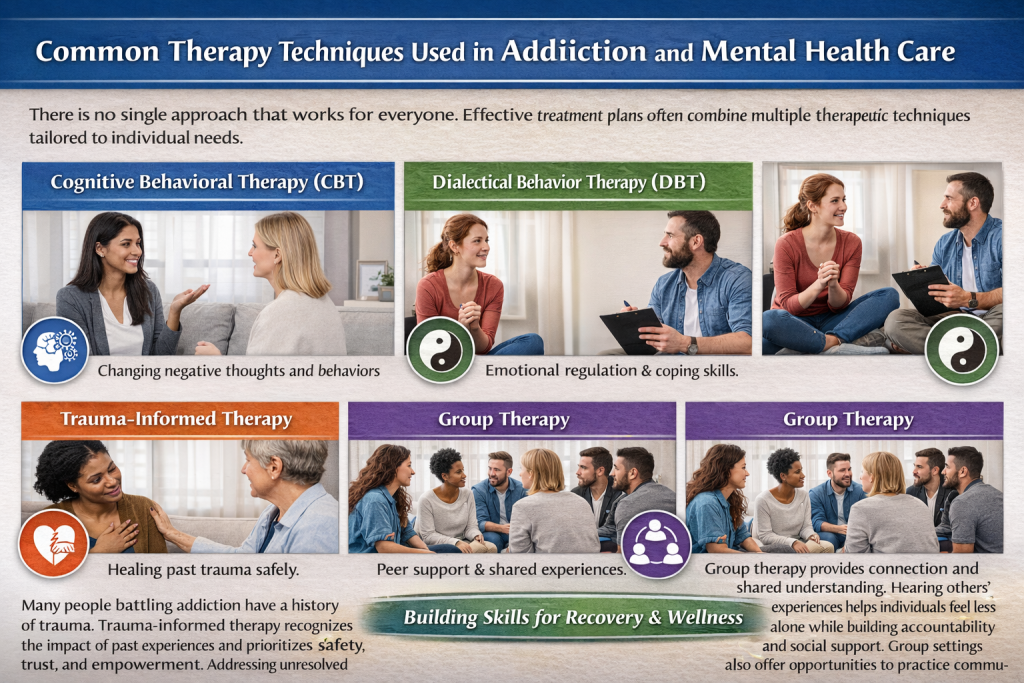
There is no single approach that works for everyone. Effective treatment plans often combine multiple therapeutic techniques tailored to individual needs.
Cognitive Behavioral Therapy (CBT)
CBT is one of the most widely used approaches in addiction and mental health treatment. It focuses on identifying harmful thought patterns and replacing them with healthier, more constructive ones. By understanding how thoughts influence behavior, individuals learn practical skills to manage cravings, stress, and emotional challenges.
Dialectical Behavior Therapy (DBT)
DBT is especially helpful for individuals who experience intense emotions or struggle with impulse control. This approach emphasizes emotional regulation, distress tolerance, and interpersonal effectiveness, making it valuable for both addiction recovery and mental health stability.
Trauma-Informed Therapy
Many people battling addiction have a history of trauma. Trauma-informed therapy recognizes the impact of past experiences and prioritizes safety, trust, and empowerment. Addressing unresolved trauma can significantly reduce the need for substances as a coping mechanism.
Group Therapy
Group therapy provides connection and shared understanding. Hearing others’ experiences helps individuals feel less alone while building accountability and social support. Group settings also offer opportunities to practice communication and receive feedback in a supportive environment.
Mindfulness as a Powerful Tool in Healing
Mindfulness is increasingly recognized as a valuable component of addiction therapy and mental health care. It encourages individuals to remain present, aware, and non-reactive to thoughts and emotions.
Practicing mindfulness can help by:
- Reducing stress and emotional overwhelm
- Increasing awareness of cravings without acting on them
- Improving focus and emotional balance
- Encouraging self-compassion and patience
Simple practices such as deep breathing, meditation, and mindful reflection can be integrated into daily routines, reinforcing progress made during therapy sessions.
The Long-Term Benefits of Professional Support
Seeking therapy is not a sign of weakness—it is an investment in long-term health and stability. Professional support provides structure and accountability, especially during vulnerable periods of recovery. Over time, therapy helps individuals build a stronger sense of identity, purpose, and emotional resilience.
Those who engage in structured therapy often experience improved relationships, better stress management, and a renewed sense of control over their lives.
Conclusion
Addiction and mental health challenges do not develop overnight, and recovery is rarely a linear process. Therapy provides the tools, understanding, and support necessary to navigate this journey with clarity and confidence. By combining evidence-based therapeutic techniques with mindfulness practices, individuals can achieve deeper healing that extends beyond sobriety.
With the right guidance, recovery becomes not just about avoiding substances, but about building a healthier, more balanced life grounded in awareness, resilience, and self-respect.
For those seeking structured and evidence-based support, treatment centers such as Revolution Recovery offer programs designed to support long-term mental health and addiction recovery.
