
Across Canadian farmyards and building lots, the short summer working season pushes operators to finish more with fewer machine changes. A loader that can dig, then grab, then backfill without swapping attachments earns its keep on a crowded July schedule.
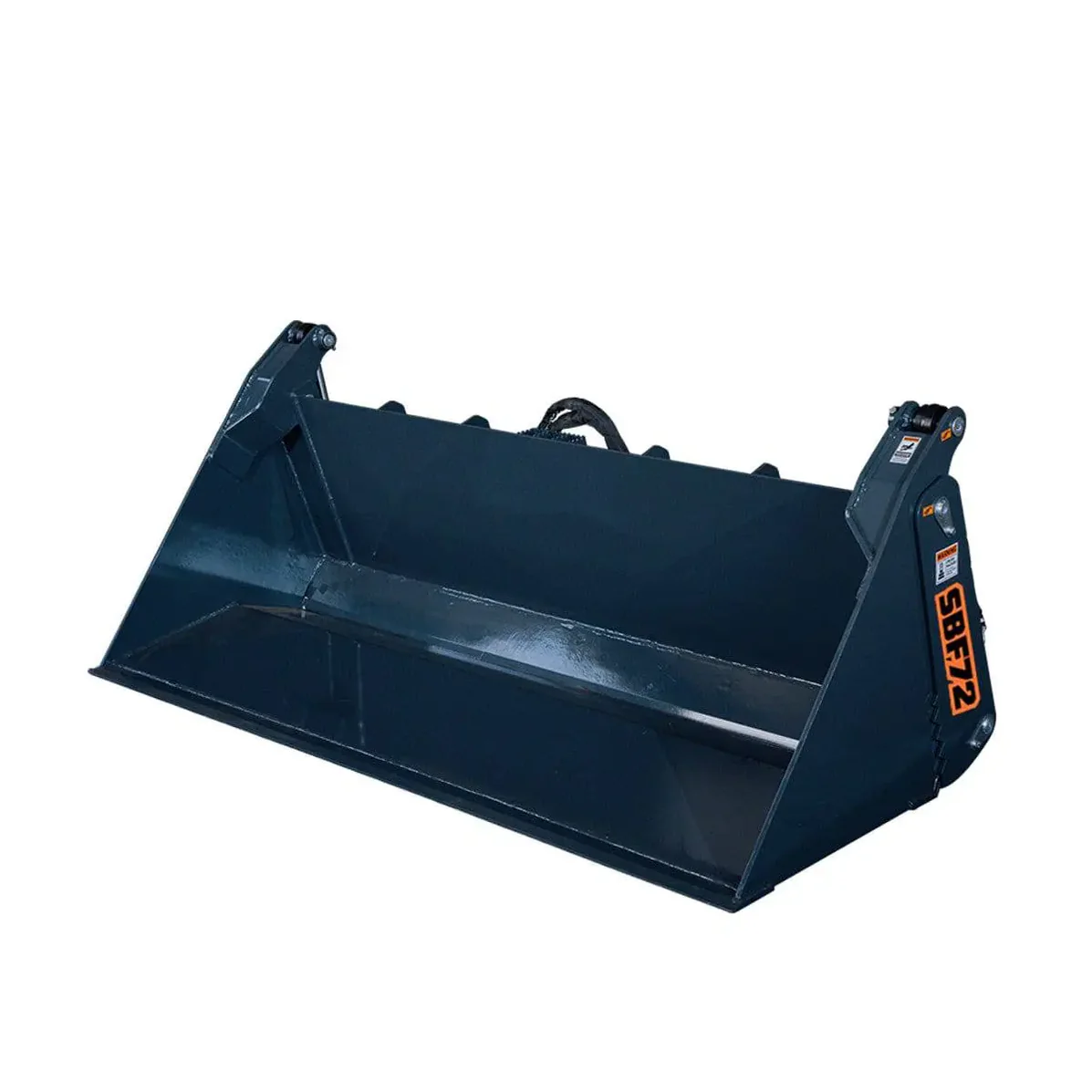
That flexibility is the whole promise of the four-in-one bucket, a loader tool whose front half hinges open so a single frame can take on jobs a plain bucket never could.
A clamshell hinge splits the shell into two working halves
A standard loader bucket is one rigid shell. This attachment cuts that shell across the middle and sets a hinge there, so the front lip swings away from the back like a clam opening.
With the halves closed, the profile matches an ordinary bucket and scoops the same way. Open the front, and the two edges become a mouth that grips material between them rather than only carrying it in the bowl.
The strength of the four-in-one bucket is that neither shape is bolted on afterward. The scooping bowl and the gripping jaw are the same steel, so opening the hinge simply reveals a second tool that was there the whole time.
Hydraulic cylinders set how hard the jaw can close
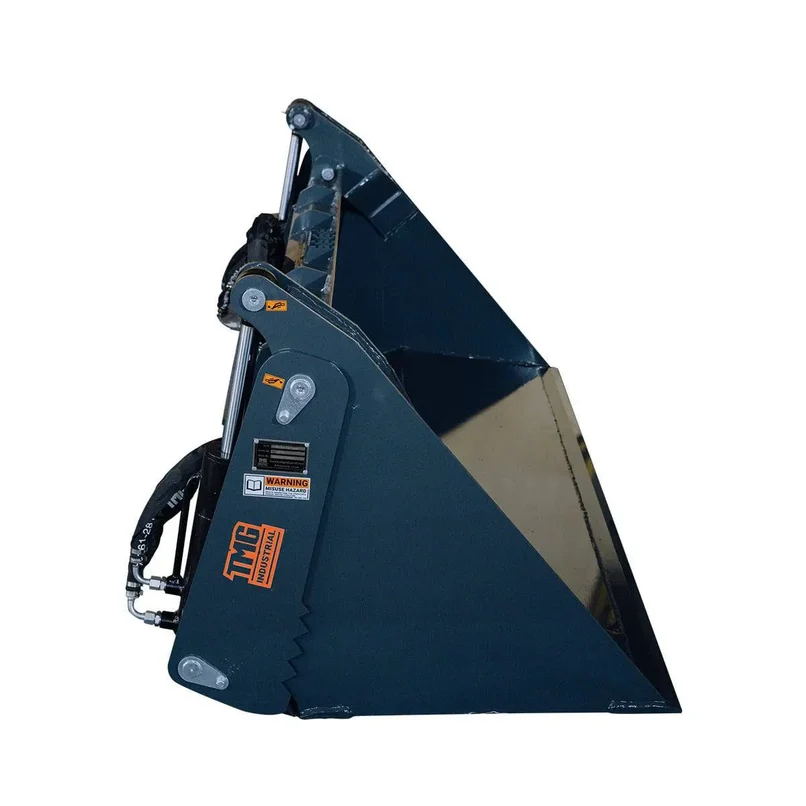
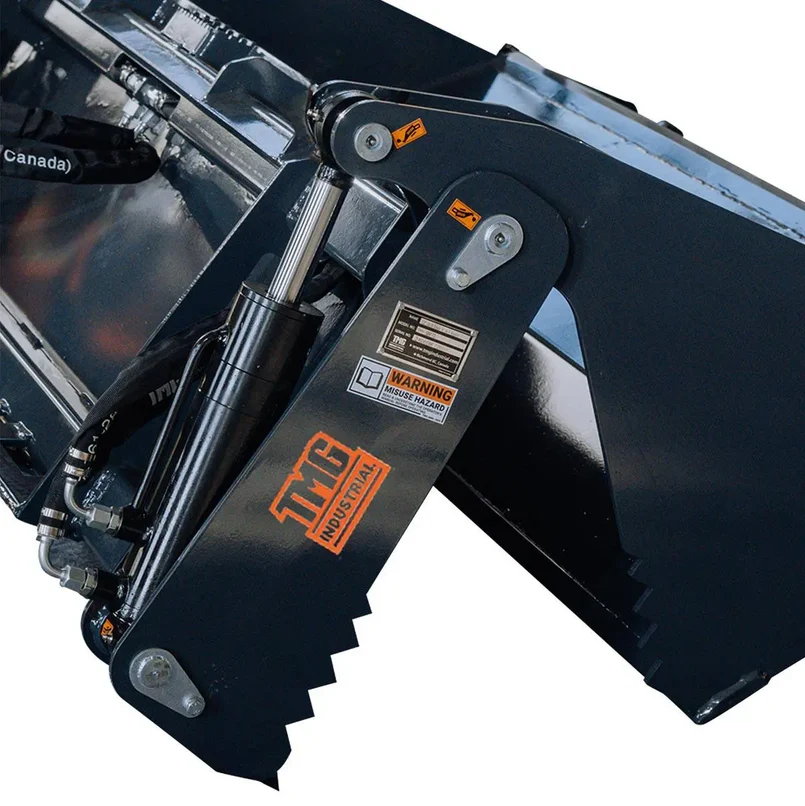
The hinge is driven by hydraulic cylinders fed from the loader, and their pressure decides the clamping force at the lip. A brush pile or a loose boulder is held only as firmly as the cylinders can squeeze.
Because the clamp is powered rather than mechanical, the operator modulates grip from the cab. A light hold keeps a landscape timber intact, while full pressure pins an awkward root wad for the trip to the pile.
One frame that covers four separate jobs
The reason a four-in-one bucket replaces several attachments is that each of its motions maps to a familiar task. Nothing here is a compromise shape; every function uses geometry already built into the frame.
- Bucket: scoops and carries soil or gravel
- Clamp: grips brush, rocks, and debris
- Dozer: pushes fill with the closed front
- Grader: back-drags to level loose ground
Matching the mode to the summer task
Choosing the right motion for the material is what keeps a single pass productive. The same frame that loads a trailer at dawn can grade a lane by noon.
- Loose gravel: closed bucket for clean scooping
- Storm brush: open jaw for firm clamping
- Rough backfill: front blade for pushing fill
Reading the pile before each pass is what a four-in-one bucket rewards, since the wrong motion wastes fuel and daylight. An operator soon learns to see soil as a scoop, brush as a clamp, loose spoil as a blade, and a rough bed as something to grade flat.
A contractor resetting a washed-out driveway might scoop new gravel, clamp out the stray fieldstone, then back-drag the surface smooth, all without leaving the seat or changing tools. Each of those moves would otherwise mean stopping to hang a different attachment.
Seen this way, the attachment is less a bucket than a hinged hand that opens and closes on command. Its value is not any single motion but the speed of moving between them while the loader keeps running.
For a Canadian operator stretching a short summer season, a four-in-one bucket turns four trips to the attachment rack into one tool that stays on the loader all day.
