
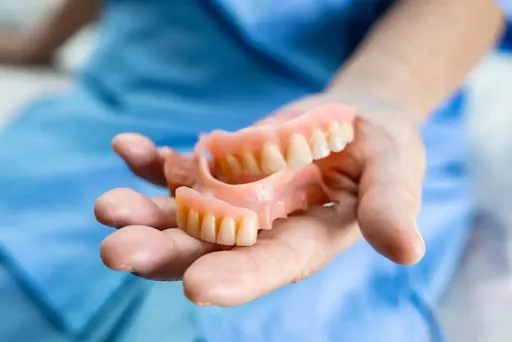
If you have been looking into getting dentures on the Gold Coast and come across the terms dental prosthetist and dental prosthesis, you are not alone in finding them confusing. They sound similar, they are closely connected, and yet they refer to entirely different things. Understanding the distinction helps you make more informed decisions about your dental care and know exactly who to see and what to expect when you do.
Whether you are exploring your options at a denture clinic on the Gold Coast, need an emergency denture repair, or simply want to understand the process before booking a consultation, this guide explains both terms clearly so you can move forward with confidence.
Summary: A dental prosthetist is a qualified, nationally registered dental professional who designs, constructs, and fits removable dental prostheses. A dental prosthesis is the actual device they create, whether a full denture, partial denture, or other oral appliances. If you need a removable dental prosthesis, a dental prosthetist will assess your needs, recommend the most suitable treatment and guide you through the fitting process.
What Is a Dental Prosthetist?
A dental prosthetist is a registered dental professional who has completed an accredited qualification in dental prosthetics and is registered with the Australian Health Practitioner Regulation Agency (AHPRA). Many are also members of the Australian Dental Prosthetists Association, which upholds professional standards across the field.
In Australia, dental prosthetists are independently regulated and qualified to provide a broad range of services directly to patients without a referral from a dentist. Their scope of practice includes:
- Assessment, diagnosis, and treatment planning for patients with missing teeth.
- Design and construction of full and partial dentures, including implant-supported solutions.
- Denture reline services to restore the fit of existing dentures as the mouth changes over time.
- Emergency denture repair for broken, cracked, or damaged appliances.
- Custom oral appliances for conditions such as snoring and sleep apnea.
Dental prosthetists often collaborate with implant specialists, dental technicians, and other members of the dental profession to deliver the best possible outcomes for each patient. The key distinction from a general dentist is that a prosthetist focuses specifically on removable dental Prosthesis rather than the full scope of general dentistry.
What Is a Dental Prosthesis?
A dental prosthesis is an artificial device designed to replace missing natural teeth and the surrounding oral structures. It is the physical result of a dental prosthetist’s assessment and clinical work.
While dentures are the most commonly recognised form of dental prosthesis, they are not the only type. Dental prostheses fall into two broad categories:
Removable prostheses are appliances the patient can take in and out independently. These include:
- Complete dentures for patients who have lost all of their natural teeth in one or both arches
- Partial dentures for patients who still retain some of their natural teeth
- Valplast dentures, a flexible thermoplastic alternative to traditional acrylic partial dentures
- Implant-retained dentures that clip onto implants for improved stability and comfort
Fixed prostheses are permanently attached to existing teeth or implants and include dental crowns, bridges, and fixed implant restorations. These are typically constructed and fitted by a specialist dentist or prosthodontist rather than a dental prosthetist.
The right type of prosthesis depends on how many teeth are missing, their location, your overall oral health, and your lifestyle. A qualified dental prosthetist will assess all of these factors during your consultation and recommend the most appropriate solution.
Dental Prosthetist vs Dental Prosthesis Explained
The simplest way to understand the difference is that a dental prosthetist is the qualified professional, while dental Prosthesis is the field of oral healthcare they practise in. This area of dentistry focuses on designing, fitting, and maintaining removable dental appliances that restore oral function, comfort, and appearance.
If you’re wondering what a dental prosthetist does, they assess patients, recommend suitable treatment options, and design custom-made dentures and other removable oral appliances to meet individual needs.
Which One Do You Need?
If you need a removable dental prosthesis, such as complete, partial or Valplast denture, your first step is to see a qualified dental prosthetist. They will assess your oral health, discuss your goals and lifestyle, and recommend the most suitable solution for your needs. From there, they manage the entire process, from design and fitting to ongoing adjustments, relines and repairs.
If you need a fixed restoration, such as a dental crown, dental bridge or implant-supported restoration, your treating dentist or prosthodontist will generally manage that treatment.
Book a Free Consultation at South Coast Denture Clinic
Whether you’re considering dentures for the first time, need a denture reline, or require an emergency repair, speaking with a qualified dental prosthetist is the best place to start. At South Coast Denture Clinic, we provide personalised advice and tailored denture solutions to help restore your comfort, confidence, and oral function.
Book your free initial consultation today to discuss your options with an experienced prosthetist and receive honest, professional guidance before making any treatment decisions.
Frequently Asked Questions
What is the difference between a dental prosthetist and dental prosthesis?
A dental prosthetist is the qualified oral health professional who designs, fits and maintains removable dental appliances. A dental prosthesis is the appliance itself, such as a complete or partial denture, created to replace missing teeth.
Can I see a dental prosthetist without a referral?
Yes. In Australia, you can usually see a dental prosthetist without a referral, allowing you to access denture assessments, fittings and repairs directly.
Can I eat normally with a dental prosthesis?
Yes. Most people can eat comfortably with a well-fitted dental prosthesis after a short adjustment period, especially when it is properly maintained
How long does a dental prosthesis last?
A dental prosthesis typically lasts 5 to 10 years, depending on the material, daily care, and changes to your oral health. Regular check-ups help ensure it continues to fit comfortably and function effectively.
