
Nobody plans to let the litter box slide. It happens in small increments: one rushed morning, then a skipped scoop, then a week where the box becomes background noise rather than a daily task. The mess spreads from the pan to the floor to the air in the room, and the animal living next to it notices long before any visitor does.
The cost is not just aesthetic. A neglected box influences behavior, household odor, and the amount of time you spend cleaning up after the fact. It also shapes how your cat feels about the one spot in the house it cannot avoid. Rebuilding a simple routine is less about willpower than about removing the friction that caused the slide in the first place. Here is how to think about the mess, where it comes from, and what actually keeps it under control.
Where the Mess Really Comes From
Most litter problems trace back to a few predictable sources, and none of them are the cat’s fault. Litter scatters when the pan is too small, the sides are too low, or the litter is too fine and lightweight for an enthusiastic digger. Odor builds when clumps stay in the box and the surface is never fully replaced. Dust collects when a low-quality litter breaks down into powder under repeated scratching.
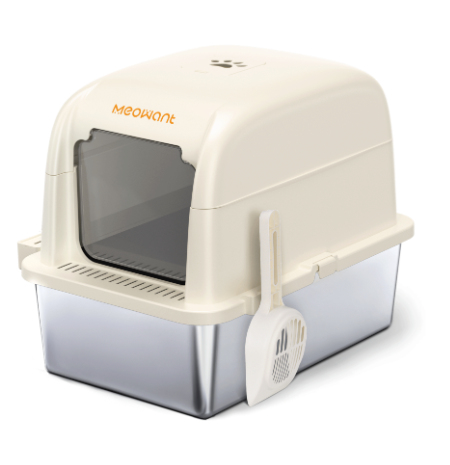
The way a cat litter box is designed amplifies or reduces each problem. A pan with high sides and a defined entry zone contains scatter. A smooth, non-porous interior resists odor and wipes clean easily. A lid, where appropriate, traps what would otherwise travel. Understanding these mechanics lets you fix the source rather than chase the symptoms with more sweeping and more air freshener.
The Scatter Problem
Kicked litter is normal behavior, not misbehavior. Cats dig to bury, and some dig with real energy. The fix is containment, not correction. Increase side height, add a mat with a textured surface at the exit, and consider a top-entry design for cats that launch litter like confetti. Avoid punishing the cat for digging; it is doing exactly what instinct tells it to do. If scatter remains heavy, your litter may be too light — heavier clumping formulas stay down better than fine, dusty types.
The Odor Problem
Odor control is mostly a matter of removal frequency and airflow. Scoop at least once a day, fully replace litter on a regular schedule, and wash the box with mild soap rather than strong fragrance. Covered boxes need more attention, not less, because air does not circulate freely inside them. If you use filters, change them as directed; a saturated filter stops helping and can become a source of odor itself. For a multi-cat home, more boxes spread the load and reduce how quickly any single box becomes saturated.
Building a Routine You Will Keep
The routines that survive are the ones with the least friction. If scooping takes two minutes and the waste goes straight into a sealed bag, the habit holds. If it takes ten minutes and requires moving furniture, it will be skipped. Design the workflow around convenience: keep the scoop and bags within reach, place the box where you pass it regularly, and keep a small bin nearby so the trip to the trash is short.
Daily, Weekly, and Monthly Tasks
Split maintenance into layers. Daily: scoop solids and clumps, top up litter, and wipe the rim. Weekly: check the litter level for fines and dust, wash the scoop, and inspect the mat. Monthly: empty the box completely, wash it with mild soap, dry it fully, and refill with fresh litter. A deep clean every month prevents the slow buildup that makes daily tasks feel pointless. Mark the schedule somewhere visible until it becomes automatic.
Choosing Tools That Reduce Effort
A metal scoop with deep slots beats a flimsy plastic one. A sealed waste container keeps odor down between trips. A large mat catches tracking before it spreads. None of these items is expensive, but together they cut the time and mess involved in daily care. The goal is to make the good habit easier than the bad one, which is always the more reliable strategy for maintaining a routine.
When Automation Changes the Math
Self-cleaning boxes exist for the households where daily scooping keeps getting missed. They run a raking or rotating cycle after use, moving clumps into a sealed drawer and leaving a fresh surface behind. That does not eliminate work — the drawer must be emptied, the unit needs periodic deep cleaning, and sensors require the occasional reset — but it shifts the burden from a daily task to a weekly one.
Automation is not right for every cat. Skittish animals can be startled by motors, and large cats may not fit comfortably in compact designs. Introduce a new unit gradually and keep the old box available during the transition. For owners who travel or work long hours, the reduction in daily effort often justifies the investment. Brands such as Meowant have focused on quiet operation and simple waste removal for exactly this reason, since an automated box that is hard to empty or loud in use ends up back in manual mode. As with any design choice, the deciding factor is whether the cat accepts it and whether you will keep it clean.
Whichever route you choose, the measure of success is the same: a box that stays clean, a floor that stays clear, and a cat that uses its space without hesitation.
Cleaner Habits, Calmer Home
Litter mess is a design and routine problem more than a discipline problem. Containment, airflow, and a low-friction cleaning schedule solve most of it, and the right tools make good habits easy to maintain. The investment is modest and the payoff is immediate: less sweeping, less odor, and a cat that trusts its box.
Start with the daily scoop, add the weekly and monthly layers, and adjust the setup where the mess originates. Once the routine fits your schedule, the box stops being a source of frustration and becomes what it should be — a quiet, reliable part of the household.
