
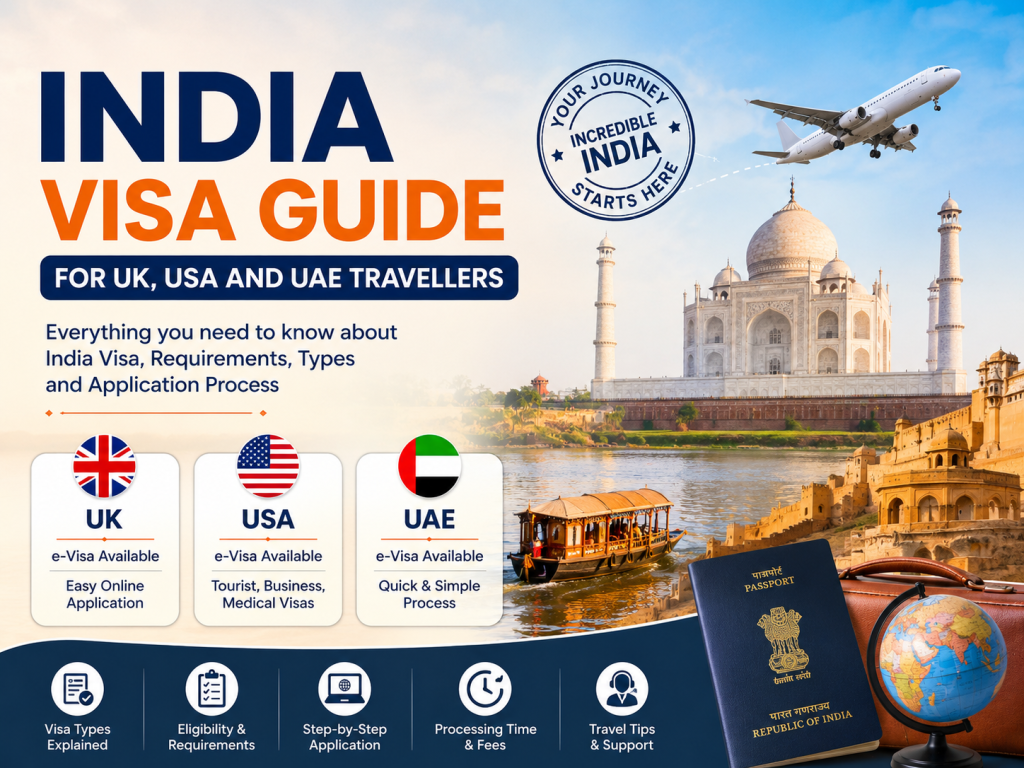
British, American, and UAE travelers must obtain an e-Visa to enter India, applying online through the official government portal. Applicants need a passport with six months of validity, a digital photo, and a scanned passport PDF. Fees and validity lengths vary by nationality; a one-year visa typically costs $40. Additionally, travelers must complete an e-Arrival Card within 72 hours of landing and enter only through designated entry airports or seaports. India tour packages from the UK, USA or UAE by Swan Tours can make the process easy and hassle free.
India Visa Requirements: What Every Traveller Must Have
An India travel visa is mandatory for UK, US and UAE passport holders. The India tourist visa is issued electronically before departure, and the portal checks five things before anything else.
- Passport valid at least six months from arrival, with two blank pages for stamping
- A return or onward ticket and sufficient funds
- A separate passport for every traveller, children included
- No diplomatic or official passport, and no Pakistani nationality or Pakistani-origin parentage
- No defence, military, police or security background, serving or retired, which needs a regular visa
India eVisa Application: Four Steps
The India eVisa application is completed online at indianvisaonline.gov.in, the only official website. Travel agents in India like Swan Tours can help and smoothen the process. The government charges nothing for express or emergency grants.
- Upload a square JPEG photograph between 10 KB and 1 MB on a plain background, plus a PDF of your passport bio page under 300 KB.
- Pay the fee by card, wallet or PayPal.
- Wait for your Electronic Travel Authorisation by email, then confirm the portal status reads “Granted”.
- Print it and present it at immigration, where your visa is stamped and biometrics are captured.
On India visa processing time, apply between four and 120 days before arrival. Payment must be cleared at least four days before travel or the application is not processed. A bank charge of 3 per cent is added, and the fee is non-refundable whether you are granted or rejected.
India Visa Fees and Validity Compared for 2026
India visa fees are set by nationality, and the 30-day rate drops in the April to June off-peak window. Figures below are government fees published on 9 July 2026, before bank charges.
| Passport held | 30 days (Apr to Jun) | 30 days (Jul to Mar) | 1 year | 5 years |
| United Kingdom | USD 10 | USD 25 | USD 40 | USD 484 |
| United States | USD 10 | USD 25 | USD 40 | USD 160 |
| United Arab Emirates | USD 10 | USD 25 | USD 40 | USD 200 |
On India visa validity, the 30-day option runs from your first arrival with double entry. The one-year and five-year options run from the grant date, allow multiple entries, and cap your stay at 180 days per calendar year.
India Visa for UK Citizens
British passport holders pay USD 484 for the five-year visa, the highest rate on the list. Unless you return most years, the one-year visa at USD 40 is better value. Match the window to your itinerary of luxury India tours from the UK.
India Visa for US Citizens
The USA passport India visa uses the identical form. Its five-year fee of USD 160 is the cheapest long-validity rate of the three, which suits repeat trips. If you want to travel to India from the USA, Swan Tours can guide you further.
India Visa for UAE Residents
An India visa from Dubai depends on your passport, not your residency. Emirati nationals who have previously held an Indian e-Visa or paper visa may use visa on arrival, a facility otherwise limited to Japan and South Korea. Expatriate residents apply under their own nationality and fee band.
“Nearly every rejected India eVisa fails for one reason: the application does not match the passport. Spell your name exactly as printed, apply at least four days before you fly, and never pay for express processing, because the Government of India does not sell it.”
OCI vs Tourist Visa: Which One Applies to You
An OCI card is a lifelong, multiple-entry visa for people of Indian origin and their spouses. A tourist visa is temporary and expires.
- OCI holders may stay indefinitely, with no FRRO registration
- OCI holders get resident parity on domestic airfares and entry fees at monuments, museums and national parks
- Journalism, research, missionary and mountaineering activities need prior permission even with OCI
- The eVisa is non-extendable and non-convertible, so each trip needs a fresh application
India Entry Requirements at the Airport
India entry requirements now include an arrival formality separate from your visa.
- Complete the e-Arrival Card online within 72 hours of landing. It is a declaration, not a visa, and OCI holders file it too.
- Enter only through the designated airports and seaports listed on the portal. You may exit from any immigration check post.
- Biometrics are captured at immigration on arrival.
- The eVisa does not cover Protected, Restricted or Cantonment areas, which need separate permission.
- India immigration rules and India customs regulations require foreign currency above the notified limits to be declared on arrival.
Sort These Before You Board A Flight to India
- Best time to visit India: October to March, which is also the peak-season fee window
- Flights to India: book into an airport on the eVisa entry list, or you will be refused entry
- India travel insurance: arrange it before departure
- Currency in India: the rupee, with cards in cities and cash useful in smaller towns
- UPI for tourists: prepaid wallets linked to your passport allow QR payments
- SIM card in India: buy on arrival with your passport, visa copy and a photograph
Ready to Plan the Trip to India
Your visa decides when you travel. The itinerary decides whether the trip earns its cost. Once your authorisation is granted, fix your entry airport, then your season, then your circuit. Speak to experienced travel agents in India who can match your visa window to a realistic plan, and contact Swan Tours to start yours.
