
Finding time for healthcare can be harder than it sounds.
A person may know they need medical attention but keep postponing an appointment because of work, family responsibilities, traffic, travel, or simply the inconvenience of spending hours at a clinic.
This is one reason home medical services have become increasingly attractive. For suitable situations, patients can receive professional healthcare without making the journey to a traditional medical facility.
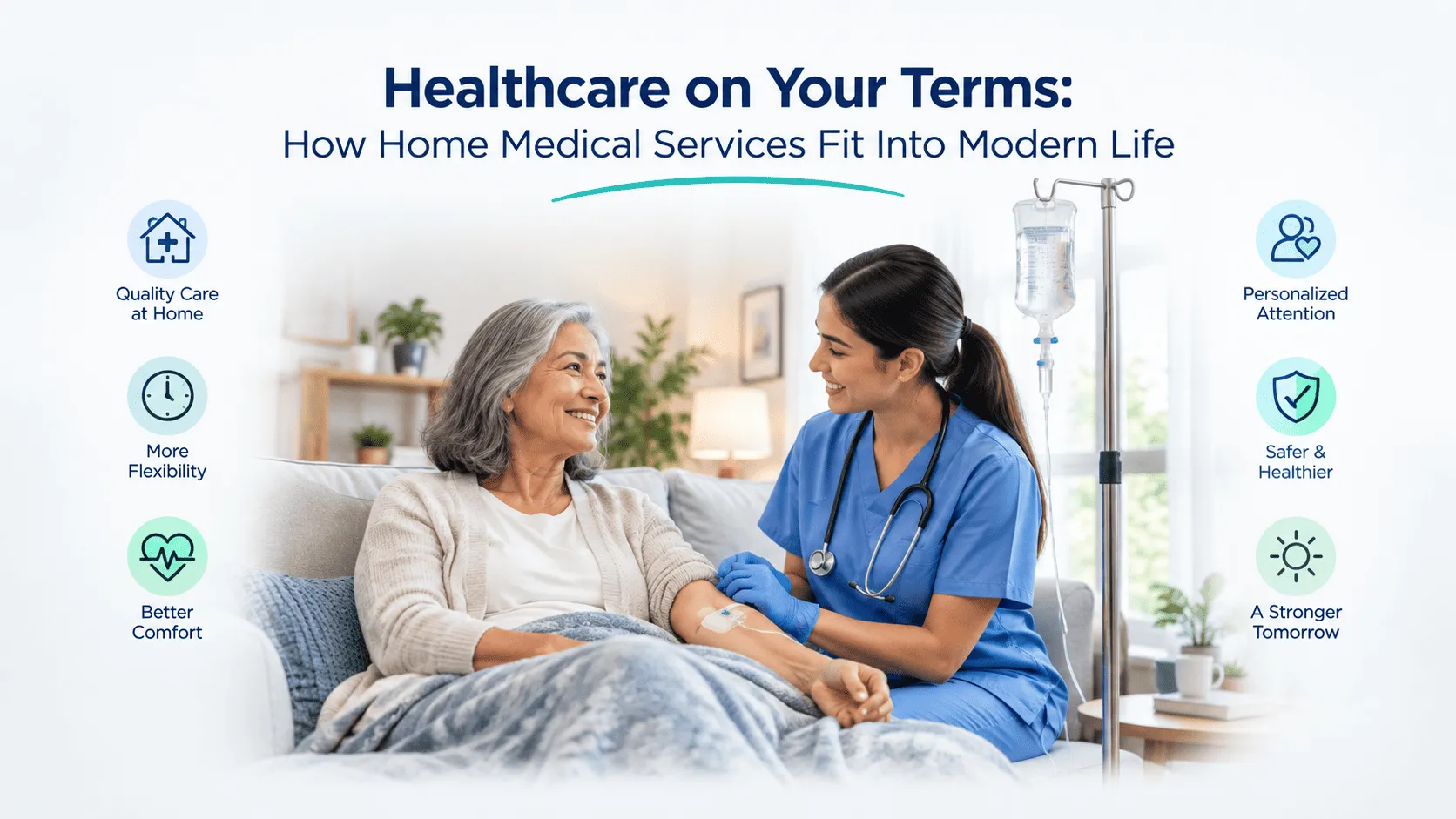
The options can range from doctor consultations and pediatric visits to diagnostic services and selected treatments. For patients who have been medically assessed and are appropriate candidates, IV therapy at home can also provide a convenient setting for receiving certain intravenous treatments.
However, convenience should never be the only consideration. Medical services should always be based on professional assessment and patient safety.
Why People Are Rethinking the Traditional Clinic Visit
There is nothing wrong with visiting a clinic. In many situations, it is exactly what a patient needs.
But not every health concern requires a patient to spend hours traveling and waiting.
Someone with a mild illness may prefer to have a doctor assess them at home. A parent may find it easier to have a child examined at home rather than taking them through traffic. An older adult with mobility difficulties may struggle with transportation even when the medical issue itself is relatively straightforward.
Home healthcare addresses some of these practical challenges.
It allows suitable medical services to be delivered where the patient is, while still maintaining professional involvement.
The Importance of Choosing Appropriate Treatments
The availability of a treatment at home does not automatically make it appropriate for everyone.
This is especially important when discussing treatments such as IV therapy. Intravenous treatment should be recommended based on an individual’s health needs rather than convenience alone.
A healthcare professional may need to review symptoms, medical history, medications, allergies, and other relevant information before deciding whether treatment is suitable.
This approach helps prevent patients from assuming that a particular treatment is the answer to every episode of fatigue, dehydration, or weakness.
Good healthcare begins with understanding the patient.
Parents Often Need Flexible Healthcare Options
Few things change a parent’s schedule faster than a sick child.
A child who wakes up with a fever or develops another health concern may need medical assessment at a time when parents are preparing for work or managing other children.
Getting everyone ready to leave the house can become an unnecessary challenge when the child is uncomfortable.
Home pediatric care can make certain situations easier to manage.
An at home pediatrician can visit the family and assess the child in familiar surroundings. Parents can discuss symptoms and provide information about changes in the child’s behavior, appetite, sleep, or daily routine.
For some children, staying at home may also make the examination feel less intimidating.
Parents should still understand the limits of home visits. If a child has severe breathing problems, becomes unresponsive, suffers a serious injury, or develops another potentially life-threatening condition, emergency medical care should be sought immediately.
Familiar Surroundings Can Make a Difference
The environment in which healthcare is provided can influence how comfortable a patient feels.
Adults may appreciate being able to rest in their own surroundings after a consultation. Children may be more relaxed when they have their parents, toys, and familiar surroundings nearby.
For older adults, avoiding unnecessary travel can also reduce physical strain.
A home visit may give patients more time to discuss practical questions about their care. They may feel more comfortable asking about medication schedules, recovery, hydration, or what to expect over the following few days.
The quality of the medical care remains the priority, but the setting can improve the overall experience.
A Useful Option for Busy Professionals
Work commitments are another reason people look toward home healthcare.
A professional may have a full schedule of meetings and deadlines but still need medical attention. Spending several hours traveling to and waiting at a clinic may not be practical.
An appropriate home visit can reduce the amount of time spent away from work and daily responsibilities.
This does not mean people should work through serious illness. It simply means that healthcare can sometimes be delivered in a way that fits better around a person’s circumstances.
Support for People With Mobility Challenges
For someone with limited mobility, getting to a clinic may involve much more planning than the appointment itself.
Transportation needs to be arranged, someone may need to accompany the patient, and navigating a medical facility can require additional effort.
When the condition allows for home-based care, bringing the healthcare professional to the patient can remove some of these barriers.
Family members may also find this arrangement easier when they are responsible for coordinating appointments for an older relative.
A Convenient Option for Travelers
Travelers face another challenge: they may not know where to go when they become unwell.
A visitor in Dubai, for example, may be staying at a hotel and have little knowledge of nearby medical facilities. If they are feeling unwell, traveling across the city may be uncomfortable.
Home or hotel medical services can offer a practical option for appropriate cases.
A healthcare professional can assess the traveler and determine what type of care is needed. If further evaluation is required at a hospital or specialist facility, the patient can then be directed toward the appropriate level of care.
What Makes Home Medical Care Reliable?
Patients should consider more than convenience when selecting a provider.
The qualifications and licensing of healthcare professionals are important. Patients should also know what services are included and how appointments are arranged.
Clear communication is another sign of a responsible healthcare service.
Before receiving treatment, patients should have an opportunity to understand what is being recommended and why. They should also be able to ask about potential risks, medications, costs, and follow-up requirements.
Healthcare should feel supportive rather than rushed.
Technology and Communication Are Changing Access
Arranging healthcare has become easier as communication technology has improved.
Patients can contact providers through calls or messaging platforms, explain their concerns, and determine whether a home visit may be suitable.
This can save time and make healthcare access more straightforward.
Technology can also support follow-up communication. However, it should complement medical care rather than replace it.
Some conditions require diagnostic equipment, specialist evaluation, or hospital treatment that cannot be provided in a home setting.
The Bigger Picture: More Flexible Patient Care
The growth of home healthcare reflects a broader change in patient expectations.
People want healthcare to be accessible, but they also want it to fit into real life. Families need flexibility. Professionals need practical options. Older adults may need easier access. Travelers may need care without navigating an unfamiliar healthcare system.
Home medical services can help address these needs when used appropriately.
They are not intended to replace hospitals or specialist clinics. Instead, they provide another level of care for situations where a home setting is suitable.
Looking Ahead
Healthcare will continue to evolve as patients look for services that are both medically responsible and convenient.
Home-based healthcare is likely to remain part of that evolution. Its value lies not simply in saving a trip to the clinic but in making appropriate medical care easier to access.
When patients receive care from qualified professionals, undergo appropriate assessment, and understand when a condition requires facility-based treatment, home healthcare can offer a practical addition to the wider healthcare system.
Ultimately, good healthcare is about meeting patients where they are—while making sure the care they receive remains safe, appropriate, and professionally delivered.
FAQs
1. What services can be provided through home healthcare?
Depending on the provider, home healthcare may include doctor consultations, pediatric visits, nursing care, laboratory testing, and certain treatments. The available services vary according to the provider and patient’s needs.
2. Is IV therapy at home suitable for everyone?
No. IV therapy should only be provided when a qualified healthcare professional determines that it is appropriate. An assessment should be completed before treatment.
3. Why might parents prefer an at-home pediatrician?
Parents may prefer an at-home pediatrician because it can reduce travel and waiting time and allow a child to be assessed in familiar surroundings. It can be particularly convenient for suitable non-emergency concerns.
4. Can home healthcare be useful for travelers?
Yes. Home or hotel medical services may be convenient for travelers who become unwell and have difficulty traveling to a medical facility. The healthcare professional can assess whether further care is required.
5. Does home healthcare replace hospitals and clinics?
No. Home healthcare complements traditional medical facilities. Serious conditions, emergencies, complex diagnostic needs, and treatments requiring hospital equipment still require facility-based care.
