
Discharge day rarely feels like a finish line. For most families, it feels like the moment the real work starts. The hospital team hands you a folder of instructions, wishes you well, and sends you home with a parent, spouse, or partner who may not walk, speak, or eat the way they did a week ago.
If you’re standing in that gap right now, somewhere between “we made it through the hospital” and “I have no idea what happens next,” you’re not alone, and you’re not supposed to already know the answers. Stroke recovery doesn’t come with a manual. But it does follow patterns that experienced caregivers and clinicians recognize, and understanding those patterns can turn a terrifying unknown into something you can actually plan around.
This guide walks through what the first three months at home tend to look like, the practical decisions that matter most early on, and how to know when it’s time to bring in outside help.
Why Stroke Recovery Doesn’t Follow a Straight Line
Every stroke is different, which is part of what makes this so disorienting. The location of the brain injury, how quickly clot-busting treatment was given, the person’s age and prior health, and the strength of their support system at home all shape how recovery unfolds. Two people with what looks like a similar stroke on a scan can have very different recoveries.
That said, clinicians who specialize in stroke rehabilitation generally describe recovery as happening in overlapping windows rather than a single continuous climb. Knowing which window you’re in helps you calibrate expectations, both for your loved one and for yourself.
Days 1-14: Stabilization
This stretch is less about progress and more about not losing ground. The priorities are getting medications right, preventing falls, and building a routine everyone in the house can actually follow. Confusion is normal here, not just for the stroke survivor, but for the family. You’re absorbing new medical vocabulary, new physical limitations, and a new daily rhythm all at once.
Weeks 3-12: The Active Recovery Window
This is typically when the most visible gains happen, particularly for survivors who are engaged in outpatient physical, occupational, or speech therapy. The brain’s capacity to rewire itself, what clinicians call neuroplasticity, is highest in these early months, which is part of why consistent therapy attendance and home practice matter so much during this window. Progress is rarely linear, though. A great Tuesday can be followed by a frustrating Wednesday, and that whiplash is one of the hardest parts for families to prepare for emotionally.
Month 3 and Beyond: Sustained, Slower Gains
Improvement usually continues well past the 90-day mark, just at a gentler pace. Research on stroke recovery has repeatedly shown that meaningful gains in mobility, speech, and independence can continue for a year or more, especially with ongoing therapy and practice. For some families, this is also the point where a short-term caregiving arrangement quietly becomes a long-term one, and that shift deserves its own conversation, not just an assumption.
Building Your Home Care Plan Before You Need It
The discharge packet from the hospital is a starting point, not a finished plan. Here’s what to work through in the first week or two at home.
1. Walk through the house like a therapist would. Before your loved one is even mobile, look at the home with fresh eyes. Are there clear, wide paths through the rooms they’ll use most? Is there a grab bar near the toilet and shower? Are there throw rugs, extension cords, or clutter in hallways? Falls are one of the leading causes of hospital readmission after a stroke, and most fall hazards are fixable in an afternoon.
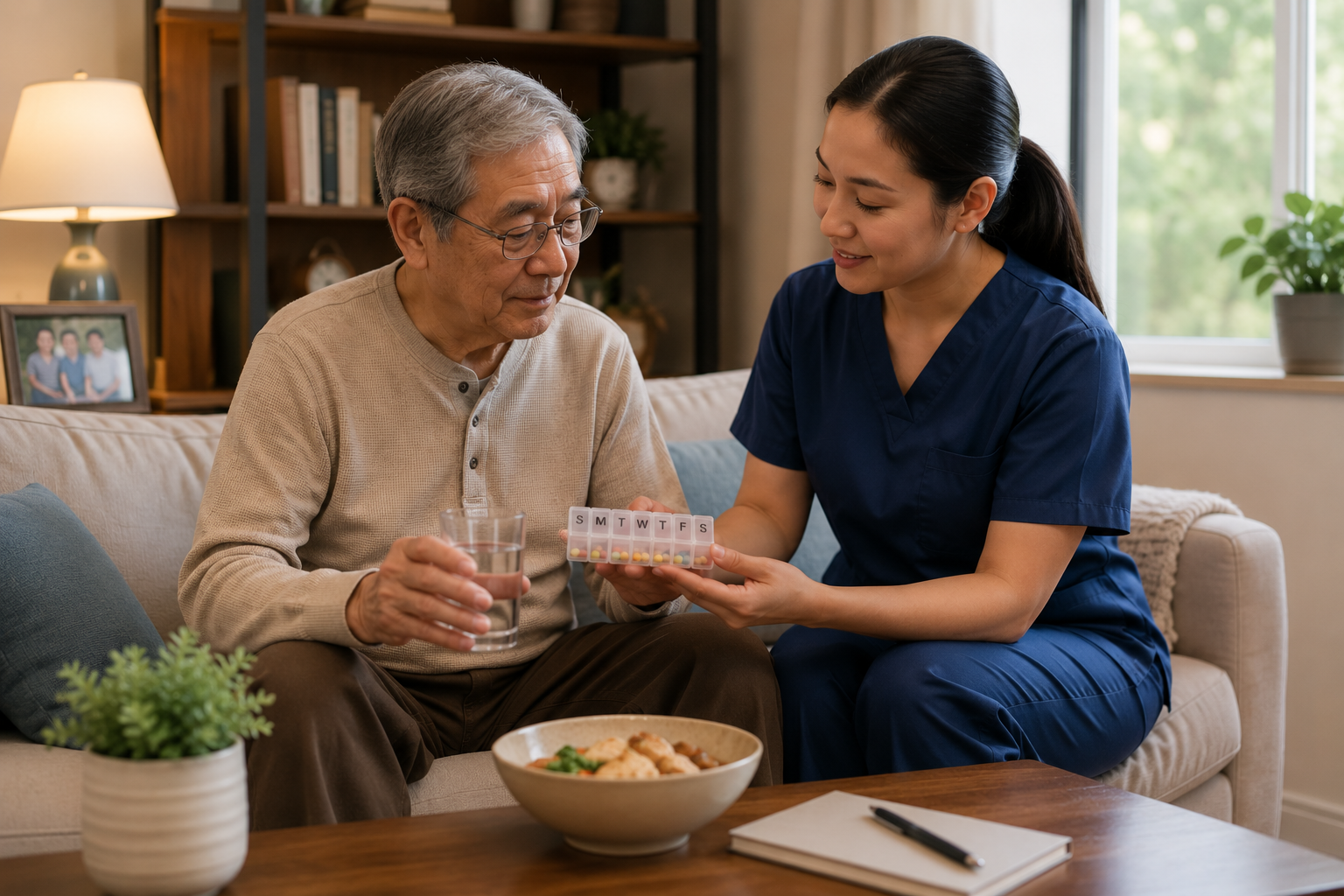
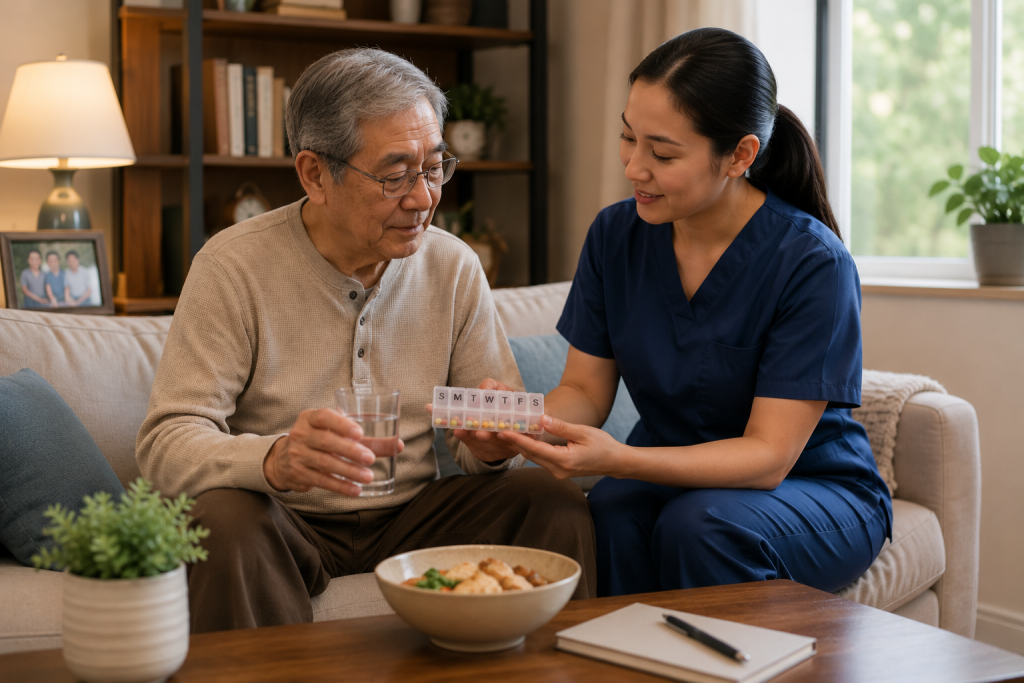
2. Simplify medications ruthlessly. Post-stroke medication lists are often more complicated than what your loved one was managing before, frequently including blood thinners or blood pressure medications where a missed or doubled dose actually matters. A weekly pill organizer, a consistent time of day, and one person designated as the “medication owner,” even if others help, dramatically cuts down on errors.
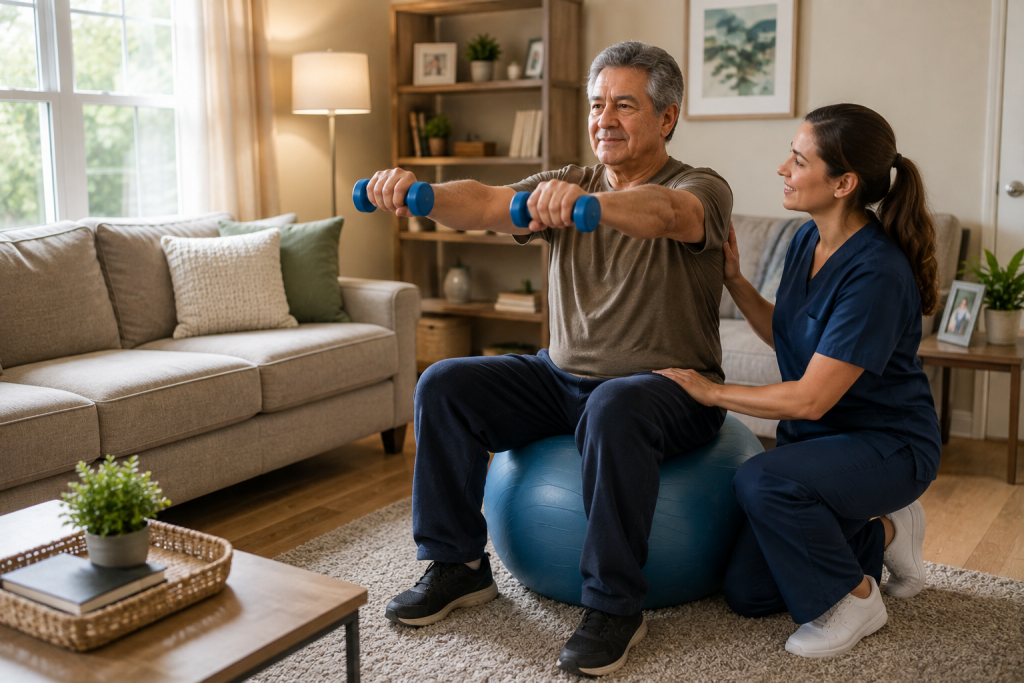
3. Treat therapy homework as non-negotiable. Physical, occupational, and speech therapists do the clinical work, but the gains they create between sessions depend on practice happening at home. If getting to appointments is a barrier, and many stroke survivors can’t safely drive for months, even after most physical function returns, solve transportation early rather than letting missed appointments become the norm.
4. Watch balance and mobility closely, even after the obvious deficits improve. Balance problems are among the most underestimated risks after a stroke. Someone can regain arm strength and speech clarity while still being at meaningful fall risk when walking to the bathroom at 2 a.m. Don’t let visible progress in one area create false confidence in another.
5. Revisit food and swallowing. Some stroke survivors develop swallowing difficulties (dysphagia) or need new dietary restrictions tied to cardiovascular risk. Appetite often changes too, sometimes from medication, sometimes from depression, sometimes simply from the disruption of routine. This is worth checking in on specifically, not assuming it will sort itself out.
Write the plan down. Share it with everyone involved in care, including out-of-town family who want to help but aren’t sure how. And revisit it every few weeks, because it should change as your loved one’s needs change.
The Part of Recovery Nobody Prepares You For
Physical recovery gets the spotlight, but the emotional aftermath of a stroke is just as significant, for the survivor and for the people caring for them.
It’s common for stroke survivors to experience new irritability, anxiety, or withdrawal. Sometimes this is a direct neurological effect of the stroke itself; sometimes it’s the very human response to losing independence overnight. Either way, it’s real, and it’s not something families should feel they have to manage silently.
Caregivers carry a parallel weight. Many describe a low-grade feeling of never fully being off duty, paired with guilt that they’re not doing enough, even while quietly running on empty. If that sounds familiar, it’s worth naming out loud to your own doctor, a support group, or a therapist. Feeling stretched thin isn’t a personal failure. It’s usually the clearest signal that more support needs to come into the picture.
Knowing When You Need More Help Than You Can Give Alone
There’s rarely a single dramatic moment that tells a family “it’s time.” More often, it’s an accumulation: a medication that got missed twice in one week, a near-fall nobody wants to talk about, a caregiver who hasn’t slept a full night in a month, or a loved one who is medically stable but increasingly isolated during the day.
This is the space non-medical, in-home care is built for. It doesn’t replace therapy or medical treatment; it fills the hours between appointments, when someone still needs help getting dressed safely, having meals prepared that match dietary guidance, staying on top of medication timing, or simply having company through a long and difficult stretch. For a lot of families, this kind of support is what makes it possible to keep recovery happening at home, on the survivor’s own terms, rather than somewhere else.
What Does This Actually Cost?
This question comes up early, and understandably so, since stroke recovery often arrives on top of hospital bills that are already substantial.
A few things drive the cost: how many hours of support are needed weekly, whether care is scheduled hourly or more continuous, and what specific tasks are involved. One common misconception is that Medicare or general health insurance covers this kind of support. In most cases it doesn’t; non-medical home care is typically private-pay and separate from medical home health services like skilled nursing or therapy visits, which insurance may cover. Many families end up using both in tandem: medical home health for clinical needs, non-medical home care for the daily support layered around it.
Rather than estimating blind, the most reliable way to understand cost is a direct conversation about your specific hours and needs. Most home care agencies offer a free assessment for exactly this purpose, and it’s worth asking any provider you’re considering, including in-home care for stroke recovery options local to the Bay Area, to walk through your family’s situation directly.
Frequently Asked Questions
Does the amount of care needed change as recovery progresses?
Yes, and it should. A stroke survivor in week two typically needs more hands-on support than the same person at month six. Care plans work best when they’re reassessed on a regular schedule rather than set once and forgotten.
Can in-home caregivers work alongside physical, occupational, or speech therapy?
Yes, and ideally they do. Caregivers aren’t delivering therapy themselves, but they reinforce it: encouraging practice between sessions, supporting safe daily mobility, and helping with transportation to and from appointments.
How soon after discharge can home care start?
Immediately, in many cases. Families often coordinate care to begin the same day their loved one leaves the hospital, so the support structure is already in place instead of being assembled during a crisis.
Steadying the First 90 Days
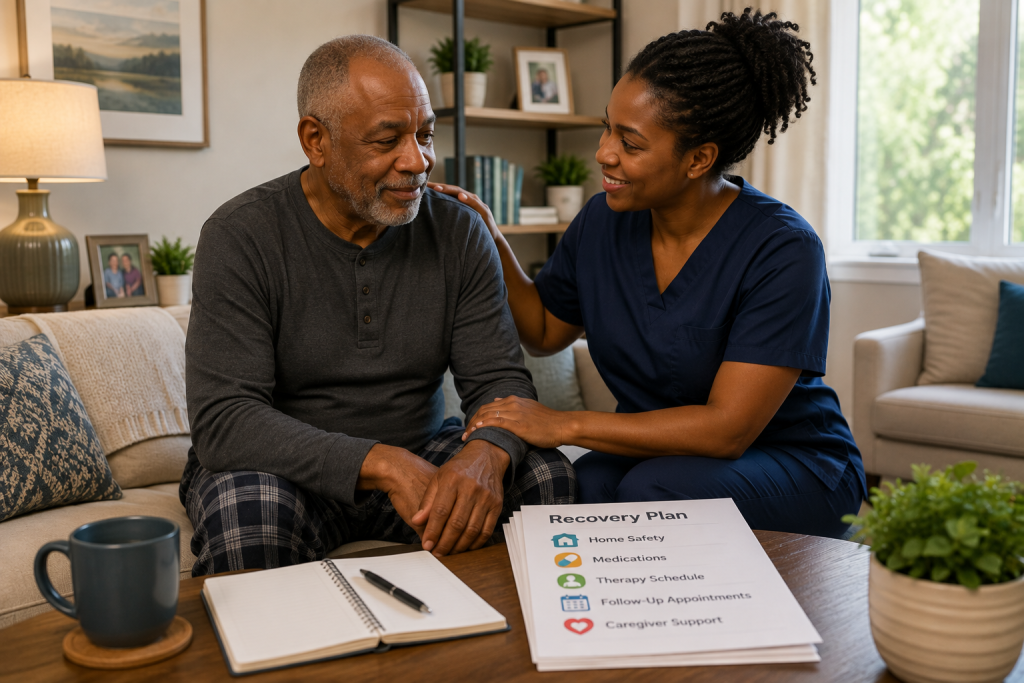
Stroke recovery is unpredictable by nature, but the first 90 days don’t have to be chaotic. A clear-eyed home safety check, a simplified medication routine, consistent therapy follow-through, and an honest conversation about your own limits as a caregiver will do more to steady this period than almost anything else.
And if you reach the point where the caregiving load has outgrown what your family can manage alone, that’s not a sign anything has gone wrong. It’s simply the next step in building a recovery plan that actually holds up.
