
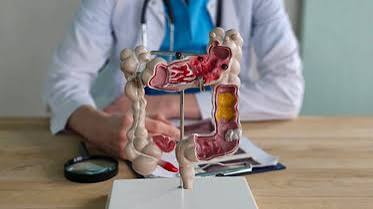
For decades, colorectal cancer was considered a disease of older adults, something to start worrying about only after 60. That assumption no longer holds. Across Indian hospitals, oncologists are seeing a steady rise in colon and rectal cancer among people in their 30s and 40s, many of whom have no family history of the disease. This shift is forcing doctors, and patients, to rethink when to start paying attention to gut health.
Why Is Colorectal Cancer Rising in Younger Indians?
The reasons behind this trend are rarely a single cause. Instead, doctors point to a combination of lifestyle and biological factors that are converging on a younger population.
Changing diets are a major driver. Traditional fiber-rich Indian meals are increasingly being replaced by processed and packaged foods, refined carbohydrates, and red or processed meats. Low fiber intake slows digestion and increases the time harmful compounds stay in contact with the colon lining.
Obesity and sedentary living compound the problem. Desk-bound jobs, long commutes, and little physical activity have pushed obesity rates up sharply in urban India, and excess body fat is a well-documented risk factor for colorectal cancer.
Genetics and family history still matter. Conditions like Lynch syndrome and familial adenomatous polyposis significantly raise lifetime risk, and anyone with a first-degree relative diagnosed with colorectal cancer should be screened earlier than the general population.
Inflammatory bowel disease (IBD), including ulcerative colitis and Crohn’s disease, is another important risk factor. Chronic inflammation of the colon over many years can lead to cellular changes that eventually turn cancerous, which is why patients with long-standing IBD need regular colonoscopic surveillance.
Add to this rising rates of smoking, alcohol use, and unmanaged diabetes, and it becomes clear why oncologists are no longer surprised to see colorectal cancer in a 35-year-old.
Early Warning Signs You Shouldn’t Ignore
One of the biggest challenges with early-onset colorectal cancer is that its symptoms are easy to dismiss. Many young adults attribute them to stress, spicy food, or piles, and delay seeing a doctor. Watch for:
● Persistent changes in bowel habits, such as diarrhoea, constipation, or narrower stools lasting more than a few weeks
● Rectal bleeding or blood in the stool, even if it seems minor
● Unexplained abdominal pain, cramping, or bloating
● Iron-deficiency anaemia that doesn’t have an obvious cause
● Unintended weight loss or persistent fatigue
● A sensation that the bowel doesn’t empty completely
None of these symptoms confirm cancer on their own, but having even one that persists for more than two to three weeks is reason enough to get evaluated. Research shows that having multiple such symptoms together substantially raises the likelihood of an underlying diagnosis, which is why self-diagnosis or home remedies can be dangerous when symptoms don’t resolve.
Why Timely Screening and Colonoscopy Matter
Colorectal cancer is one of the most preventable and treatable cancers when caught early, largely because it usually develops slowly from polyps that can be detected and removed before they turn cancerous. A colonoscopy remains the gold standard for both screening and diagnosis, allowing doctors to directly visualise the colon, take biopsies, and remove suspicious polyps in the same sitting.
While international guidelines have lowered the average-risk screening age to 45, doctors in India increasingly recommend that anyone with a family history, IBD, unexplained symptoms, or known genetic risk should not wait until then. Early consultation with a gastroenterologist or GI oncologist, followed by a timely colonoscopy, can catch the disease at a stage where cure rates exceed 90 percent, compared to advanced-stage disease where outcomes are far more guarded.
Treatment Options for Colorectal Cancer
Treatment is tailored to the stage, location, and molecular profile of the tumour, and typically involves one or more of the following:
● Surgery to remove the tumour and surrounding tissue, often using minimally invasive laparoscopic or robotic techniques that shorten recovery time
● Chemotherapy, given before surgery to shrink tumours, after surgery to reduce recurrence risk, or as the primary treatment for advanced disease
● Radiation therapy, particularly important in rectal cancer to shrink tumours before surgery and reduce local recurrence
● Targeted therapy and immunotherapy, guided by molecular and genetic testing of the tumour, which have improved outcomes for specific patient subgroups
● Ostomy and reconstructive care, where needed, supported by specialised nursing to help patients adapt
For patients seeking the Best Colorectal cancer treatment, the choice of hospital matters as much as the choice of treatment, since outcomes depend heavily on surgical expertise, access to advanced diagnostics, and coordinated post-treatment care.
Why Multidisciplinary GI Oncology Care Improves Outcomes
Colorectal cancer rarely responds well to a single-specialist approach. The best outcomes come from a multidisciplinary team, gastroenterologists, GI surgical oncologists, medical oncologists, radiation oncologists, and pathologists, working together on a single treatment plan rather than in isolation.
At CK Birla Hospital’s GI oncology programme, this collaborative model brings together specialists such as Dr. Pushpinder Gulia, Dr. Bhawana Awasthy, Dr. Harish Verma, Dr. Harsimran Singh Bhatia, Dr. Parminder Kaur, Dr. Raman Narang, and Dr. Rohan Khandelwal, who jointly evaluate each case to design a treatment plan around the patient’s specific tumour biology, stage, and overall health rather than a one-size-fits-all protocol. This kind of coordinated care has been shown to improve both survival rates and quality of life, since decisions on surgery, chemotherapy, and radiation are made jointly rather than sequentially, reducing delays and gaps in care.
Equally important is what happens after active treatment ends. Nutritional support, psychological counselling, and long-term surveillance colonoscopies all play a role in helping patients return to normal life and catching any recurrence early.
The Bottom Line
Colorectal cancer is no longer a disease you can assume you’re too young for. If you notice persistent changes in bowel habits, unexplained bleeding, or a family history that puts you at higher risk, don’t wait for symptoms to worsen before seeking care. A timely colonoscopy, evaluated by an experienced GI oncology team, remains the single most effective step you can take to catch this disease early, when it is most curable, and to get the best possible outcome from treatment.
