
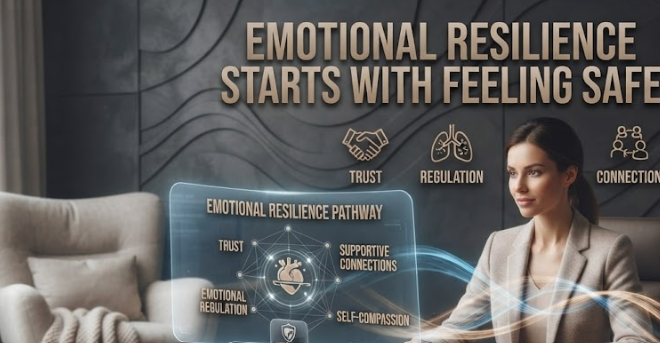
Emotional resilience is often described as the ability to recover from challenges, adapt to change, and continue moving forward during difficult moments. While resilience is commonly associated with strength, independence, and perseverance, one important factor is often overlooked: feeling safe.
The ability to feel safe is closely connected to how we experience relationships, trust, and emotional connection. Learning about these patterns through an attachment course can help people better understand how past experiences influence their emotional responses, relationships, and ability to cope with stress.
When people have a strong sense of emotional safety, they are better able to process difficult emotions, manage uncertainty, and respond to challenges with greater flexibility. Without that foundation, everyday situations can sometimes feel more overwhelming than they need to be.
What Is Emotional Resilience?
Emotional resilience is the ability to navigate stress, disappointment, change, and difficult experiences while maintaining emotional balance. It does not mean avoiding negative emotions or pretending that challenges do not exist.
Instead, resilience involves developing the ability to:
- Understand and process emotions.
- Recover after stressful experiences.
- Adapt to unexpected situations.
- Maintain perspective during difficult moments.
- Ask for support when challenges become overwhelming.
Emotionally resilient people still experience fear, sadness, frustration, and uncertainty. The difference is that they have developed healthier ways to handle these emotions without being controlled by them.
Why Emotional Safety Is the Foundation of Resilience
Feeling safe creates the conditions needed for emotional growth. When people feel secure, they are more likely to explore new experiences, communicate openly, solve problems, and recover from setbacks.
On the other hand, when someone feels constantly threatened, rejected, or unsupported, their energy often shifts toward protection rather than growth.
This can result in patterns such as:
- Overthinking potential problems.
- Avoiding situations that involve vulnerability.
- Struggling to trust others.
- Feeling overwhelmed by normal life challenges.
- Reacting strongly to uncertainty.
A sense of safety allows the mind and body to focus on adaptation instead of constantly preparing for danger.
How Past Experiences Influence Emotional Responses
The way people experience relationships throughout their lives can shape how they respond to stress, conflict, and emotional challenges.
Early experiences often influence beliefs about important questions:
- Can I rely on other people?
- Are my feelings important?
- Is it safe to express my needs?
- Will others support me when things become difficult?
When someone grows up with consistent support and emotional availability, they often develop a stronger foundation for managing challenges.
However, experiences involving inconsistency, emotional distance, criticism, or unpredictability can make it harder to feel secure, even when current situations are safe.
These patterns are not weaknesses. They are often learned responses that developed as ways of protecting oneself during difficult circumstances.
The Nervous System and the Experience of Safety
The nervous system constantly evaluates whether situations feel safe or threatening. This process happens automatically and influences how people respond emotionally.
When the nervous system recognizes safety, people are better able to:
- Think clearly.
- Communicate effectively.
- Stay present during difficult conversations.
- Consider different perspectives.
- Recover more quickly from stress.
However, when the nervous system remains in a heightened state of alert, normal challenges can feel much more intense.
A simple disagreement may feel like a major threat. A small mistake may create excessive self-criticism. A change in plans may trigger significant anxiety.
Developing emotional resilience involves creating the internal conditions where challenges can be experienced without losing a sense of stability.
Building Emotional Resilience Through Awareness
Emotional resilience grows through understanding yourself and developing healthier responses to difficult situations.
Some practices that can support this process include:
Recognizing Personal Triggers
Understanding what situations create strong emotional reactions is an important first step. Instead of judging these reactions, it can be helpful to approach them with curiosity.
Identifying patterns allows people to recognize when past experiences may be influencing present situations.
Developing Emotional Regulation Skills
Emotional regulation involves learning how to manage intense feelings without immediately reacting to them.
Practices such as mindfulness, journaling, breathing exercises, and self-reflection can help create more space between emotions and actions.
Creating Supportive Connections
Healthy relationships play an important role in emotional resilience. Supportive connections provide opportunities to experience trust, communication, and acceptance.
Feeling understood by others can reinforce the belief that challenges can be handled safely.
Practicing Self-Compassion
Many people become more resilient when they replace harsh self-judgment with patience and understanding.
Treating yourself with compassion during difficult moments makes it easier to recover and continue moving forward.
Why Resilience Is Not About Being Independent All the Time
A common misconception is that emotionally resilient people handle everything alone. In reality, resilience often develops through connection.
People are naturally influenced by their relationships and environments. Support from trusted individuals can provide stability during challenging periods and help create new experiences of safety.
Being resilient does not mean never struggling. It means developing the ability to face difficulties while maintaining trust in yourself and your ability to recover.
Creating a Stronger Emotional Foundation
Emotional resilience is not a fixed personality trait. It is a skill that can be developed over time through awareness, practice, and supportive experiences.
When people understand their emotional patterns and create a stronger sense of safety, they become better equipped to manage stress, navigate uncertainty, and build healthier relationships.
Feeling safe does not remove challenges from life. Instead, it creates the foundation needed to face those challenges with greater confidence, flexibility, and emotional strength.
A secure emotional foundation allows people to not only recover from difficult experiences but also continue growing through them.
