
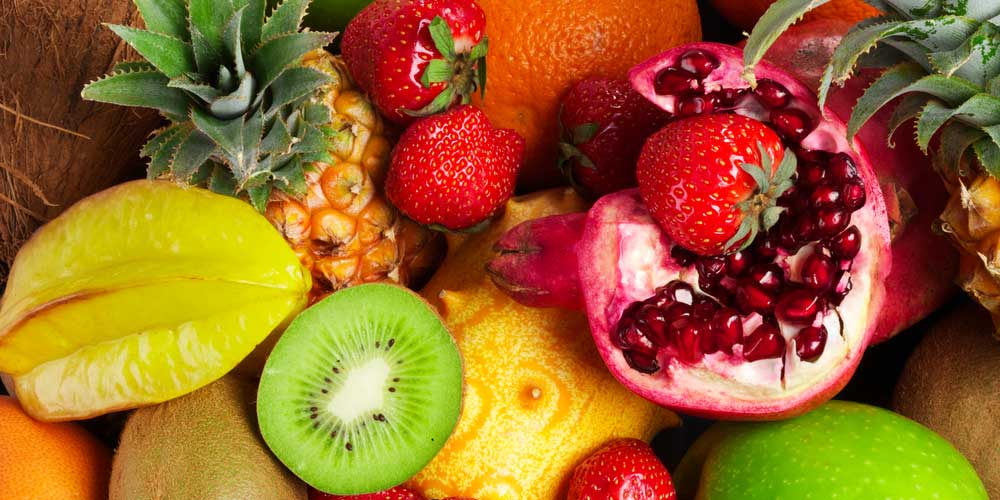
Fruit has a reputation as the “safe” food group, the thing people reach for when they’re trying to eat healthier or cut back on processed snacks. So it can be genuinely confusing when a piece of fruit, or a big fruit salad, leaves someone bloated and uncomfortable an hour later. The instinct is often to blame one specific fruit, but the real answer usually comes down to two overlapping issues: fructose malabsorption and simple portion overload from stacking too many FODMAPs in one sitting.
What Fructose Malabsorption Actually Means
Fructose is a simple sugar found naturally in fruit, and it’s absorbed in the small intestine through a specific transport mechanism. Most people can absorb moderate amounts of fructose without issue, especially when it’s paired with glucose, which helps pull fructose across the intestinal wall more efficiently. Fructose malabsorption happens when the small intestine’s capacity to absorb this sugar is limited, so any fructose that isn’t absorbed travels on to the large intestine, where bacteria ferment it and produce the classic symptoms of gas, bloating, and altered bowel habits.
This is different from a true fructose intolerance, which is a rare genetic condition. Fructose malabsorption is far more common and exists on a spectrum. Someone might handle a small amount of high-fructose fruit just fine but react to a larger portion, which is part of what makes it tricky to pin down through trial and error alone.
Where FODMAP Overload Comes Into the Picture
Fructose is just one of several fermentable carbohydrates grouped under the FODMAP umbrella, alongside fructans, lactose, polyols, and galacto-oligosaccharides. Many fruits contain more than one of these at once. An apple, for example, carries both excess fructose and sorbitol, a polyol. Dried fruit concentrates natural sugars into a smaller volume, which means a handful of dried mango or dates can deliver a much bigger FODMAP load than the same fruit eaten fresh.
It’s not always one “bad” fruit causing trouble, but the cumulative FODMAP total across a meal or snack. Two moderate-FODMAP fruits eaten together can add up to a reaction that neither one would cause on its own.
Fruit Types Worth Paying Attention To
Some fruits are considered “excess fructose” fruits, meaning they contain more fructose than glucose, which makes them harder to absorb regardless of overall gut health. Apples, pears, mangoes, and watermelon fall into this category. Others, like bananas, oranges, grapes, and berries, have a more balanced fructose-to-glucose ratio and tend to be better tolerated in reasonable portions, even for people with some degree of fructose malabsorption.
Stone fruits and dried fruits deserve particular attention because they often combine excess fructose with polyols like sorbitol, stacking two fermentable sugars into a single food. This combination is part of why a few dried apricots or a handful of cherries can cause a stronger reaction than a person might expect from fruit alone.
Timing and Portioning Matter More Than People Expect
A single serving of a higher-FODMAP fruit, eaten on its own and spaced away from other fermentable carbohydrates, is often tolerated reasonably well. The trouble tends to start when fruit is eaten in large quantities, combined with other high-FODMAP foods in the same meal, or eaten on an empty stomach, which can speed up fermentation before the gut has a chance to process the sugars gradually.
Spreading fruit intake across the day rather than eating it all at once, and pairing fructose-heavy fruit with a source of glucose, like a small amount of rice or a plain cracker, can sometimes improve tolerance. This isn’t a guaranteed fix, but it reflects how fructose absorption actually works in the small intestine.
Where Enzymes Can Help
Enzyme supplements that target specific FODMAP components can offer some relief, but only for the mechanisms they’re designed to address. A xylose isomerase enzyme, for instance, is formulated to help convert excess fructose into glucose before it reaches the colon, which can reduce symptoms tied specifically to fructose malabsorption. This kind of support tends to work best when the fruit in question is genuinely high in excess fructose and the portion size is reasonable, not when someone is eating a large volume of several different high-FODMAP fruits at once. For anyone trying to make sense of which enzymes actually match their triggers, it’s worth taking the time to learn about FODZYME and how its targeted approach is designed to support fruit tolerance without requiring blanket avoidance.
Where Enzymes Don’t Help
Enzymes aren’t a workaround for simple overconsumption. If a reaction is coming from eating an unusually large quantity of fruit, or from combining multiple high-FODMAP foods into one sitting, no enzyme is going to fully offset that fermentable load. Similarly, if the polyol content of a fruit, rather than its fructose content, is driving symptoms, a fructose-specific enzyme won’t address that piece of the puzzle. Sorbitol and mannitol are absorbed through a different, much slower pathway than fructose, and there isn’t a widely available enzyme that meaningfully speeds up that process.
Figuring Out What’s Actually Happening
The clearest way to separate fructose malabsorption from general FODMAP overload is to test fruits individually, in modest portions, spaced apart from other fermentable foods. Reacting consistently to excess-fructose fruits like apples and mangoes, even in small amounts, points toward fructose malabsorption specifically. Reacting more to volume, like tolerating a small serving of mixed fruit but not a large one, or reacting only when fruit is combined with other high-FODMAP foods, points more toward general FODMAP load. Keeping track of fruit type, portion size, and what else was eaten in the same sitting tends to reveal the pattern faster than eliminating fruit altogether, and it makes reintroduction, whether through smarter pairing, portion control, or targeted enzyme support, a lot more manageable.
