
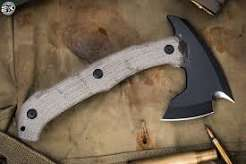
Choosing the right axe for camping is about more than finding a sharp blade with a comfortable handle. The best option depends on how you camp, what tasks you expect to perform, and how much weight you are willing to carry.
A compact hatchet may be enough for preparing kindling, while a larger camping or bushcraft axe can provide more power for processing firewood and handling outdoor woodworking tasks. Current camping-axe guides commonly emphasize portability, head weight, handle length, balance, and intended use when comparing options.
If you are comparing different styles before a trip, browsing a collection of handmade camping and outdoor axes can also help you understand how axe size, head design, handle shape, and construction vary between models.
The right choice should ultimately match your specific outdoor activities rather than simply choosing the largest or most expensive axe.
What Will You Use the Axe For?
Start by identifying the main jobs you expect the axe to handle.
A camping axe might be used for:
- Splitting small pieces of firewood
- Preparing kindling
- Cutting small branches
- Clearing light vegetation
- Basic bushcraft work
- Carving and shaping wood
- Processing fallen branches
- General campsite maintenance
You do not necessarily need a heavy axe for every task. If your campsite already provides firewood, carrying a large chopping tool may add unnecessary weight.
For occasional kindling and small branches, a compact hatchet can be easier to transport. Longer camping axes become more useful when you need greater reach and chopping power.
Choose the Right Axe Type
Axes come in several designs, and each has a different purpose.
Camping Axes
Camping axes are designed to balance portability and cutting ability. They are generally more versatile than heavy splitting axes and can handle common campsite tasks without becoming excessively cumbersome.
They can be useful for campers who want one tool for several moderate wood-processing jobs.
Hatchets
Hatchets are smaller and usually designed for one-handed use. Their compact size makes them attractive for car camping, hunting trips, trail work, and other situations where portability matters.
A hatchet can be particularly convenient for preparing kindling or handling small branches.
Bushcraft Axes
Bushcraft axes are designed around controlled wood processing. Their shape and balance can make them suitable for tasks such as carving, limbing, and preparing firewood.
They are often chosen by people who spend significant time practicing wilderness skills rather than simply visiting established campsites.
Splitting Axes
Splitting axes are designed specifically for breaking apart rounds of firewood. Their heavier heads and geometry are intended to help drive the edge into wood.
For ordinary weekend camping, however, a dedicated splitting axe may be more tool than you need.
Consider Head Weight
Head weight affects how an axe feels during use.
A heavier head can generate considerable force, but it also requires more effort to control and carry. A lighter head can be easier to handle but may require additional strikes when working through larger pieces of wood.
Think about the type of wood you normally encounter.
If you mainly process small branches and kindling, a lighter axe or hatchet may be sufficient. If you regularly split larger firewood, additional head weight can become more useful.
The goal is controlled power, not maximum weight.
Pay Attention to Handle Length
Handle length affects leverage, portability, and control.
A short handle is easier to pack and generally gives you greater control for smaller jobs. A longer handle can provide additional leverage and swing power, but it also requires more room and careful handling.
For backpacking or compact camping setups, portability may be your biggest concern.
For vehicle-based camping, you can usually accommodate a larger tool because you do not have to carry it over long distances.
Look at Balance and Ergonomics
Two axes with similar specifications can feel completely different in the hand.
Balance affects how naturally the axe moves through a swing. A well-balanced design should feel controlled rather than awkward or excessively head-heavy.
Also consider:
- Handle shape
- Grip texture
- Overall weight
- Handle length
- Head-to-handle balance
- Your own hand size and strength
A comfortable axe is easier to control than one that simply looks powerful.
For people interested in traditional craftsmanship, JW SteelCrafts offers handmade axes and other forged tools in different styles, giving buyers an opportunity to compare traditional designs and modern outdoor applications.
Check the Blade Design
The edge geometry should match the work you intend to perform.
A relatively thin and appropriately shaped edge can be useful for controlled cutting and woodworking. A splitting-oriented design is better suited to separating firewood.
Avoid choosing an axe based only on how sharp the edge feels when new. Edge geometry, steel quality, heat treatment, and overall construction all influence how the tool behaves during repeated use.
A sharp edge is useful, but the correct geometry for the task matters just as much.
Consider the Steel
Steel is another important factor when choosing an axe.
Common considerations include:
- Toughness
- Edge retention
- Ease of sharpening
- Resistance to damage
- Heat treatment
- Intended application
For outdoor tools, toughness is particularly important because an axe experiences repeated impact.
Damascus or pattern-welded steel can also provide a distinctive appearance. However, the name “Damascus” alone should not determine your purchase. The actual construction, heat treatment, geometry, and intended use deserve equal attention.
Think About the Handle Material
Traditional wooden handles remain popular because they offer a combination of feel, repairability, and classic appearance.
Hickory, ash, and other hardwoods are commonly associated with axe handles. The important factor is not simply the species of wood but the quality of the handle, grain orientation, fitting, finish, and overall construction.
When examining an axe, look closely at where the head meets the handle. The connection should feel secure, with no noticeable looseness or movement.
Don’t Forget the Sheath
A protective sheath is more than an accessory.
An exposed axe edge can damage camping equipment, packs, vehicle interiors, or other gear. It can also create a serious handling hazard.
When transporting an axe, use a properly fitted protective cover that securely protects the cutting edge.
Before storing your axe, inspect the sheath as well as the tool itself. A damaged or poorly fitting cover should be replaced.
Match the Axe to Your Camping Style
Your camping style should influence the final decision.
Backpacking
Weight and packability become major priorities. A compact hatchet may make more sense than a full-sized axe.
Car Camping
You have more freedom to choose a larger tool because transportation is easier. A versatile camping axe can be useful when processing firewood around the campsite.
Bushcraft
Control, balance, handle design, and blade geometry become particularly important because the axe may be used for several woodworking tasks.
Hunting and Wilderness Trips
Portability, durability, and versatility may matter more than decorative features. Choose a tool that matches the actual tasks you expect to perform.
Consider the Weight You Have to Carry
It is easy to underestimate how much an axe contributes to your overall camping load.
A large axe may perform demanding jobs efficiently, but carrying it several miles can become tiring. On the other hand, taking a tiny hatchet to a campsite where you expect to process substantial firewood can leave you wishing you had brought something larger.
Think about the entire trip rather than just the tool’s performance.
The best camping axe is often the one that provides enough capability without creating unnecessary weight.
Inspect the Axe Before Buying
Before purchasing, look at the complete tool rather than focusing on the blade alone.
Check:
- Overall weight
- Handle length
- Head design
- Edge geometry
- Handle condition
- Head-to-handle fit
- Balance
- Protective sheath
- Intended use
- Manufacturer or maker information
If buying online, carefully read the specifications and product description.
Pay attention to dimensions and materials instead of relying solely on photographs.
How to Carry and Store a Camping Axe Safely
An axe should always be treated as a cutting tool, even when you are simply transporting it around camp.
Keep the blade covered whenever the axe is not being used. Store it somewhere stable where people will not accidentally contact the edge.
When carrying it between locations, make sure the cutting edge is protected and that the tool cannot shift unexpectedly inside your pack or vehicle.
Never leave an uncovered axe lying around a campsite.
How to Maintain Your Camping Axe
Regular maintenance can help preserve an axe and keep it ready for future trips.
After using it, remove dirt and moisture from the head. If the steel requires protection against corrosion, apply an appropriate protective treatment.
Inspect the handle regularly for cracks, loose areas, or other damage.
The edge should also be maintained according to the manufacturer’s recommendations. Avoid removing excessive material when sharpening because the original geometry contributes to how the axe performs.
Wooden handles may also benefit from appropriate conditioning to help maintain their condition.
Common Mistakes When Choosing a Camping Axe
Several mistakes can make an otherwise good axe unsuitable for your needs.
Buying Based Only on Appearance
A beautifully finished axe may look impressive, but appearance does not tell you whether its size, weight, and geometry suit your camping style.
Choosing the Heaviest Axe
More weight does not automatically mean better performance. It can also make transportation and handling more difficult.
Ignoring Handle Length
An axe that is uncomfortable to control can become frustrating and potentially unsafe.
Choosing the Wrong Axe for the Job
A splitting axe is not necessarily the best tool for detailed bushcraft work, while a small hatchet may struggle with larger firewood.
Forgetting Transportation
Always consider how you will carry the axe to and around your campsite.
Final Thoughts
Choosing the right axe for camping starts with understanding your actual outdoor needs.
Consider the type of work you will perform, the amount of weight you can comfortably carry, the axe’s head weight, handle length, balance, steel, blade geometry, and protective equipment.
For occasional camping, a compact hatchet may provide everything you need. For more demanding outdoor work, a dedicated camping or bushcraft axe may be more appropriate.
The most important point is to choose a tool that matches your activities rather than simply choosing the biggest or most visually impressive axe.
A well-selected axe can become a useful part of an outdoor kit for years, provided it is used responsibly, maintained properly, and stored safely.
You have not enough Humanizer words left. Upgrade your Surfer plan.
