
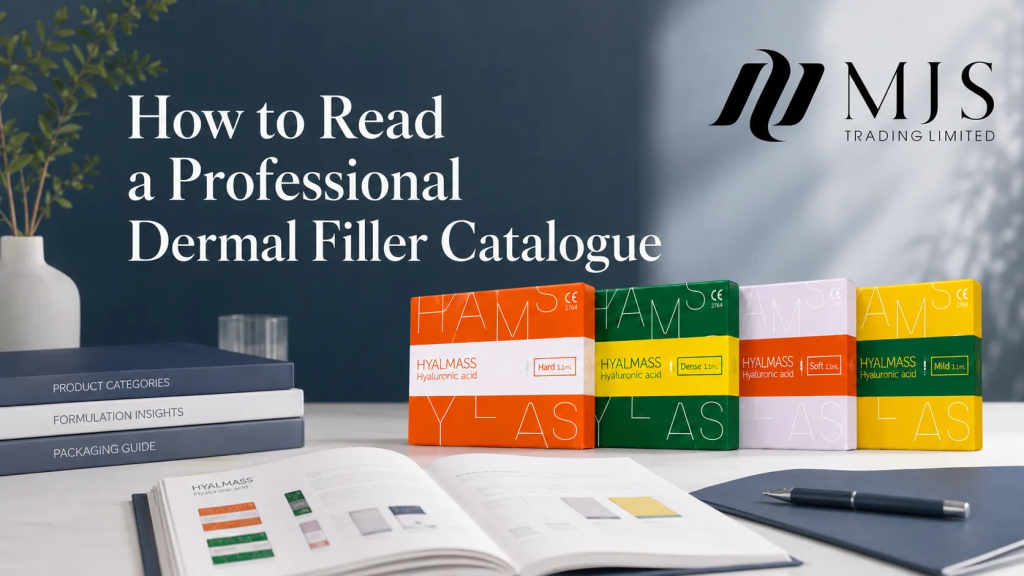
A professional catalogue is easier to use when the reader understands its information hierarchy. Category, brand, series, individual product, presentation and pack quantity answer different questions. When those levels are mixed, a buyer may copy a broad label into an order that requires a precise commercial identity.
Dermal filler catalogues often contain many visually related products. Colour, layout and naming patterns can help navigation, but they should never replace exact text fields in purchasing and inventory records.
Catalogue literacy is therefore less about memorizing every product and more about reading each layer in the right order.
Move From Broad to Specific
Begin with the category, then identify the brand and any named series before recording the exact item. The order description should be specific enough that a second employee can match it to the same listing without interpretation.
Keep variants as separate records even when the packaging looks similar. A filter or folder can group them for browsing without erasing their individual identities.
Separate Description From Specifications
A catalogue description explains how a supplier presents an item. Specifications identify the commercial format. Keep these fields separate so marketing language does not become part of the master-data name.
When a statement is unclear, preserve the original wording and mark it for clarification. Do not rewrite uncertainty into a stronger factual claim.
Use the Catalogue to Form Better Enquiries
A useful enquiry includes the exact item, requested quantity, destination, required date and documents or quotation details needed. This reduces back-and-forth and creates a response that can be compared with other suppliers.
Record the page date because catalogue content and availability can change. A screenshot without a timestamp is weak evidence for a later order decision.
A Practical Record Structure
The following fields create a concise shared record. Each entry should identify its source, review date and owner when the information may change.
| Record field | What to capture |
| Category | Broad navigation group |
| Brand | Commercial brand identity |
| Series | Related product line, if stated |
| Product | Exact individual item name |
| Presentation | Commercial format and labeled quantity |
| Source status | URL, review date and questions outstanding |
A Buyer’s Review Checklist
- Read the catalogue hierarchy before copying a name.
- Keep brand, series and product in separate fields.
- Do not infer specifications from colour or package shape.
- Check whether quantities refer to one unit or a pack.
- Use the exact item name in the supplier enquiry.
Using Online Catalogue Information
During commercial research, buyers may review professional dermal fillers as a catalogue or product reference. Website information should be dated, attributed and followed by the organization’s own verification and approval process.
For wider catalogue and enquiry context, the buyer can also review MJSBeautys. This second reference does not replace the checks required for a specific product, supplier or destination market.
Online availability does not by itself establish current stock, authorization, import status, suitability or professional use in a particular jurisdiction. Those questions should be handled through the official sources and qualified review appropriate to the destination market.
Questions Buyers Commonly Ask
Why not use the category name on a purchase order?
A category is too broad to identify a specific commercial item.
What if two pages use different names for the same-looking item?
Treat the difference as unresolved. Save both references and obtain written clarification before combining records.
Does a professional catalogue replace internal approval?
No. It is a research and enquiry source; internal and destination-market checks remain separate.
A Practical Next Step
Choose five catalogue entries and map each one into category, brand, series, product and presentation. Any blank or conflicting field becomes a focused supplier question.
A dependable purchasing record does not need to be complicated. It needs to show what was reviewed, which source supported the entry, what remains uncertain and who is responsible for the next action.
