

Mitochondria are often called the powerhouses of cells because they play a central role in converting nutrients into usable energy. However, their functions extend beyond energy production. These structures also participate in cellular signaling, metabolic regulation, and responses to environmental stress. As scientists explore the relationship between mitochondrial activity and overall metabolic health, one molecule attracting attention is MOTS-C, a small peptide associated with mitochondrial function.
Research into MOTS-C offers an interesting perspective on how cells communicate and adapt to changing energy demands. Although many questions remain unanswered, studying this peptide may help researchers better understand the complex relationship between mitochondria, metabolism, and cellular resilience.
Understanding MOTS-C and Its Mitochondrial Origins
MOTS-C stands for mitochondrial open reading frame of the 12S rRNA-c, a short peptide encoded by a small region of mitochondrial DNA. Unlike most proteins encoded by mitochondrial DNA, MOTS-C has attracted interest because of its potential signaling activities outside traditional mitochondrial energy production.
Researchers have investigated how MOTS-C may influence metabolic pathways involved in glucose utilization, stress responses, and cellular energy balance. Experimental findings suggest that it can interact with pathways associated with AMP-activated protein kinase (AMPK), an enzyme that helps cells respond when their energy supply changes.
When cellular energy becomes limited, AMPK helps coordinate processes that support energy production and efficiency. Understanding how MOTS-C may influence this system could provide valuable insights into mitochondrial signaling and metabolic regulation.
However, findings from laboratory experiments should not be confused with established clinical benefits. Much of the evidence surrounding MOTS-C remains preclinical, and further research is necessary to determine its significance in human health.
How Mitochondria Regulate Cellular Energy

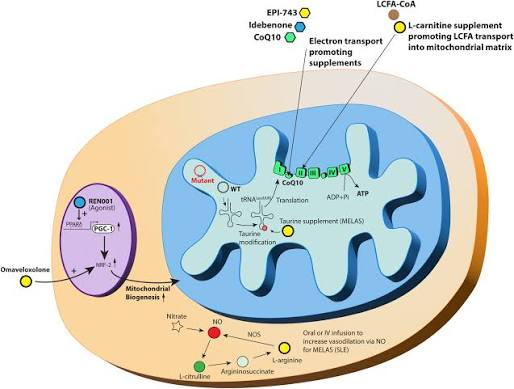
Mitochondria generate much of the energy cells use through a process called oxidative phosphorylation. During this process, nutrients are broken down through several interconnected reactions, creating a proton gradient that powers the production of adenosine triphosphate (ATP).
ATP supplies energy for essential activities, including muscle contraction, cellular repair, molecular transport, and the maintenance of normal cell function.
Mitochondria also respond dynamically to changes in nutrient availability, exercise, aging, and cellular stress. They can adjust their activity, communicate with other cellular systems, and participate in processes that help maintain metabolic balance.
MOTS-C research adds another dimension to this picture. Scientists are investigating whether this mitochondrial-derived peptide acts as a signaling molecule that helps coordinate cellular responses to changing energy conditions. These interactions may reveal new details about how cells adapt when their energy requirements increase or their metabolic environment changes.
MOTS-C and Metabolic Research
One major area of interest is the potential relationship between MOTS-C and glucose metabolism. Glucose is an important energy source, and the body must carefully regulate how it is absorbed, transported, and used by different tissues.
In experimental studies, MOTS-C has been associated with changes in pathways involved in insulin sensitivity and glucose utilization. Some animal research has also explored its possible relationship with exercise-related metabolic responses.
These findings have encouraged scientists to investigate whether MOTS-C could help clarify mechanisms underlying metabolic dysfunction. Nevertheless, promising laboratory results do not establish that the peptide can prevent or treat diabetes, obesity, or other metabolic conditions in humans.
Researchers must still determine how MOTS-C behaves in different biological environments, what its normal physiological roles are, and whether experimental observations translate into meaningful clinical outcomes.
Challenges and Future Directions in Mitochondrial Research
Despite growing scientific interest, several important questions remain. Researchers need a clearer understanding of MOTS-C production, distribution, stability, and interactions with cellular signaling networks. They must also establish how its effects vary across tissues and under different physiological conditions.
Another challenge is translating findings from cell cultures and animal models into reliable human evidence. Differences in metabolism, peptide processing, and biological responses can make this transition difficult.
For laboratories exploring emerging peptide science, access to appropriate research materials and reliable documentation is also important. Resources such as Peptide supply China may be relevant when investigating research supply options, although researchers should independently assess product identity, purity documentation, and suitability for their specific experimental requirements.
Future investigations may help clarify whether MOTS-C has a meaningful role in mitochondrial communication, metabolic adaptation, or age-related changes in cellular function. Well-designed studies, reproducible methods, and transparent reporting will be essential to answering these questions.
Conclusion: Advancing Our Understanding of Cellular Energy
MOTS-C represents an intriguing area of mitochondrial research because it connects mitochondrial DNA with broader questions about cellular signaling and metabolic regulation. Studies examining its relationship with AMPK, glucose metabolism, and energy balance may provide valuable insights into how cells respond to changing physiological demands.
However, the science is still developing, and MOTS-C should not be regarded as an established treatment or proven method for improving human metabolic health.
As research advances, the priority should remain clear: build stronger evidence, understand the underlying biological mechanisms, and determine whether laboratory discoveries have practical clinical relevance. By continuing to investigate mitochondrial signaling, scientists can deepen our understanding of cellular energy and the intricate systems that sustain life.
