
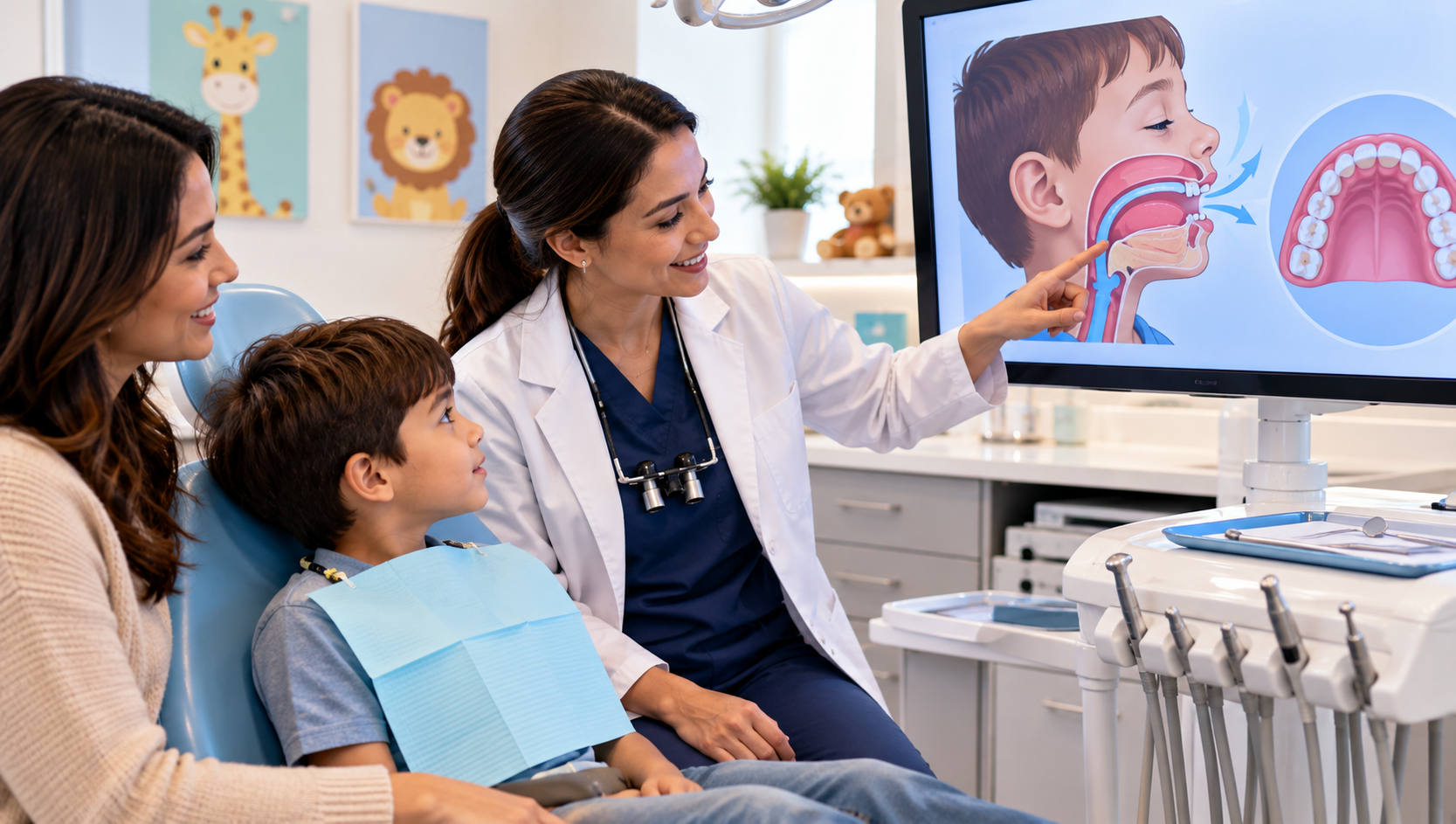
Does your child sleep with their mouth open, snore regularly, or wake up feeling tired even after a full night’s sleep? These symptoms may seem unrelated to dental health, but they can sometimes provide important clues about a child’s breathing and sleep.
An emerging area of interest in children’s dental care is pediatric airway dentistry. This approach considers how oral structures, jaw development, breathing patterns, and sleep-related symptoms may relate to one another.
For families in Rancho Cucamonga, CA, understanding the relationship between oral health and breathing can help parents recognize potential concerns and seek appropriate professional evaluations.
Although pediatric dentists do not diagnose every airway-related condition, they can play a valuable role in recognizing certain warning signs and coordinating care with medical specialists.
What Is Pediatric Airway Dentistry?
Pediatric airway dentistry is an approach to dental care that considers the relationship between the mouth, facial structures, and breathing.
During an airway-focused pediatric dental evaluation, a dentist may examine jaw development, dental alignment, oral tissues, and other anatomical features while reviewing symptoms associated with sleep-disordered breathing.
The goal is to recognize potential concerns that may warrant further assessment.
Children’s airways continue developing as they grow, and factors such as enlarged tonsils, nasal obstruction, and certain craniofacial characteristics can influence breathing.
However, no single dental finding can reliably diagnose an airway disorder.
A pediatric dentist who identifies concerning symptoms may recommend evaluation by a pediatrician, ear, nose, and throat specialist, or pediatric sleep physician.
Why Nasal Breathing Matters for Children
The nose plays an important role in normal breathing.
Nasal passages help filter, warm, and humidify incoming air before it reaches the lungs.
Many children naturally breathe through their noses while resting.
Occasional mouth breathing during a cold or seasonal allergies is common. Persistent mouth breathing, however, may indicate difficulty moving air through the nose.
Potential contributing factors include nasal congestion, allergies, enlarged adenoids, and structural nasal problems.
Some children develop habitual mouth breathing even after temporary congestion improves.
Parents should avoid assuming that every child who breathes through their mouth has an airway obstruction.
Instead, persistent symptoms deserve an appropriate clinical assessment.
Seven Signs Your Child May Need an Airway Evaluation
Children do not always describe breathing difficulties clearly. Parents often notice behavioral or nighttime symptoms first.
1. Frequent Snoring
Occasional snoring during an illness can occur, but habitual snoring deserves attention.
Snoring may indicate increased resistance to airflow during sleep.
A pediatrician can determine whether additional assessment for sleep-disordered breathing is necessary.
2. Sleeping With an Open Mouth
Some children regularly sleep with their mouths open.
Although this behavior alone does not establish a medical diagnosis, persistent mouth breathing may justify evaluation for nasal obstruction or other contributing factors.
3. Restless Sleep
Frequent tossing, turning, or unusual sleeping positions may accompany sleep disturbances.
However, restless sleep can result from many causes, so parents should discuss recurring concerns with a healthcare professional.
4. Daytime Fatigue
Children who experience disrupted sleep may struggle to feel rested during the day.
Some become sleepy, while others appear unusually active or irritable.
These symptoms are nonspecific and require a broader medical assessment.
5. Difficulty Concentrating
Sleep problems can affect attention, learning, and behavior.
A child experiencing inadequate sleep may have difficulty concentrating at school or completing daily activities.
Parents should not assume that attention difficulties automatically indicate an airway problem.
6. Pauses or Gasping During Sleep
Witnessed breathing pauses, choking sounds, or gasping during sleep are important warning signs.
Parents should contact their child’s pediatrician promptly when these symptoms occur.
7. Persistent Nasal Congestion
Ongoing congestion may interfere with comfortable nasal breathing.
Allergies, enlarged adenoids, and other medical conditions can contribute to this symptom.
A pediatrician or ENT specialist can evaluate the underlying cause.
How Are Jaw Development and Breathing Connected?
The upper and lower jaws influence the position of the teeth, tongue, and surrounding oral structures.
Certain craniofacial characteristics may be associated with an increased likelihood of sleep-disordered breathing.
For example, some children with particular jaw relationships or narrower upper dental arches may have anatomical features that warrant further assessment.
However, jaw shape alone cannot determine whether a child has obstructive sleep apnea.
Researchers continue studying the complex relationships between facial growth, oral function, nasal breathing, and sleep.
An airway-focused pediatric dentist may document relevant dental findings and recommend specialist evaluation when appropriate.
What Happens During a Pediatric Airway Dental Evaluation?
An airway-focused dental appointment often begins with questions about the child’s sleep and breathing habits.
Parents may be asked whether their child snores, sleeps with an open mouth, experiences daytime fatigue, or has previously received treatment for nasal obstruction.
The dentist then performs an oral examination.
Depending on the child’s needs, the evaluation may include:
- Reviewing dental and medical history.
- Examining the teeth and bite.
- Assessing jaw and dental arch development.
- Observing tongue position and oral tissues.
- Looking for enlarged tonsils when visible.
- Discussing sleep-related symptoms.
- Determining whether a medical referral is appropriate.
Some dental practices use screening questionnaires to identify children who may benefit from further assessment.
These tools help organize clinical information but do not replace a medical diagnosis.
A pediatric dental exam may reveal findings worth investigating, but diagnosing obstructive sleep apnea requires an appropriate medical evaluation.
Can a Pediatric Dentist Diagnose Sleep Apnea?
Pediatric dentists can screen for symptoms and risk factors associated with sleep-disordered breathing, but they should not independently diagnose obstructive sleep apnea based on dental findings alone.
When a child shows concerning symptoms, the dentist may recommend consultation with a pediatrician or sleep specialist.
A medical sleep evaluation may include overnight polysomnography, commonly called a sleep study.
Polysomnography measures several physiological signals during sleep and helps clinicians identify breathing disturbances.
The child’s medical team determines whether testing is necessary and which treatment options are appropriate.
This collaborative approach helps families avoid unnecessary procedures while addressing genuine health concerns.
What Treatments Are Available for Pediatric Airway Problems?
Treatment depends on the underlying diagnosis.
Because sleep-disordered breathing has multiple possible causes, no single treatment works for every child.
Medical Management
Children with allergies or chronic nasal inflammation may benefit from medical treatment prescribed by their healthcare provider.
Improving nasal symptoms can help address breathing difficulties when those conditions contribute to the problem.
ENT Evaluation
Enlarged tonsils or adenoids can contribute to obstructive sleep apnea in some children.
An ENT specialist can determine whether surgical or nonsurgical management is appropriate.
Orthodontic Assessment
Certain children with specific dental or skeletal findings may benefit from orthodontic evaluation.
In selected cases, orthodontic treatment may address jaw or dental arch concerns as part of a coordinated care plan.
However, orthodontic expansion should not be presented as a universal treatment or guaranteed cure for pediatric sleep apnea.
Sleep Medicine Treatment
Children with diagnosed obstructive sleep apnea may require additional treatment under the guidance of a pediatric sleep specialist.
The appropriate approach depends on disease severity, medical history, anatomy, and other individual factors.
Is Mouth Taping Safe for Children?
Mouth taping has received attention on social media as a way to encourage nasal breathing during sleep.
However, parents should not tape a child’s mouth shut to address snoring, mouth breathing, or suspected airway obstruction.
Restricting mouth breathing may create risks, particularly when a child has nasal congestion or an undiagnosed breathing disorder.
There is insufficient evidence to recommend mouth taping as a routine treatment for pediatric sleep-disordered breathing.
Children with persistent mouth breathing should receive appropriate medical evaluation rather than attempting unproven home interventions.
When Should Parents Seek Professional Advice?
Parents should discuss persistent snoring, frequent mouth breathing, restless sleep, or unusual daytime fatigue with their child’s pediatrician.
Witnessed breathing pauses or gasping during sleep warrant prompt medical attention.
A pediatric dentist can also review oral and dental development during routine examinations.
If the dentist identifies concerning findings, they may recommend consultation with an appropriate specialist.
Early recognition matters because untreated sleep-disordered breathing can affect children’s health, behavior, and quality of life.
However, treatment decisions should follow a careful diagnosis rather than assumptions based on isolated symptoms.
Pediatric Airway Dentistry for Rancho Cucamonga Families
Families researching pediatric airway dentistry in Rancho Cucamonga, CA, should look for professionals who emphasize evidence-based screening and collaboration with medical providers.
Parents can ask whether a pediatric dental practice reviews sleep-related symptoms, evaluates oral development, and provides referrals when necessary.
Children throughout Rancho Cucamonga, Alta Loma, Etiwanda, and surrounding Inland Empire communities may benefit from coordinated care involving pediatric dentists, pediatricians, ENT specialists, and sleep medicine professionals.
A comprehensive approach considers the child’s overall health rather than focusing exclusively on tooth alignment or a single anatomical feature.
Supporting Healthy Breathing and Growing Smiles
Children’s dental health, facial development, and breathing patterns are important aspects of their overall well-being.
Although many children occasionally snore or breathe through their mouths, persistent symptoms may deserve further investigation.
Pediatric airway dentistry can help identify potential warning signs during dental examinations and encourage appropriate medical referrals.
If your child experiences frequent snoring, ongoing mouth breathing, or concerning sleep symptoms, discuss these issues with their pediatrician and dental professional.
Families seeking a pediatric dentist in Rancho Cucamonga, CA, can also ask about airway-related screening during routine dental appointments.
Recognizing concerns early and involving the right healthcare professionals can help children receive appropriate care for healthier sleep, breathing, and dental development.
