
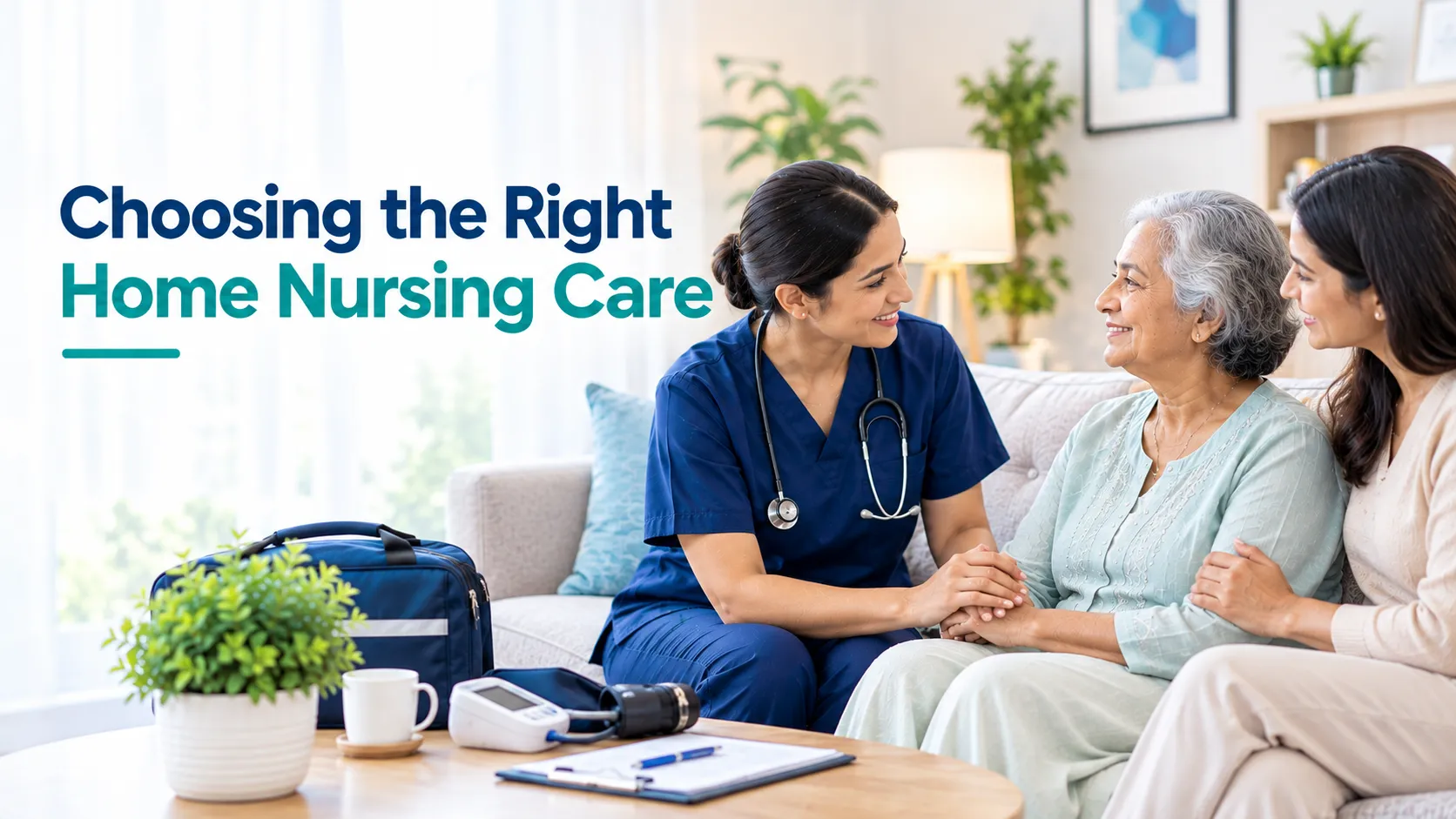
Home-based nursing has become a practical alternative to extended hospital stays and facility care in the UAE. Patients recover in familiar surroundings, families stay involved and clinical needs are still met by licensed professionals. The difficulty for most households is knowing which level of care fits the situation. This guide explains the main options, who each suits and what to check before you decide.
What skilled nursing at home includes
Skilled nursing at home refers to clinical care delivered by a licensed nurse, as opposed to non-medical help with bathing, meals or companionship. Typical services include:
Wound care and dressing changes after surgery or injury. Administration of injections, IV medication and infusions. Medication management and monitoring for side effects. Catheter, feeding tube and tracheostomy care. Monitoring of vital signs, blood sugar and oxygen levels. Support for chronic conditions such as diabetes, heart disease and respiratory illness. Post-operative and post-hospital recovery care.
A nurse also acts as the link between the patient, the family and the treating doctor, reporting changes so that treatment can be adjusted early.
Visiting nurse care versus continuous care
Care needs fall along a spectrum, and the right level depends on how stable the patient is.
Visiting care suits patients with predictable needs, such as a daily dressing change or a weekly injection schedule. A nurse attends for a set period and the family manages the rest.
Continuous care is appropriate when a condition can change quickly, when the patient cannot safely be left alone or when procedures are needed throughout the day. This is where a full time nurse at home is usually recommended.
When a full time nurse at home makes sense
A dedicated daytime nurse is commonly arranged in these situations:
Recovery from major surgery, such as cardiac, orthopedic or abdominal procedures. Stroke rehabilitation, where mobility, swallowing and medication all need close attention. Advanced chronic illness requiring frequent monitoring. Cognitive decline where supervision and clinical oversight are both needed. Complex medication schedules that carry a risk of error.
The main clinical advantage is continuity. A nurse who sees the same patient daily learns their baseline, so subtle changes in breathing, appetite, skin condition or alertness are recognised earlier. This often prevents avoidable complications and hospital readmissions.
When 24 hour nursing care at home is appropriate
24 hour nursing care at home provides a nurse on duty around the clock, normally through shift rotation so that alertness is maintained. It is generally considered for patients whose needs continue overnight, including:
Patients on ventilators or continuous oxygen support. Those with tracheostomies who need regular suctioning. Advanced dementia with night time confusion or wandering. Patients at high risk of falls or sudden deterioration. End of life and palliative care where symptom control is needed at any hour. Critical recovery periods immediately after hospital discharge.
Overnight cover also protects family caregivers. Caring through the night for extended periods leads to exhaustion, which increases the risk of errors and reduces the family’s ability to support the patient emotionally. Professional night cover lets relatives rest and remain effective during the day.
Nursing support for children
Home nursing is not limited to older adults. A child care nurse provides clinical support that a babysitter or nanny is not trained to give. This can include:
Newborn care and feeding support in the first weeks after birth. Administration of prescribed medication at correct pediatric doses. Monitoring of temperature, breathing and hydration during illness. Support for children with long-term conditions such as asthma, epilepsy or diabetes. Recognising warning signs and advising when medical review is needed.
For parents, this offers reassurance and rest, particularly during the demanding early months or during a child’s prolonged illness.
Why a flu vaccine belongs in the care plan
Patients who are recovering, elderly, very young or living with chronic conditions face a higher risk of serious complications from influenza. A flu vaccine is one of the simplest preventive measures available and is widely recommended for these groups, along with the family members and caregivers who share the home.
Vaccination is best completed before the peak flu season so that protection is in place when exposure risk rises. Where a nurse is already involved in care, the vaccine can be administered at home, which helps patients who find travel tiring or difficult. Timing and suitability should always be confirmed with the treating doctor, especially for patients with allergies, weakened immunity or complex medical histories.
How to decide on the right level of care
A structured approach helps avoid both under-supporting and over-arranging care.
- Request a nursing assessment. A qualified nurse should review the diagnosis, medications, mobility, home setup and family availability.
- Follow the doctor’s recommendations. Discharge summaries and treating physicians often indicate whether monitoring or overnight observation is needed.
- Match care to risk. Choose the lightest level that keeps the patient safe, and review it regularly.
- Plan for change. Needs often reduce as recovery progresses, so choose a provider that can scale hours up or down.
What to verify before hiring a provider
Confirm that nurses are licensed and that the provider is approved by the Dubai Health Authority. Ask how emergencies and clinical escalation are handled, how shift handovers are documented and whether the same nurses will be assigned consistently. Clear care plans, written records and defined communication with the family are markers of a well run service.
Final considerations
The right choice between visiting, full time and 24 hour care comes down to clinical risk, the patient’s stability and the family’s capacity to support them safely. Starting with a professional assessment gives the clearest picture. If you are exploring home nursing options for a family member in Dubai, The Nurse Company offers home nursing services delivered by qualified professionals, and their team can help you identify the appropriate level of care.
