
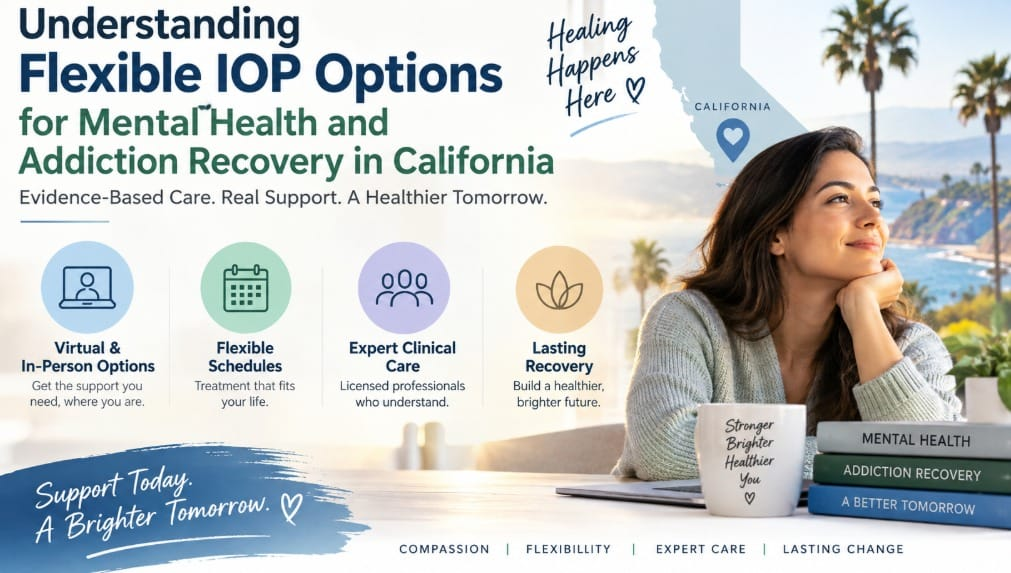
Finding the right treatment can be difficult when someone is trying to balance recovery with work, family, school, or other everyday responsibilities. For people who need structured support without stepping away completely from their normal routine, a Virtual IOP California program can offer a practical alternative to traditional residential care. Virtual treatment brings structured behavioral health services into a person’s home environment while maintaining regular contact with qualified professionals.
That flexibility, however, should not be mistaken for a less serious approach to treatment. Intensive outpatient care is built around consistency, clinical support, accountability, and the development of skills that can be used beyond the treatment setting.
Where Intensive Outpatient Care Fits Into Treatment
Behavioral health treatment exists on a continuum. Some people may need only periodic outpatient counseling, while others require highly structured residential or inpatient care. Between those levels is intensive outpatient treatment, commonly referred to as IOP.
An IOP provides more frequent and structured care than conventional outpatient therapy while allowing participants to continue living at home. Depending on the provider and individual treatment plan, services may include individual therapy, group counseling, behavioral health education, recovery planning, and other clinical support.
This middle-ground approach can be particularly useful for people who are stable enough to live independently but still need regular professional guidance.
Why the Structure of IOP Matters
One weekly therapy appointment may not provide enough support for someone dealing with significant emotional, behavioral, or substance-related challenges. IOP increases the frequency of therapeutic contact, creating more opportunities to identify problems and work on them before they become overwhelming.
Treatment may address areas such as:
– Stress and emotional regulation
– Unhealthy behavioral patterns
– Substance-use triggers
– Relapse prevention
– Communication and relationships
– Coping strategies
– Daily routines and healthy habits
– Personal recovery goals
The value is not simply in attending more sessions. Consistent treatment allows people to learn a skill, apply it in real life, discuss the outcome, and adjust their approach.
That process can make therapy much more practical.
The Growing Role of Virtual Behavioral Healthcare
For many Californians, accessibility is a major consideration when choosing treatment.
Long commutes, transportation problems, work schedules, childcare responsibilities, or simply living far from an appropriate provider can make regular attendance challenging. Virtual treatment can remove some of these obstacles by allowing eligible participants to attend sessions remotely.
A virtual IOP can therefore make structured treatment more compatible with everyday life.
But successful virtual care still depends on the quality of the clinical program. It should involve real interaction with professionals, scheduled sessions, individualized treatment goals, and appropriate monitoring rather than simply providing generic online information.
The technology changes the setting; it does not eliminate the need for human connection.
What Happens During an IOP?
There is no universal IOP schedule because treatment is generally shaped around the individual’s clinical needs.
A program may combine several forms of care, including individual therapy and group sessions. Individual sessions provide space to discuss personal circumstances in greater depth, while group therapy can offer peer interaction and a sense that recovery does not have to happen in isolation.
Some programs may also incorporate behavioral therapies, recovery education, family support, psychiatric services, or medication management when appropriate.
Another important element is practical skill development.
Participants may learn how to recognize emotional triggers, manage stressful situations, challenge unhelpful thought patterns, improve communication, establish healthier routines, and identify warning signs that could interfere with recovery.
These skills become more meaningful when they are practiced between sessions.
Why Everyday Environment Matters
One of the interesting advantages of outpatient treatment is that people do not necessarily have to leave their everyday environment to participate in care.
Consider someone who experiences stress at work, conflict at home, or triggers in their normal social environment. Those situations are difficult to reproduce inside a controlled residential setting.
With appropriate outpatient care, people can learn strategies in treatment and then test those strategies in real-world circumstances.
The next session can become an opportunity to discuss what worked, what did not, and what needs to change.
That connection between treatment and daily life is an important part of building sustainable behavioral changes.
How to Evaluate an IOP Program in California
A Google search for treatment can produce dozens of options, but choosing a program should involve more than clicking the first result.
Someone researching an IOP Program California option should consider several practical and clinical questions.
Is IOP the appropriate level of care?
Not everyone needs the same intensity of treatment. A professional assessment can help determine whether intensive outpatient care is suitable or whether another level of care would be more appropriate.
What does the program actually provide?
Look beyond broad descriptions. Find out whether the program includes individual therapy, group counseling, behavioral support, recovery planning, psychiatric services, or other relevant resources.
How often are sessions held?
The weekly commitment can vary considerably. Understanding the schedule beforehand makes it easier to determine whether treatment can realistically be maintained.
Is virtual care available?
For people facing transportation or scheduling barriers, telehealth can be an important consideration.
How is progress evaluated?
Treatment should not be a fixed process in which everyone follows exactly the same path. A person’s needs can change, and the care plan should be capable of changing with them.
Virtual Treatment Still Requires Accountability
Convenience is one reason people consider virtual treatment, but convenience alone does not make a program effective.
Successful treatment still requires participation.
That can mean attending scheduled sessions, engaging honestly with therapists, completing agreed-upon exercises, communicating difficulties, and being willing to examine patterns that may be uncomfortable.
The virtual format may remove the commute, but it does not remove the work involved in recovery.
For some people, that combination can be ideal: professional support remains accessible while the individual continues handling many responsibilities at home.
When Virtual IOP May Not Be Enough
It is equally important to recognize the limits of outpatient treatment.
Someone experiencing an acute crisis, severe instability, or circumstances requiring continuous supervision may need a higher level of care. In those situations, residential treatment, inpatient services, crisis support, or emergency assistance may be more appropriate.
The objective should never be to select virtual treatment simply because it is easier. The priority is matching the person with the level of care that best fits their clinical situation.
A More Sustainable Approach to Recovery
Treatment becomes more sustainable when it fits realistically into a person’s life.
For some individuals, residential treatment provides the structure they need. For others, intensive outpatient care offers enough support without completely disrupting work, family, or home life. Virtual IOP can add another layer of accessibility for people who face geographic or logistical barriers to in-person treatment.
Compassion Recovery Centers provides information about behavioral health and addiction treatment options, including intensive outpatient and virtual treatment pathways.
Ultimately, choosing treatment is not about finding the program with the biggest claims or the most convenient format. It is about understanding the level of support required, considering practical circumstances, and finding a treatment environment where meaningful participation is possible.
For people who are ready to explore their options, that balance between clinical structure, accessibility, and continuity of care can be an important part of making treatment a realistic and sustainable step forward.
