
A mastectomy can change much more than the physical shape of the breast. For many women, it can affect how they see their bodies, how clothing fits, and how they feel when they look in the mirror.
Breast reconstruction gives women an option to restore breast shape after mastectomy. Some women choose reconstruction during their mastectomy, while others wait months or years. Some decide not to reconstruct at all.
There isn’t one right decision. The best choice depends on your cancer treatment, health, anatomy, personal preferences, and what you want your recovery to look like.
What is breast reconstruction after mastectomy?
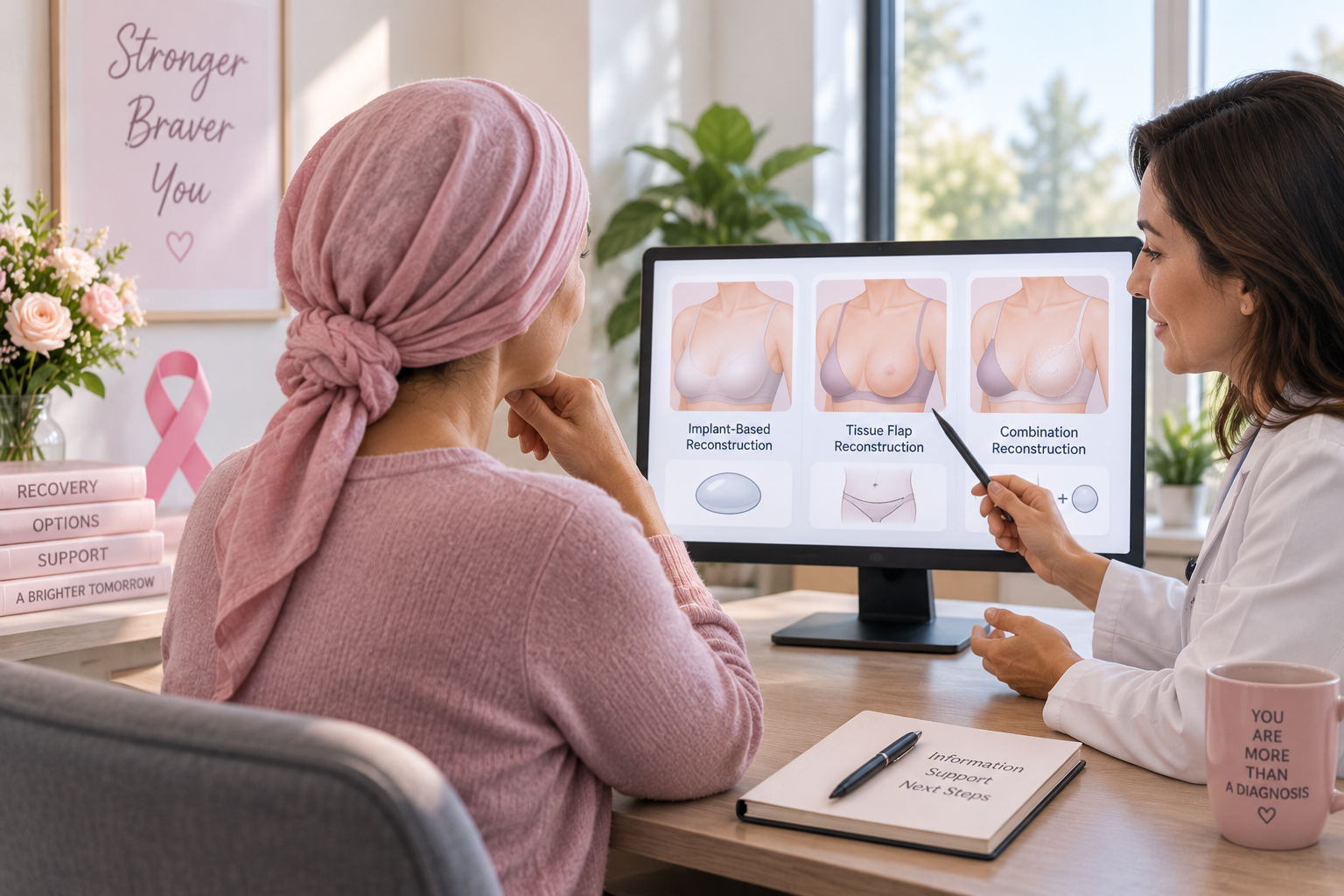
Breast reconstruction is surgery to rebuild the shape of a breast after mastectomy. A plastic surgeon can use a breast implant, tissue from another part of your body, or a combination of the two.
The procedure can begin during the same operation as the mastectomy, or it can be performed later. Reconstruction also often involves more than one procedure before the final result is reached.
The goal is to create a breast shape that fits your body and gives you a result you feel comfortable with. A reconstructed breast, however, won’t necessarily look or feel exactly like the breast you had before surgery. Sensation can also be reduced or altered after mastectomy and reconstruction.
That’s something worth discussing early, before you choose a reconstruction approach.
When can reconstruction be performed?

There are 2 broad approaches: immediate and delayed reconstruction.
Immediate breast reconstruction begins during the same operation as the mastectomy. Depending on the technique, the reconstruction may be completed during that operation or may involve later stages.
Delayed breast reconstruction begins after the mastectomy, sometimes months or even years later. Some women choose this route because they want time to consider their options. Others may need to complete cancer treatment before reconstruction.
Radiation therapy is one factor that can affect the timing and type of reconstruction. Radiation can change the skin and tissues of the chest, so your breast surgeon, oncologist and reconstructive surgeon should consider the entire cancer treatment plan before surgery.
That’s why a consultation with a reconstructive plastic surgeon before mastectomy can be useful, even if you’re unsure whether you’ll eventually have reconstruction. The surgical team can plan around your cancer treatment and preserve options for later.
What are the main types of breast reconstruction?
Most breast reconstruction falls into 2 main categories: implant-based reconstruction and tissue flap reconstruction.
Implant-based reconstruction
Implant reconstruction uses a saline or silicone breast implant to create the breast shape.
Some women can have an implant placed during the mastectomy. In other cases, the surgeon first places a tissue expander. The expander is gradually filled during follow-up visits to stretch the skin and soft tissue before it is replaced with a permanent implant.
For some women, implant reconstruction can mean a shorter initial recovery than flap reconstruction. The right approach depends on factors such as the amount and condition of the remaining tissue, previous treatment, radiation, body type and personal preference.
Implants can also develop complications. These can include infection, implant rupture or displacement, and capsular contracture, in which scar tissue around the implant becomes tight.
Flap reconstruction
Flap reconstruction, also called autologous breast reconstruction, uses your own tissue to create the breast.
Depending on the technique, tissue can come from areas such as the abdomen, back, thighs or buttocks. A DIEP flap, for example, uses tissue from the lower abdomen while preserving the abdominal muscles.
Flap surgery is a larger operation than implant reconstruction for many patients, and recovery can involve both the breast and the area where the tissue was taken.
The advantage is that the reconstructed breast is made from your own tissue. Whether that makes sense for you depends on your anatomy, medical history, cancer treatment and goals.
Combination reconstruction
Some women have a combination of their own tissue and an implant. Your surgeon can explain whether this approach makes sense based on the amount of tissue available and the breast shape you want to achieve.
How does radiation affect breast reconstruction?
Radiation deserves a separate conversation because it can influence both timing and reconstruction choices.
Radiation changes the tissues of the chest. If radiation is part of your treatment plan, your breast surgeon and plastic surgeon need to plan around it rather than treating reconstruction as a separate decision.
The effect varies from patient to patient. Radiation can increase the risk of problems with implants and can affect the appearance and feel of reconstructed tissue.
There are several ways a surgical team can approach reconstruction when radiation is expected. In some cases, a temporary tissue expander may be placed during mastectomy and the final reconstruction performed later. In other situations, a different reconstructive technique may make more sense.
Ask your cancer team one simple question early: “How will radiation affect my reconstruction options?”
The answer can change the surgical plan.
Who is a candidate for breast reconstruction?

Many women who undergo mastectomy can consider reconstruction, but candidacy is individual.
Your overall health, cancer treatment, previous surgeries, radiation history, body type, available donor tissue and personal goals can all influence which options are available.
certain medical conditions and previous abdominal or chest surgeries can also affect surgical planning.
Your surgeon should explain which procedures are realistic for your particular situation. If you aren’t comfortable with the first recommendation, getting a second opinion is reasonable, especially when you’re choosing between significantly different surgical approaches.
What is recovery like?
Recovery varies widely because breast reconstruction isn’t one operation.
Someone having implant reconstruction may have a different recovery from someone having a DIEP flap. A patient having immediate reconstruction may also have a different experience from someone undergoing delayed reconstruction.
You may have surgical drains, swelling, bruising, discomfort and restrictions on physical activity while the tissues heal. Follow-up appointments are used to check healing and manage any concerns.
Some women also need additional procedures after the main reconstruction. These may include revision surgery, fat grafting or nipple and areola reconstruction.
Ask your surgeon about the entire process rather than focusing only on the first operation.
How many stages are likely? How long might each recovery take? What happens if you aren’t happy with the shape or symmetry?
Those answers can help you plan your work, family responsibilities and recovery time.
What are the possible risks?
Every operation has risks, and breast reconstruction has risks that vary by technique.
Possible complications include bleeding, infection, blood clots, fluid buildup, wound-healing problems and changes in sensation. Implant reconstruction has additional risks such as rupture, displacement and capsular contracture. Flap reconstruction can have complications involving the transferred tissue or the donor site.
Your individual risk profile matters more than a generic list found online.
Before surgery, ask your surgeon which complications are most relevant to your health and the reconstruction method being considered.
What about nipple and areola reconstruction?
Nipple reconstruction can be performed after the main breast reconstruction if the nipple wasn’t preserved during the mastectomy.
Options can include a small surgical procedure, medical tattooing, or a combination. Some women also choose nipple prosthetics.
This step is usually planned after the reconstructed breast has had time to heal.
It can be easy to overlook when you’re focused on the mastectomy and primary reconstruction, so ask about it during your initial consultation.
What if you don’t want reconstruction?
Breast reconstruction is optional.
Some women choose an aesthetic flat closure, which creates a smooth chest wall after mastectomy. Others use an external breast prosthesis.
This decision deserves the same respect as choosing reconstruction.
You should be given clear information about all of your options and enough time to decide what feels right for you.
Questions to ask your reconstructive surgeon
Before making a decision, bring a written list of questions to your consultation.
The decision is yours
Breast reconstruction after mastectomy is a personal medical decision that deserves time and careful discussion.
For some women, reconstruction helps restore breast shape and makes them feel more comfortable with their bodies. For others, going flat or using a prosthesis is the better choice.
The right answer depends on your cancer treatment, health, anatomy and priorities.
Start the conversation early. Ask what your options are, what the recovery involves and how your cancer treatment could affect reconstruction. Then give yourself permission to make a decision based on what you want for your own body.
• Which breast reconstruction options are realistic for me?
• Should I consider immediate or delayed reconstruction?
• Will I need radiation or chemotherapy?
• How could radiation affect my reconstruction?
• Which technique do you recommend, and why?
• How many surgeries should I expect?
• How long could recovery take?
• Will I have surgical drains?
• What will my reconstructed breast look and feel like?
• How much sensation should I expect?
• What complications are most relevant to me?
• What happens if I need revision surgery?
• Can I see examples of similar reconstructions?
• Should I get a second opinion?
About the Author
Dr. Pablo Prichard, MD is a board-certified plastic and reconstructive surgeon in Scottsdale, Arizona. He is certified by the American Board of Plastic Surgery and is a Diplomate of the American Society of Plastic Surgeons. His practice includes breast reconstruction for women following mastectomy and breast cancer treatment.
