
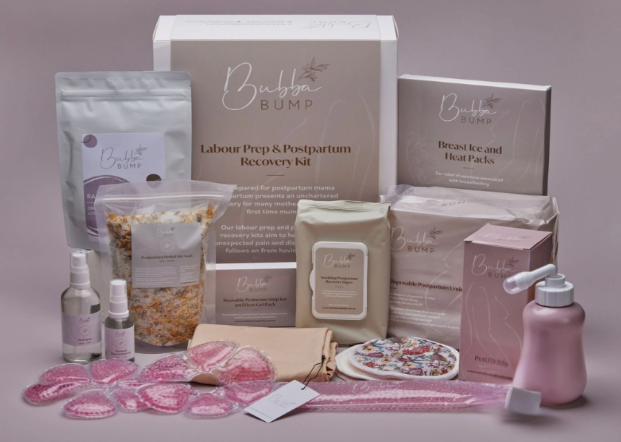
Most people picture postpartum recovery as an emotional journey. What they underestimate is how intensely physical it is from the very first hour and how much the smallest practical decisions shape whether those weeks feel survivable or completely draining. Clothing is one of those decisions. Not exciting, not obvious, but genuinely consequential. Postnatal underwear is designed around a body that mainstream clothing brands have never really considered, and that gap matters far more than most new mothers realise until they are already in the thick of it.
Your Uterus Is Still Working Hard
What most people do not realise is that the uterus keeps contracting vigorously for days after birth, whether the delivery was vaginal or surgical. Those contractions are performing crucial work – reducing the uterus back towards its natural position and helping to manage postpartum haemorrhage. The difficulty is that any pressure or friction on the lower abdomen during this procedure dramatically intensifies pain. A waistline that slips, rolls inward, or rests right over the contracting uterus does not only feel irritating. It competes with a physiological function that requires room to proceed undisturbed. Most underwear was never made with that in mind.
C-Section Scars React to Fabric Differently
The caesarean incision heals in distinct layers, and the deeper layers take considerably longer than the visible skin. Nerve endings in the tissue surrounding the scar can become hypersensitive during this process — a condition called ‘allodynia’, where even light contact registers as sharp or burning pain. This is why some post-caesarean mothers find that a waistband pressing gently on an area that looks healed still triggers strong discomfort. Postnatal underwear built for surgical recovery is cut to sit either well above the navel or low on the hip, ensuring the waistband never crosses the scar line at all. That positioning is not simply a comfort feature. It directly prevents the kind of nerve irritation that stalls healing.
Lochia Is Unpredictable for a Reason
Most women expect postpartum bleeding to behave like a heavy period. It does not. Lochia surges in response to physical activity and, notably, to breastfeeding — because the oxytocin released during nursing causes uterine contractions that push blood out. This means a woman sitting still may feel fine, then stand to feed the baby and experience a sudden, heavy surge. Maternity pads need to stay perfectly positioned through all of that, through every awkward reach and slow sit-down. Postnatal underwear holds the gusset close and consistently, something ordinary underwear simply cannot maintain against a body that is moving cautiously but constantly.
What Compression Actually Does to Healing Tissue
There is a widespread assumption that postpartum compression garments exist purely for cosmetic reasons — to flatten, to smooth, and to hurry the belly back to its pre-pregnancy shape. That framing misses the actual mechanism. After birth, the round ligaments, pelvic floor, and transverse abdominal muscles are all operating at reduced capacity. Gentle, graduated compression gives these structures external feedback — a kind of proprioceptive cue that helps the body recruit the right muscles during movement. Postnatal physiotherapists refer to this as offloading: reducing the demand on structures that are healing by giving them passive support from outside. The underwear does not rebuild muscle. It simply stops exhausted tissue from being overloaded before it is ready.
Synthetic Fabric Creates a Specific Medical Risk
Night sweats in the postnatal period are not just uncomfortable — they are substantial. The body is rapidly expelling the extra fluid volume it built up during pregnancy, and much of that happens through perspiration overnight. Combined with lochia and the warmth generated by skin-to-skin feeding, synthetic fabrics against the vulval and perineal area create a persistently warm, moist environment. That environment is clinically recognised as a primary risk factor for thrush and bacterial vaginosis, both of which are already more likely postnatally due to hormonal shifts. Natural fibres disrupt this by allowing air circulation that keeps the skin drier.
Conclusion
Postnatal underwear is not a luxury item dressed up as a necessity. It addresses real, specific, medically relevant needs that arise directly from what birth does to the body. The uterine contractions, the layered scar healing, the unpredictable bleeding, the overtaxed ligaments — none of these is vague discomforts. They are physiological events, and the right underwear works with them rather than against them. Women who understand what these garments actually do tend to prioritise them differently, and the recovery experience reflects that choice in ways that are surprisingly concrete.
