
Topical treatments are often the first line of defense for people experiencing thinning hair or early-stage androgenetic alopecia, because they act directly at the scalp where follicles reside and can do so with lower systemic exposure than oral medications. A successful topical therapy can increase blood flow to the hair matrix, extend the anagen (growth) phase, reduce local inflammation, or modulate hormone activity around follicles. Clinical trials and decades of dermatologic practice have established a handful of topical agents that reliably stimulate follicles and produce measurable hair density improvements when used consistently.
Minoxidil — the benchmark for topical therapy
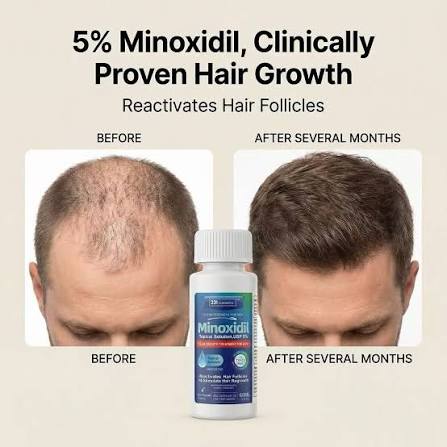
Minoxidil is the most extensively studied topical hair stimulant and remains the only over-the-counter ingredient with robust, long-term evidence of efficacy for scalp hair regrowth. Applied directly to affected areas, minoxidil acts primarily as a vasodilator and appears to prolong the anagen phase while increasing follicle size. Clinical studies show that twice-daily application of 5% solution or daily use of 5% foam produces superior results compared with lower concentrations for male pattern hair loss; women often tolerate 2% solution well but may also benefit from 5% foam under guidance. Users should be advised that visible gains typically take three to six months to appear and that discontinuation leads to gradual loss of newly gained hair. Side effects are usually limited to local irritation and, rarely, unwanted facial hair growth due to runoff; systemic adverse effects are uncommon when used as directed.
Topical finasteride — targeted androgen blocking
Finasteride taken orally is an established systemic treatment that inhibits 5-alpha-reductase, lowering dihydrotestosterone (DHT) and slowing androgen-driven follicle miniaturization. Topical finasteride formulations have been developed to concentrate the drug at the scalp while minimizing systemic absorption. Randomized trials and comparative studies indicate that topical finasteride can reduce scalp DHT and produce hair count improvements similar to oral finasteride but with lower serum drug levels and fewer systemic side effects. Many clinicians now consider topical finasteride a useful adjunct for patients who want to reduce systemic exposure yet still target androgen-mediated follicle decline. As with other therapies, sustained application is essential, and dermatologic supervision helps tailor concentration and excipient choices for tolerability.
Ketoconazole and anti-inflammatory shampoos
Inflammation and scalp microbial imbalances can contribute to follicular stress. Ketoconazole, an antifungal shampoo used at 1–2% concentrations, has anti-inflammatory properties and may reduce local DHT activity. Controlled studies and clinical observations suggest that regular use of ketoconazole shampoo can improve hair density and complement primary stimulatory treatments. Unlike minoxidil and finasteride, ketoconazole is typically used as a cleansing therapy a few times per week rather than as a daily leave-on product. It is especially valuable for patients with dandruff, seborrheic dermatitis, or scalp irritation that might hinder other treatments.
Peptides, growth factors, and prostaglandin analogs
A newer generation of topical products contains bioactive peptides and growth factors aimed at signaling the dermal papilla to enter and sustain the anagen phase. Compounds like copper peptides (GHK-Cu) and specially formulated peptide blends have shown encouraging results in small clinical studies, improving hair thickness and reducing shedding. Eyelash-regrowth prostaglandin analogs such as bimatoprost are approved for promoting lash growth and are being investigated for scalp application; however, evidence for extensive scalp use remains limited and off-label. While these agents demonstrate biological plausibility and some clinical benefit, they are best considered complementary to established first-line topicals until larger trials confirm long-term efficacy.
Combining therapies and formulation matters
Combination therapy often yields better outcomes than single agents because it addresses multiple mechanisms simultaneously: minoxidil stimulates follicles and prolongs anagen, topical finasteride reduces local androgen impact, and ketoconazole controls inflammation and microbial factors. Delivery systems are equally important; foams, solutions, and serums differ in penetration, drying time, and scalp tolerance. Some patients prefer a targeted hair regrowth serum with a supportive vehicle that enhances absorption without greasy residue. For individuals with sensitive scalps, alcohol-free or foam formulations may reduce irritation, while those with thicker hair may favor dropper solutions that reach the scalp more easily.
Safety, expectations, and clinical guidance
Realistic expectations are fundamental. Clinically proven topicals can halt progression and produce regrowth in many users, but results vary by age, genetics, and duration of hair loss before treatment begins. Adverse effects are generally localized and mild, though allergic reactions and folliculitis can occur; systemic effects are rare but possible, especially with improper use or when combining potent actives. A dermatologist can evaluate pattern and cause of hair loss, recommend evidence-based combinations, and monitor response. They can also advise on tapering, switching formulations, or adding adjunctive in-office therapies when appropriate.
Practical application and adherence
Consistency is the single most important factor in topical success. Applying products at the recommended frequency, drying the scalp appropriately, and maintaining a regimen for several months are prerequisites for evaluating efficacy. Patients should avoid mixing multiple actives in a single application unless instructed, and they should report irritation or unexpected hair changes promptly. When shopping for products, prioritizing formulations supported by peer-reviewed trials and clinical experience will yield the most predictable outcomes.
Evolving research and informed choices
The field of topical follicle stimulation continues to evolve as novel molecules and delivery systems emerge. Ongoing clinical trials are refining optimal concentrations, combination strategies, and patient selection criteria. For people confronting hair thinning, clinically proven topicals like minoxidil, topical finasteride, and ketoconazole-based therapies form a solid, evidence-backed foundation. When combined thoughtfully and supervised by a clinician, these options offer a practical path toward stimulating dormant follicles and rebuilding hair density over time.
