
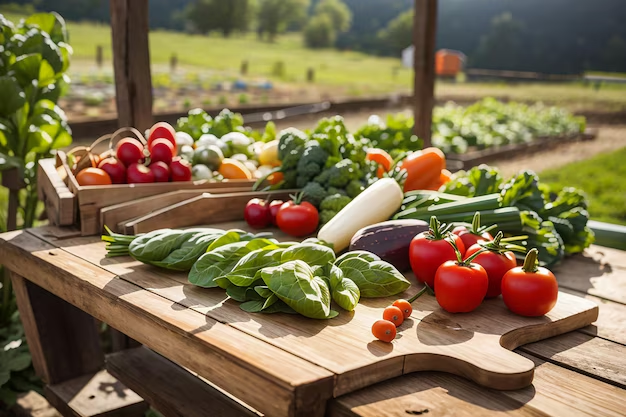
There is something deeply satisfying about biting into a tomato that was picked this morning, or pulling a bunch of carrots from a box that still has soil clinging to the roots. That kind of freshness is nearly impossible to replicate in a grocery store, where produce often travels hundreds – sometimes thousands – of miles before it lands in your cart. The good news is that local organic farms and small growers are more accessible than most people realize. You just need to know where to look and how to reach out.
Why Buying Direct From Local Growers Matters
When you buy produce directly from a local farm, you are doing far more than cutting out the middleman. You are supporting a food system that values soil health, biodiversity, and chemical-free growing practices. Organic and small-scale farmers typically use regenerative techniques that restore nutrients to the land rather than depleting them. The result is produce that is richer in flavor and, in many cases, more nutrient-dense than what you find on supermarket shelves.
Beyond nutrition, buying local means your food has a much shorter journey from field to table. That means fewer preservatives, no wax coatings to extend shelf life, and none of the cold-chain handling that strips away peak freshness. When you connect directly with the person who grew your food, you also get transparency. You can ask how it was grown, what the soil amendment practices are, and whether any sprays were used – questions a grocery store simply cannot answer.
How to Find Organic Farms in Your Area
The search does not have to be complicated. Here are some of the most reliable ways to locate organic and naturally grown produce near you.
Visit Farmers Markets and Talk to Vendors
Your local farmers market is one of the most straightforward entry points. Even if a vendor is not certified organic, many small growers use organic practices without carrying the official certification because the certification process can be expensive and time-consuming for small operations. Ask vendors directly about their growing methods. Most are happy to talk at length about their practices, and that conversation alone can tell you a great deal.
Search Community Supported Agriculture Programs
A CSA, or Community Supported Agriculture program, lets you buy a share of a farm’s harvest in advance. In return, you receive a weekly box of whatever is in season. This model supports farmers by giving them income upfront and gives you a steady supply of ultra-fresh, locally grown produce throughout the season. Websites that aggregate CSA listings by zip code make it easy to find programs within driving distance.
Use Land and Parcel Data Tools
This one surprises people, but it is genuinely useful. If you have ever driven past a beautiful piece of farmland and wondered whether the owner sells directly to the public, there are tools that can help you find out who to contact. Resources that let you look up a property owner by address can surface contact information for landowners, including those running small agricultural operations that may not have a strong online presence. Many of the best local farms are essentially invisible on the internet – no website, no social media, just land and a passion for growing. Being able to reach out to them directly opens doors that most consumers never find.
Check Agricultural Extension Offices and Local Farm Directories
State and county agricultural extension offices maintain directories of registered farms and growers in their regions. These directories are often free to access and searchable by product type – so you can look specifically for vegetable farms, herb growers, or orchards. Local food co-ops and community health food stores often keep printed directories or bulletin boards with farm contact info as well.
How to Reach Out to Farmers Directly
Once you have found a farm that interests you, reaching out does not need to feel awkward. Farmers who sell direct are almost always open to new customers. A simple, respectful email or phone call goes a long way. Here is what to include when you first reach out:
- Introduce yourself briefly and explain how you found them
- Ask about what they currently grow and what is in season
- Inquire about how they manage pests and soil fertility
- Ask whether they offer pick-up, delivery, or farm stand sales
- Ask if they have a mailing list or newsletter you can join
Most small farmers appreciate customers who take an interest in their operation. That genuine curiosity often turns a one-time purchase into a long-term relationship where you get first access to limited quantities, seasonal specialties, and sometimes even produce that never makes it to public markets.
Tools That Can Help You Go Deeper
If you want to be more systematic about finding farms and growers – especially in rural or semi-rural areas where farms are spread out – it helps to use tools designed to give you better geographic and contact intelligence. One resource worth bookmarking is this free prospecting and data tool, which can help you visualize land parcels and identify properties in ways that go beyond a basic map search. It is particularly useful if you are looking to build a relationship with multiple growers across a wider area, or if you are organizing a buying collective and need to canvass a region efficiently.
Making It a Sustainable Habit
Finding fresh, organic produce from local growers is not a one-time event – it is a practice that deepens over time. The more relationships you build with local farmers, the more your food becomes tied to a real place, real people, and real seasons. You start to eat differently when you know that your greens came from a family a few miles away who has been farming that land for decades.
Start small. Visit one farmers market. Ask one farmer a question. Sign up for one CSA box. Each step you take connects you a little more firmly to the kind of food system that is better for your health, better for the environment, and honestly just better tasting in every possible way.
