
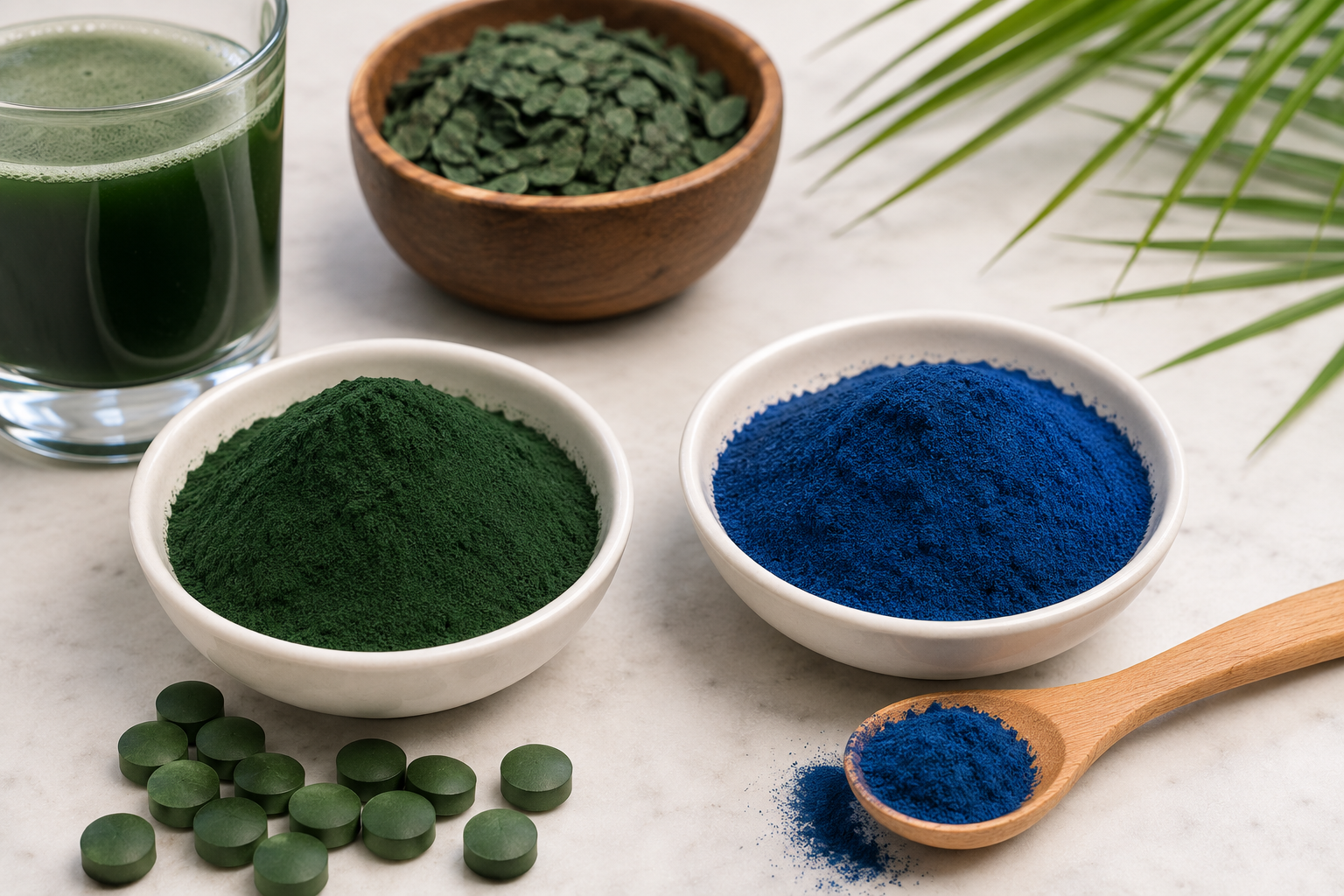
Walk into any health food store or scroll through wellness content online and you’ll likely encounter two products that sound closely related but look completely different: green spirulina powder and its vivid blue counterpart. Despite the near-identical name, a lot of people assume these are two unrelated products, when in fact one is simply a refined version of the other.
They Come From the Same Algae
Both products originate from the same blue-green algae. Whole spirulina retains everything the algae naturally contains, including chlorophyll, which is responsible for its deep green colour, along with a broad spread of nutrients. Blue spirulina is produced by extracting and concentrating a single compound from that same algae: phycocyanin, a naturally occurring antioxidant pigment that happens to be a vivid blue.
Comparing Their Nutritional Profiles
Whole spirulina is genuinely nutrient-dense as a whole food: it contains notably higher potassium than bananas gram for gram, more iron than spinach, and meaningful amounts of beta-carotene and plant-based protein, all in a low-calorie package. Blue spirulina takes a narrower approach, since it isolates specifically the phycocyanin pigment rather than delivering the algae’s full nutrient spread, but well-made versions can still carry a notably high complete protein content and meaningful B12 levels for the amount consumed.
Taste Is Where Most People Notice the Difference First
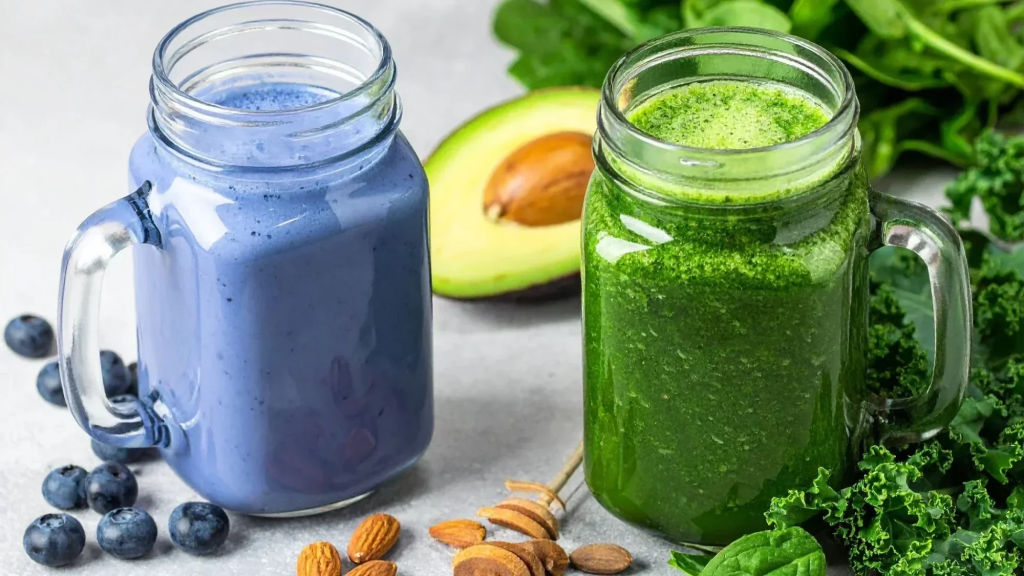
Whole spirulina has a distinct, fairly strong flavour that a lot of people find difficult to disguise in food or drinks. Blue spirulina, because it’s just the extracted pigment rather than the whole algae, tends to have a much milder taste, which is a large part of why it’s become popular in smoothies, lattes, and bowls where flavour neutrality matters.
Which One Actually Makes Sense for You
Neither product is objectively better than the other; they’re suited to different goals. Someone looking for a broad daily nutritional boost from a whole-food source is generally better served by standard spirulina. Someone more interested in a concentrated antioxidant compound, or who wants the visual appeal of a naturally blue ingredient without the stronger algae taste, is likely to prefer blue spirulina instead.
A Note on Product Quality
Because both products have become more popular, quality varies substantially between suppliers. Certification, organic in particular, and transparency around sourcing and extraction are reasonable indicators to look for, regardless of which form you choose, since the concentration and purity of the active compounds can differ meaningfully between brands sold under the same generic name.
The Bottom Line
Spirulina and blue spirulina aren’t competing products so much as two different expressions of the same base ingredient, each suited to a slightly different purpose. Understanding that relationship makes it far easier to choose the right one for your actual goals, rather than picking based on which one happens to be trending on social media that week.
